10 Best Stylish Dresses for Women Over 60
Style does not retire at 60; if anything, it becomes more refined, intentional, and personal. The right dress can flatter the body you have now, move comfortably through a long day, and still feel polished enough for dinner, church, travel, or a family celebration. This guide looks at ten dress styles that combine elegance with ease, then breaks down fabrics, fits, and styling choices so getting dressed feels simpler and far more enjoyable.
Outline: What This Guide Covers and What Makes a Dress Stylish After 60
Before getting to the ten dress styles, it helps to define what “stylish” really means in this stage of life. For many women over 60, style is no longer about chasing every seasonal trend or forcing a silhouette that looks exciting on a hanger but exhausting by noon. It is about ease, proportion, quality, and presence. A stylish dress should do several jobs at once: flatter your current shape, feel good against the skin, offer the right level of coverage for your comfort, and look intentional without demanding constant adjustment. That balance is what turns a merely pretty dress into one you actually reach for.
This article is organized in a practical way so the choices feel clear rather than overwhelming. The outline is simple:
• First, we look at the core features that make a dress useful and elegant.
• Next, we cover the first five dress styles that work especially well for everyday wear and semi-dressy settings.
• Then, we move to five more options suited to events, travel, warmer weather, or wardrobes that need variety.
• After that, we compare fit, fabric, color, and dress details so you can judge a garment beyond the product photo.
• Finally, we finish with styling and shopping advice, followed by a conclusion tailored to women who want confidence, not costume.
Several elements tend to matter more with age, not because there are rules, but because priorities become sharper. Fabric matters because scratchy, stiff materials are far less forgiving during long wear. Length matters because a hemline can change the whole tone of a dress, making it feel either elegant or awkward. Sleeve design matters because many women want flexibility: perhaps a cap sleeve for summer, an elbow sleeve for ease, or a bracelet sleeve for year-round polish. Waist placement becomes important too. A natural waist, slightly raised waist, or softly belted shape can define the figure without feeling tight, while an undefined cut can either look modern and relaxed or drift into shapeless territory.
There is also a quiet but powerful shift that often happens after 60: women dress more for alignment than approval. That is why the best dress is not always the fanciest one. Sometimes it is the shirt dress that always looks sharp, the wrap dress that adjusts to the body, or the fluid midi that moves like a breeze through an ordinary afternoon. The next sections explore ten of the strongest options and explain where each one shines.
1 to 5: The Best Stylish Dresses for Everyday Elegance and Easy Occasion Wear
The first five dresses on this list earn their place because they are adaptable, flattering on many body types, and easy to style without drama. If a wardrobe needs dependable pieces that can move from lunch to evening plans with only a shoe change, these are strong contenders.
1. The wrap dress remains a classic because it creates shape without rigidity. Its adjustable tie lets you loosen or define the waist as needed, which makes it especially practical if your size shifts slightly or you simply want comfort after a long meal. A midi-length wrap in matte jersey, crepe, or lightweight knit can look polished while still feeling easy. Compared with a fixed-waist dress, it usually offers more flexibility and less pulling across the midsection.
2. The shirt dress is one of the smartest choices for women who enjoy tailored lines. It borrows structure from menswear but translates it into a feminine, wearable shape. A shirt dress with a soft belt, side pockets, and a hem below the knee works for errands, travel, casual offices, and daytime gatherings. Compared with a wrap dress, it often looks crisper and more architectural.
3. The A-line midi dress is nearly always a safe and stylish investment. It skims the torso and opens gently through the skirt, creating movement without clinging. This shape can balance broader shoulders, soften the hip area, and provide graceful motion when walking. It is less defined than fit-and-flare, which can be an advantage if you want comfort to lead the conversation.
4. The fit-and-flare dress is ideal for women who enjoy a clearly shaped silhouette. The fitted top and fuller skirt create a balanced profile that can look especially elegant at family events, daytime weddings, and dinners out. In comparison with the A-line midi, fit-and-flare feels dressier and more deliberately feminine.
5. The knit column dress is a modern sleeper hit. When cut well, it looks streamlined, sophisticated, and quietly expensive. The key is choosing a thicker knit or ponte fabric that glides instead of grabbing. A column dress with a cardigan, scarf, or long necklace can feel current without trying too hard.
These five styles cover a lot of real life:
• Wrap dress for flexibility
• Shirt dress for structure
• A-line midi for universal ease
• Fit-and-flare for polished shape
• Knit column for modern simplicity
If your closet feels crowded but unhelpful, start here. These are the dresses that do not need an occasion to prove their value.
6 to 10: Stylish Dresses That Bring Variety, Soft Drama, and Seasonal Flexibility
The second half of the list adds range. These dresses are helpful when your wardrobe needs more than dependable basics and you want options for travel, warmer temperatures, special events, or days when your mood asks for something softer or more expressive.
6. The sleeved maxi dress offers elegance with coverage, which is a combination many women appreciate. A maxi can look sweeping and graceful, but the real secret is proportion. Choose a version with a defined shoulder, a slight waist shape, or vertical seams so the length feels intentional rather than overwhelming. Compared with shorter dresses, a maxi brings more presence and often works beautifully for outdoor events, evening dinners, and vacation wardrobes.
7. The structured shift dress is clean, chic, and often underestimated. It does not rely on waist definition, which makes it useful for women who prefer a smoother line through the middle. In linen blends, crepe, or textured cotton, it can feel smart and breathable. Compared with an A-line style, the shift is straighter and more minimalist, making it excellent for women who prefer modern dressing over overtly romantic silhouettes.
8. The empire-waist dress can be especially flattering when designed with restraint. A gently raised waistline draws the eye upward and allows fabric to skim over the midsection. This shape can feel comfortable during long days, celebratory meals, and travel. The best versions avoid excessive gathering or overly youthful prints; a clean drape, refined neckline, and subtle sleeve make all the difference.
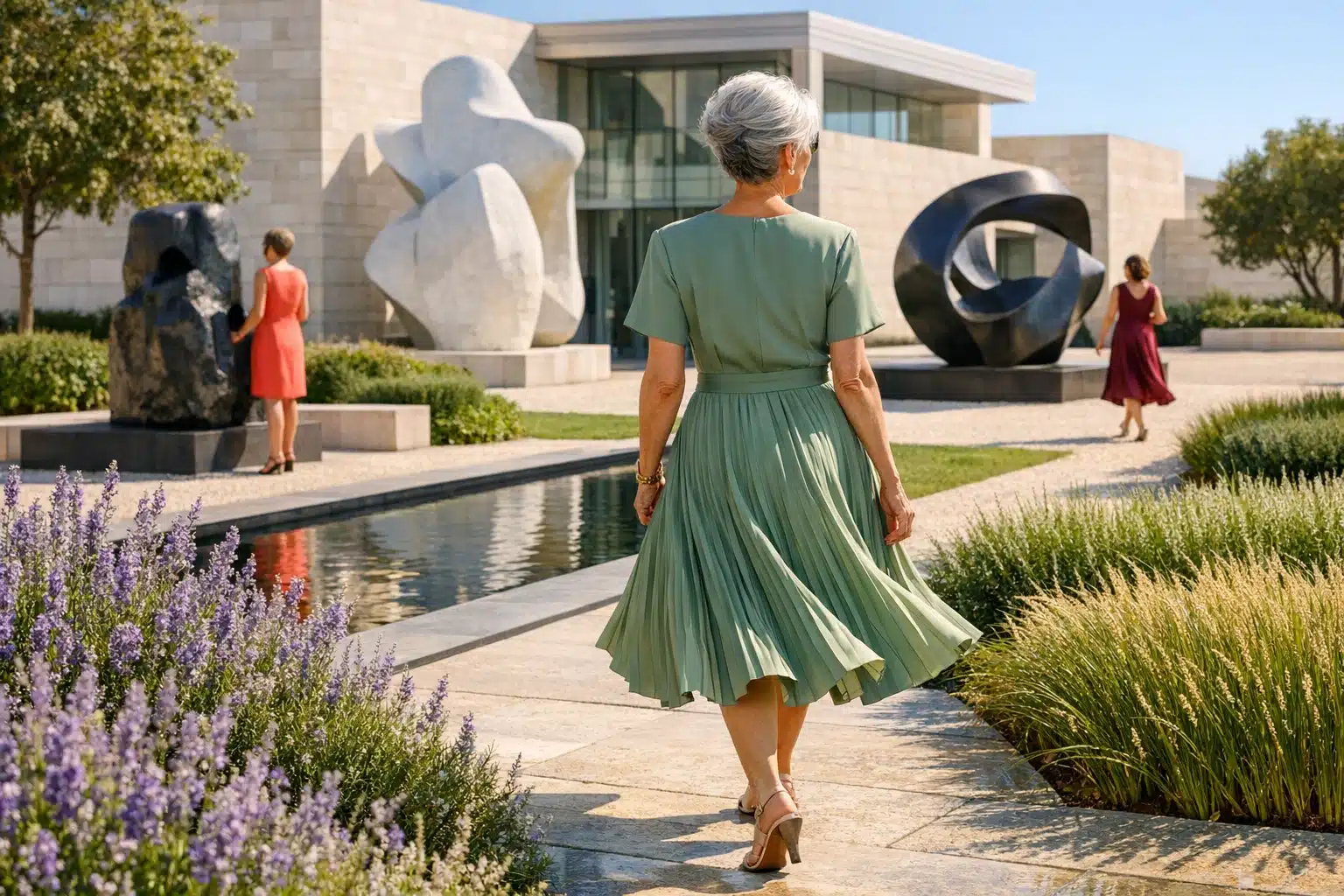
9. The pleated tea dress brings movement and a touch of old-world charm without looking costume-like. A tea dress usually sits between casual and formal, which makes it useful for luncheons, gallery visits, showers, and daytime events. Soft pleats can create elegant motion as you walk, almost like the dress has learned manners from a ballroom but prefers a garden path.
10. The tunic or kaftan-inspired dress is a standout for hot weather, travel, and relaxed entertaining. Done well, it looks effortless rather than oversized. Look for side slits, a fine print, embroidered detail, or a clean V-neck so the shape remains deliberate. Compared with a structured shift, this style feels freer and more resort-like, but it can still look sophisticated with metallic sandals or sculptural earrings.
These five styles broaden your options:
• Sleeved maxi for graceful coverage
• Structured shift for clean lines
• Empire waist for comfort with shape
• Pleated tea dress for soft elegance
• Tunic or kaftan-inspired dress for ease in warm weather
Together, all ten dresses create a wardrobe that can handle ordinary days and memorable ones without losing personality.
How to Choose the Right Dress: Fit, Fabric, Color, Length, and the Details That Matter
Even the most recommended dress style can disappoint if the fabric, fit, or finishing details are wrong. This is why smart dress shopping is less about memorizing trend lists and more about learning what to inspect. Once you know what to look for, you can spot quality much faster and avoid garments that look good online but feel disappointing in real life.
Start with fit. A flattering dress should follow the body, not fight it. That does not mean everything must be tailored or close-fitting. It means shoulder seams should sit correctly, bust darts should land where intended, and the waist, whether defined or relaxed, should support the overall shape. If the shoulders fit and the length works, many other elements can be altered. If the shoulders are wrong, the whole dress tends to look off. For this reason, many experienced shoppers judge a dress from the top down.
Fabric is just as influential. Natural fibers such as cotton, linen, silk, and wool blends often breathe better, while quality synthetics can provide stretch, wrinkle resistance, and easier care. The question is not whether a fabric is natural or man-made; it is whether it drapes well, feels pleasant, and suits the purpose of the dress. Jersey is comfortable but can reveal too much if it is thin. Linen is cool and elegant but wrinkles quickly. Crepe often flatters because it skims. Ponte adds structure and is useful for cleaner silhouettes.
Length and sleeve choice affect confidence more than fashion magazines admit. A hem at or just below the knee is widely versatile, but midi lengths can be especially elegant when paired with the right shoe. Sleeves deserve similar attention:
• Short sleeves can feel youthful and practical in summer.
• Elbow sleeves often offer a polished middle ground.
• Three-quarter sleeves are classic and good for transitional weather.
• Sleeveless styles can work beautifully under a jacket or lightweight topper.
Color and print should support your complexion and your lifestyle. Solid jewel tones, navy, olive, burgundy, plum, and softened neutrals often look rich and easy to accessorize. Prints can be wonderful, but scale matters. Very tiny prints can look busy, while very large prints can overwhelm a smaller frame. Finally, examine the details: pockets, lining, zippers, necklines, seam placement, and care instructions. A dress becomes truly stylish when it serves your life as beautifully as it serves the mirror.
Styling, Shopping, and Final Takeaways for Women Over 60 Who Want Confidence in Every Dress
Once you have the right dress, styling should feel like finishing a sentence, not rewriting the whole page. The easiest way to make a dress look expensive and intentional is to keep the supporting pieces clean, balanced, and appropriate for the setting. A great pair of earrings, a structured bag, a low block heel, sleek flats, or elegant sandals can completely change how a dress reads. The dress may be the lead actor, but accessories decide whether the performance feels casual, refined, artistic, or celebratory.
Layering is especially useful for women over 60 because it adds flexibility without forcing a wardrobe overhaul. A cropped jacket can define shape over a midi dress. A lightweight cardigan softens a sleeveless style. A longline blazer can modernize a simple column dress in seconds. Scarves, when used sparingly, add color and draw attention upward. Belts can work too, but only when they support the garment rather than interrupt it. If a dress already has beautiful drape, let it breathe.
Shopping habits matter as much as styling. It helps to buy with a short checklist instead of a rush of hope:
• Can I sit, walk, and bend comfortably in it?
• Does the fabric still look good in natural light?
• Would I wear it at least three different ways?
• Is the neckline something I will adjust all day?
• Do I own shoes and layers that work with it already?
Another smart move is to leave room in the budget for alterations. A modest hem adjustment or sleeve refinement can transform a decent dress into one that feels custom-made. This is often more effective than buying a pricier piece that almost works. Personal style at this stage is rarely about abundance; it is about precision.
For women over 60, the best stylish dress is not one that tries to make you look like someone else, or someone younger, or someone louder. It is the one that lets you move freely, meet the day with ease, and look unmistakably like yourself at your most polished. Whether you gravitate to a wrap dress, a shirt dress, a graceful maxi, or a sleek shift, the real goal is a wardrobe that feels calm, attractive, and useful. Choose dresses that respect your comfort, reflect your taste, and give you the quiet pleasure of walking into a room already knowing you are well dressed.