10-Night Greek Islands Cruise from Southampton: What to Expect
Booking a 10-night Greek islands cruise from Southampton sounds wonderfully simple: step aboard in southern England and trade grey skies for whitewashed harbours without touching an airport. Yet the route is more nuanced than many brochures suggest, because Greece sits far from the UK and that distance shapes everything from port time to pricing. Understanding the geography, the likely sea days, and the trade-offs helps travellers choose the right itinerary rather than the most tempting headline.
This guide starts with a practical outline, then looks closely at route design, island choices, onboard life, and booking strategy. The aim is not to sell a dream in broad brushstrokes, but to show what this holiday really offers when distance, ship style, and time at sea are taken seriously.
Outline of the Article and the Essential Route Reality
Before getting swept away by postcard images of blue domes and bright harbours, it helps to set out a clear outline of what this kind of cruise involves. This article explores five core questions: how realistic a 10-night sailing to the Greek islands is from Southampton, what a likely day-by-day itinerary looks like, which ports offer the strongest experiences, how ship life shapes the holiday, and whether the overall value suits UK travellers who prefer a no-fly break.
A quick outline of the main themes is useful here:
– The distance from Southampton to Greece is substantial, so time at sea is not a side note but a defining feature.
– A true Greek-islands-heavy itinerary in only 10 nights is uncommon from the UK.
– The exact mix of ports matters more than the headline destination.
– On a sea-day-heavy voyage, the ship becomes almost as important as the places you visit.
– Value depends on what you want most: convenience, island immersion, or a balanced mix of both.
The key fact that shapes everything is geography. Greece lies well over 2,000 nautical miles from Southampton by sea, depending on the route and the ports included. Even large cruise ships usually sail at moderate speeds, often around the high teens in knots rather than racing across the map. That means several days are needed simply to position the ship in the eastern Mediterranean and then, if the cruise is round trip, to bring it back. For that reason, many 10-night sailings advertised around this theme are either light on actual Greek island calls or built as special itineraries with a strong emphasis on sea days.
This is not necessarily bad news. For some travellers, the very idea of a no-fly holiday is the main attraction. Boarding in Southampton removes airport queues, baggage limits, transfer stress, and the awkward feeling that the holiday starts only after a full day of logistics. Instead, the trip begins with lunch on deck, a slow departure past the Solent, and the sense that the journey itself matters. That romance has real value.
Still, honesty helps. If your dream is to visit four or five Greek islands with long days ashore, a fly-cruise from Athens or another Mediterranean embarkation point will usually deliver more destination time in the same overall holiday period. A Southampton departure makes more sense for travellers who enjoy the ship, appreciate gradual travel, and see the eastern Mediterranean not as a checklist but as a rewarding reach beyond the usual western Med circuit.
What a 10-Night Itinerary Usually Looks Like in Practice
Once the route reality is understood, the next step is learning how these cruises are typically structured. A 10-night sailing from Southampton with a Greek islands focus usually cannot behave like a compact island-hopping holiday. Instead, it often follows one of two patterns. The first is a sea-day-rich itinerary with a small number of headline eastern Mediterranean calls. The second is a broader Mediterranean route that includes one or two Greek ports among stops in Spain, Italy, Malta, or Gibraltar. In both cases, the rhythm is very different from a fly-cruise that starts close to the islands themselves.
A likely schedule might begin with departure from Southampton, followed by time crossing the Bay of Biscay and heading south past the Iberian coast. Depending on the cruise line and route, there may be an early western Mediterranean stop to break up the voyage, or the ship may continue with several uninterrupted days at sea. If Greek ports are included, they are often selected for operational efficiency as much as for beauty. A port that allows straightforward docking or fits neatly into the route may be chosen over a more famous but logistically awkward alternative.
This matters because the difference between docking and tendering can shape the day. Santorini, for example, is iconic, but it is also one of the busiest ports in the Mediterranean and often requires tender transfers. When several ships arrive, queues can affect how much usable time you actually have ashore. Mykonos can feel more walkable and easygoing once you are in town, while larger ports such as Heraklion or Rhodes may offer better infrastructure for excursions. A brochure may show equal glamour for each stop, but the practical experience can vary sharply.
Travellers should also read the fine print on port times. A call listed as a full day may mean arrival mid-morning and departure in late afternoon. On paper, that still looks appealing. In reality, once disembarkation, transit, and reboarding are counted, the independent exploring window can shrink. That is especially important if you are hoping for beach time, archaeological sites, and a leisurely lunch in one visit.
When comparing itineraries, check these details carefully:
– Number of actual Greek calls, not just Mediterranean calls overall
– Docking versus tender ports
– Arrival and departure times
– Whether key sights are near the port or require longer coach transfers
– Total sea days and whether they are consecutive
The best way to judge value is to look at the route on a map rather than reading only the destination list. A map reveals pace. It shows whether the itinerary is sensibly balanced or stretched thin. On a journey this long in geographic terms, pacing is not a boring technical detail; it is the difference between a restorative holiday and a rushed one.
Comparing the Greek Island Stops You May Encounter
If your sailing does reach Greece, the quality of the island experience depends heavily on which ports are included. “Greek islands” sounds like a single promise, but each destination delivers a completely different mood. Some focus on scenery, others on history, others on beach culture or old-town wandering. On a shorter Southampton-based itinerary, you may only get one or two Greek calls, so choosing the right mix becomes especially important.
Santorini is often the emotional centrepiece. Its caldera views are undeniably dramatic, and the approach by sea can feel cinematic, as if the island has risen from the water simply to be admired from a cruise deck. Yet Santorini is also a classic case where beauty and crowding coexist. If several ships are in port, tender transfers and transport up from the harbour can eat into the day. Travellers focused on photography, volcanic landscapes, and atmosphere often love it anyway. Those seeking easy spontaneity may find it demanding.
Mykonos offers a different energy. It is less about a single grand vista and more about wandering lanes, browsing shops, sitting by the waterfront, and enjoying a cleaner, simpler shore day. It can still be busy, of course, but its appeal lies in how naturally visitors can explore without elaborate planning. For first-time cruisers who want a destination that is easy to absorb in limited hours, Mykonos often works well.
Crete, commonly through Heraklion or sometimes Chania on other itineraries, adds depth and variety. It can suit travellers who prefer history and regional identity over postcard familiarity. Heraklion offers access to Knossos, one of the most discussed archaeological sites in Greece, while Chania brings a more atmospheric old harbour feel. Rhodes is similarly rewarding for those who enjoy heritage, with its fortified old town providing a strong sense of place. Corfu, though culturally distinct and geographically closer to the Adriatic world, tends to feel greener and more relaxed, and it is often easier to explore in a short call.
A useful comparison for choosing among likely ports is this:
– For iconic views: Santorini
– For easy strolling and café culture: Mykonos
– For archaeology and deeper history: Crete
– For medieval architecture and old-town exploration: Rhodes
– For greenery and a gentler pace: Corfu
If your cruise includes Athens via Piraeus rather than several islands, that is not a disappointment by default. For many travellers, seeing the Acropolis is a genuine highlight. The question is simply whether you want classical history more than island ambience. In a 10-night Southampton itinerary, every port is precious. Choosing based on your own interests is far wiser than chasing the most famous names.
Why the Ship Matters So Much on This Kind of Holiday
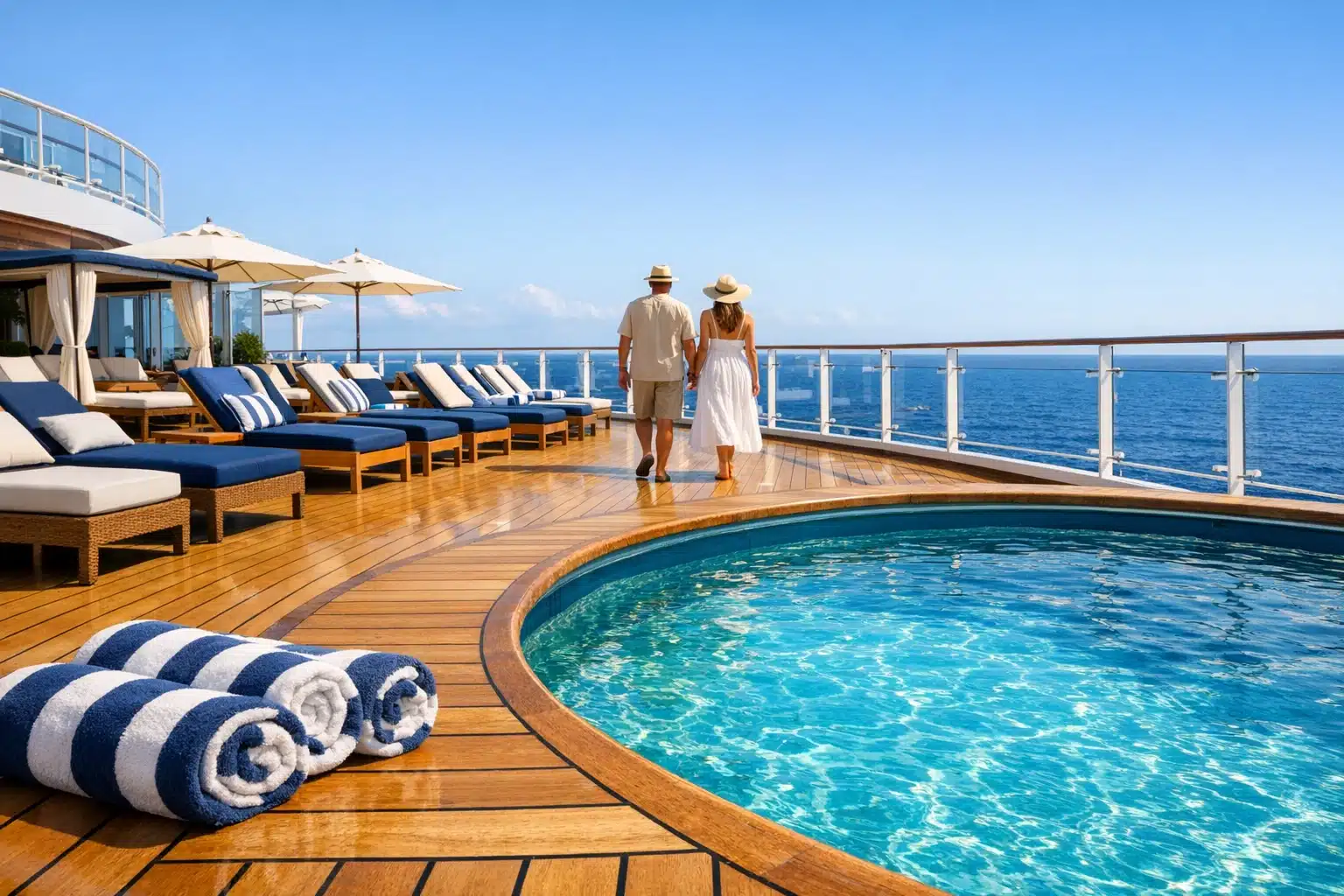
On many Mediterranean cruises, the ship is the hotel that moves you between port days. On a 10-night journey from Southampton toward Greece, the ship becomes something larger: hotel, restaurant district, theatre, observation lounge, reading room, weather shield, and sometimes your favourite destination of the week. That is why booking this trip by itinerary alone can be a mistake. Sea days are not filler here; they are core holiday time.
The first decision is ship style. A large family-focused vessel may offer multiple pools, waterslides, big-production entertainment, and abundant dining options. That can be excellent value for multi-generational groups or travellers who want a lively atmosphere during long stretches at sea. A smaller premium ship, by contrast, may provide calmer public spaces, better service ratios, more destination lectures, and a less crowded feel. Neither approach is automatically better. The better choice depends on how you relax when there is no port outside your window.
Cabin selection also matters more on sea-day-heavy sailings. On a compact port-intensive trip, many people are happy with an inside cabin because they spend so little waking time in it. On this route, a balcony can be easier to justify. Consecutive sea days create opportunities for quiet coffee mornings, sunset views, and private downtime when public decks feel busy. That does not mean a balcony is essential, but its value rises when the journey itself is long and scenic.
Think practically as well:
– The Bay of Biscay can be rougher than first-time cruisers expect, depending on season and weather
– Motion sensitivity remedies are worth packing even if you rarely need them
– Daytime programming becomes important on sea days, especially lectures, music, cinema, crafts, or wellness classes
– Wi-Fi packages can feel expensive, so decide in advance whether constant connection matters to you
– Dining style affects the mood of the trip, from buffet convenience to fixed-time formal dinners
There is also something quietly appealing about the Southampton departure itself. You roll luggage to the terminal or arrive by coach, rail, or car, and the transition into holiday mode is softer than air travel. No cramped short-haul flight, no transfer coach, no waiting for a cabin-ready hotel room. Instead, the journey unfolds gradually. One day you are leaving England; a few days later the light changes, the air feels warmer, and breakfast on deck somehow tastes more Mediterranean. That slow shift is part of the charm, and for the right traveller it is not a compromise at all. It is the point.
Costs, Booking Strategy, and Final Verdict for UK Travellers
Price is where expectations need a final reset. A no-fly cruise from Southampton can look attractively simple because there is no airfare to add, yet the base fare is only part of the real cost. On a 10-night itinerary, you should budget for drinks, gratuities if not already included, shore excursions, specialty dining, travel to Southampton, parking if driving, pre-cruise accommodation if you want a relaxed start, and travel insurance with cruise cover. Once those extras are added, the comparison with a fly-cruise becomes more nuanced.
In many cases, a fly-cruise to Greece can offer better destination density for the money. A short flight of roughly four hours from the UK can place you close to the islands, allowing far more time ashore over the same holiday period. That does not automatically make it better value, though. Value depends on what irritates you most and what you enjoy most. If you dislike airports, baggage restrictions, connection worries, or the stop-start pace of air travel, Southampton may still come out ahead in personal value even if the itinerary is lighter on Greek calls.
When booking, ask these questions before focusing on cabin grade or promotional perks:
– How many Greek ports are genuinely included?
– How many hours will I have in each?
– Is the ship one I would enjoy even if weather altered a port day?
– Does the fare include drinks, tips, or Wi-Fi?
– Am I choosing this for convenience, for island immersion, or for the overall cruise experience?
This style of holiday usually suits three groups especially well. First, seasoned cruisers who enjoy sea days and know that a ship can be part of the pleasure rather than just transport. Second, travellers from the UK who strongly prefer a no-fly break and value a smooth start from a familiar port. Third, holidaymakers who want a taste of Greece within a broader Mediterranean journey rather than a fast-moving island checklist.
It is less ideal for travellers whose priority is seeing as many Greek islands as possible in a short time. For them, a Mediterranean fly-cruise will usually be more efficient and often more satisfying. But if your idea of a good holiday includes long horizons, unhurried mornings at sea, a gradual transition from England to the Aegean mood, and a small number of carefully chosen port days, this can be a deeply enjoyable trip.
Final verdict for the target traveller: book a 10-night Southampton-to-Greece cruise if the freedom from airports and the pleasure of the voyage itself matter almost as much as the islands. Skip it if you want maximum Greek content and minimal transit. The best booking decision is not about choosing the most seductive brochure image; it is about choosing the holiday rhythm that fits you.