A Guide to Clothing Optional Resorts and Spa Experiences
Introduction and Article Outline
Clothing-optional resorts occupy a curious place in modern travel: part wellness escape, part social reset, and part lesson in comfort on your own terms. For some guests, the draw is freedom from dress codes and tan lines; for others, it is the quieter mood that can emerge when status symbols and style signals fade into the background. Add spa rituals, thermal pools, and secluded gardens, and the experience becomes less about novelty and more about ease, routine, and personal choice.
The topic matters because travel preferences are changing. Many travelers now look for stays that feel more intentional, less performative, and more closely tied to well-being. Clothing-optional properties speak to that shift, but they also raise practical questions. What does “optional” really mean in daily resort life? How is a spa-centered property different from a standard resort with a pool and a no-swimwear sun deck? What rules protect privacy, comfort, and consent? These are not small details. They shape whether a trip feels liberating, awkward, luxurious, social, or simply unsuitable.
This article takes a balanced look at both clothing-optional resorts and clothing-optional resorts with spa facilities. It does not treat them as a single category, because they are not the same in design, guest expectations, or atmosphere. Some properties focus on casual socializing and sunshine. Others revolve around hydrotherapy circuits, massage programs, thermal bathing, and slow recovery. Knowing the difference helps travelers choose wisely and arrive prepared.
Outline of the article:
- What clothing-optional resorts are, how they operate, and how they differ from other forms of nude recreation.
- How spa-oriented properties expand the experience through wellness services, quiet zones, and thermal facilities.
- The etiquette, privacy standards, and comfort practices that matter most for first-time guests.
- How to compare destinations, policies, pricing, and guest culture before making a booking.
- A practical conclusion for travelers deciding whether this style of holiday fits their needs.
Read on with an open mind and a practical eye. The goal is not to persuade every traveler to book this kind of stay, but to give clear information so the choice feels informed rather than mysterious.
What Clothing-Optional Resorts Are and How They Differ from Similar Experiences
A clothing-optional resort is a hospitality property where guests may choose whether or not to wear clothing in designated areas, and sometimes throughout most of the resort. The key word is “optional.” At many properties, guests are free to remain dressed, partially covered, or nude depending on the setting, the weather, and the house rules. That flexibility separates these resorts from strictly nudist clubs, where full nudity may be expected in common spaces, and from ordinary beach hotels, where swimwear is the norm and public nudity is not permitted.
In practice, the category covers a wide range of places. Some resorts are adults-only and built around a social vacation atmosphere, with pools, bars, themed dinners, and beach access. Others are quieter boutique properties with gardens, yoga decks, and a more private rhythm. There are also hybrid models: resorts where only one pool, terrace, or sunbathing zone is clothing-optional, while restaurants, lobbies, and activity rooms require wraps or standard attire. This is why reading the policy page matters more than relying on the label alone.
It also helps to compare clothing-optional resorts with similar settings:
- A nude beach is usually a public or semi-public natural area with limited services and a looser social structure.
- A naturist club may emphasize community membership, long-standing etiquette, and recurring social events.
- A European sauna or thermal bath may allow or require nudity for hygiene and cultural reasons, but the setting is wellness-oriented rather than vacation-centered.
- A clothing-optional resort combines lodging, leisure, and managed guest services in one package.
One common misconception is that these resorts are inherently sexualized spaces. In reputable operations, the opposite is usually true. The atmosphere is shaped by conduct rules, staff oversight, and community expectations that prioritize respect. Lewd behavior, intrusive staring, photography without permission, and disruptive conduct are commonly prohibited. In fact, many regular guests describe the environment as less performative than a conventional pool scene, because there is less emphasis on fashion, labels, and body comparison.
Another important difference is guest motivation. Not everyone visits for the same reason. Some are committed naturists. Some are couples curious about a different kind of getaway. Some travelers simply want privacy, sunshine, and a relaxed pace. Others appreciate the body-neutral environment, where age, shape, and style variety tend to be more visible than in highly curated luxury settings. That diversity of motives is part of what makes the category difficult to summarize with a single stereotype. The better way to understand these properties is to see them as hospitality spaces with their own culture, rules, and range of experiences.
Clothing-Optional Resorts and Spa Experiences: What Changes When Wellness Becomes the Focus
When a spa enters the picture, the experience shifts in meaningful ways. A clothing-optional resort with strong wellness facilities is not simply a place where guests can sunbathe without swimwear and then book a massage. The spa element changes the pace, the design language, the service model, and often the guest mindset. Instead of revolving mainly around the pool bar, beach socializing, or casual recreation, the stay may center on restoration: hydrotherapy, body treatments, thermal circuits, quiet gardens, meditation spaces, and carefully managed transitions between heat, water, rest, and nourishment.
This distinction matters because the traveler choosing between a standard clothing-optional resort and a spa-led property is often deciding between two different holiday rhythms. At a resort-first property, the emotional tone may be playful and communal. Activities can include dance nights, group games, or daytime mixers around a central pool. At a spa-first property, the energy is usually quieter. Guests move between treatment rooms, saunas, plunge pools, steam areas, herbal lounges, and shaded terraces. Conversations tend to soften. The day develops in slow layers rather than loud highlights.
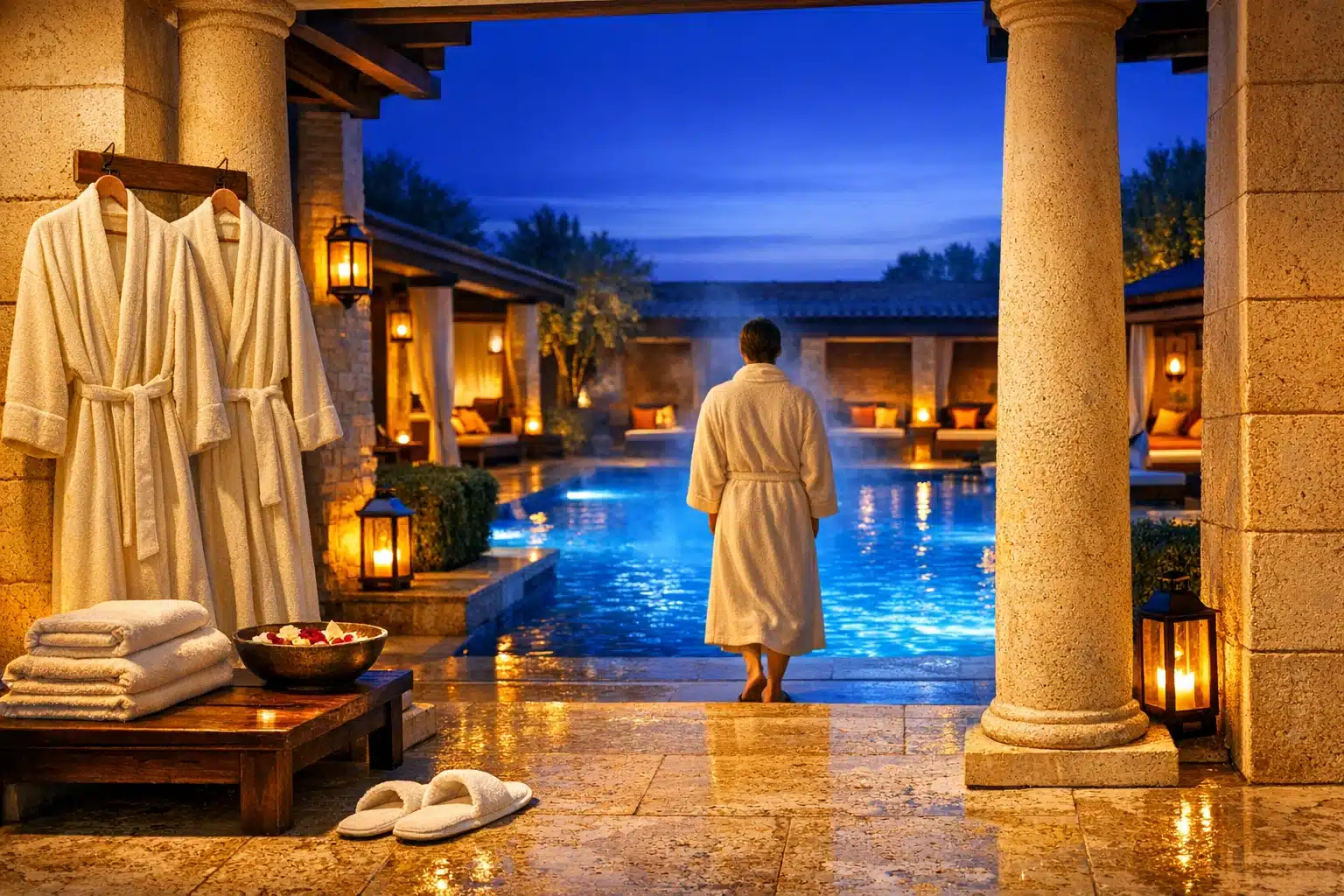
There are also operational differences worth noting. Spa-focused resorts often have more structured rules about where nudity is appropriate and when coverings are required. For example, a thermal zone may permit nudity for comfort or hygiene, while dining rooms, fitness areas, and treatment consultations may require robes or resort wear. Many properties provide towels, slippers, and robes as part of the spa routine, creating a practical middle ground between being fully uncovered and fully dressed. That makes the environment feel less binary and more ceremonial.
Typical features at clothing-optional resorts with spa facilities may include:
- Massage and bodywork ranging from Swedish and deep tissue to hot stone or aromatherapy.
- Hydrotherapy circuits with warm pools, cold plunges, steam rooms, and dry saunas.
- Beauty and skin treatments such as facials, wraps, scrubs, and detox-style rituals.
- Wellness programming like yoga, breathwork, sound sessions, and guided stretching.
- Quiet architecture designed for privacy, including screened pathways, private patios, and adult-only relaxation rooms.
There is also a cultural difference. Spa-oriented settings often attract guests who are interested in comfort, recovery, stress reduction, or sensory calm rather than social novelty. That can make them especially appealing to travelers who are curious about clothing-optional environments but feel uncertain about highly social scenes. A robe, a thermal pool, and a hushed lounge chair under filtered light can be an easier entry point than a crowded pool deck. The experience feels less like stepping into a public statement and more like entering a wellness ritual where the body is simply present, not staged.
For many travelers, that is the strongest argument in favor of the spa version of the concept: it places the focus on how the body feels rather than how it looks. And in hospitality, that is a meaningful distinction.
Etiquette, Privacy, and First-Time Comfort: The Rules That Shape a Good Experience
The success of any clothing-optional stay depends less on the absence of clothing than on the presence of etiquette. Well-run properties rely on clear conduct standards, because guest comfort comes from predictability, boundaries, and mutual respect. For first-time visitors, this is often the most reassuring discovery. A resort may appear free-form from the outside, but its internal culture usually works because the rules are understood and consistently enforced.
The first principle is consent. Guests should never assume that a clothing-optional setting eliminates ordinary social boundaries. It does not. Staring, unsolicited comments about someone’s body, persistent flirting, or intrusive questions can quickly damage the atmosphere. Reputable resorts are generally strict about this, and many reserve the right to remove guests who ignore behavior standards. In other words, respectful hospitality still applies; the dress code is simply different.
Privacy is another major concern. Many travelers want to know how resorts handle phones, cameras, and visibility. Policies vary, but strong properties often limit photography in shared areas or prohibit it altogether unless explicit permission is granted. Some spas go further and ban devices in thermal zones. Staff may also monitor access points, landscaping, and sight lines to reduce unwanted exposure from public roads or neighboring buildings. These details can sound unglamorous, yet they are central to whether guests feel safe enough to relax.
Several etiquette practices are especially common:
- Carry a towel and sit on it in shared seating areas for hygiene and courtesy.
- Bring a cover-up, robe, or wrap for restaurants, receptions, and transit areas if required.
- Ask before taking any photo that might include other people, even in the background.
- Read the property’s social rules on couples, solo travelers, day passes, and visitor access.
- Respect quiet zones, spa timing, and posted expectations for sauna or pool use.
Comfort also has a practical side. First-time guests often imagine a dramatic threshold moment, yet the transition can be gradual. Many people begin by using a robe around the spa, then uncover at the sun deck or thermal pool once they see the mood of the place. Others remain dressed for most of the stay, which is often allowed. That is why “optional” matters so much: a good resort lets guests calibrate their own pace. There is no prize for rushing.
Preparation helps. Pack sunscreen, sandals, a reusable water bottle, and at least one easy layer for movement between zones. Check whether treatments require advance booking, whether spa access is included, and whether communal areas are mixed or gender-specific. Small details reduce uncertainty. And uncertainty, more than nudity, is what usually makes beginners tense.
The best advice for a first visit is simple: observe, follow the house rules, and let the place teach you its rhythm. Once the logistics fade, most guests stop thinking about what people are or are not wearing and start paying attention to the weather, the water temperature, the quality of the massage, and the rare luxury of not having to perform for anyone.
How to Choose the Right Property: Comparing Destination, Culture, Amenities, and Value
Choosing the right clothing-optional resort or spa property is less about finding the “best” listing and more about matching the place to your comfort level, travel style, and reason for going. Two resorts can share the same label while delivering entirely different experiences. One may feel like a cheerful social club in the sun. Another may operate like a discreet wellness retreat with curated treatments and early quiet hours. The difference is not cosmetic; it affects everything from what you pack to whether you will want to return.
Start with the destination itself. Climate matters because clothing-optional environments are closely tied to physical comfort. A tropical beach resort may suit travelers who want outdoor freedom, warm water, and long afternoons by the sea. A mountain or desert spa may appeal to those who prefer thermal pools, dry heat, and a more secluded mood. Accessibility also counts. If reaching the property requires multiple transfers, complex local transport, or a long drive after a flight, the “relaxing” trip may begin with more friction than expected.
Next, compare the property culture. Some useful questions include:
- Is the resort adults-only, couples-focused, or open to a wider range of travelers?
- Are there lively events and social programming, or is the emphasis on silence and recovery?
- Is nudity optional everywhere, limited to certain areas, or expected in wellness zones?
- Does the spa operate as a central feature or merely as an add-on treatment menu?
- What do reviews say about staff professionalism, cleanliness, and rule enforcement?
Pricing deserves a close look because the headline room rate rarely tells the full story. Some properties include spa access, robes, towels, nonalcoholic drinks, and wellness classes in the nightly rate. Others charge separately for thermal facilities, premium loungers, couples treatments, or day-use areas. A less expensive booking can become costlier once extras are added. Value, therefore, is not just about price; it is about what the experience actually includes.
It is also wise to study the guest mix and social atmosphere through official descriptions and credible reviews. Solo travelers may want to know whether the environment feels welcoming and well managed. Couples may care more about privacy, suite design, and treatment packages. A traveler who is body-confident but introverted might prefer a spa-heavy retreat over a party-driven property. A socially adventurous guest may want the opposite. Neither choice is better. The right choice is the one that fits your temperament.
Finally, look for signals of professionalism: transparent policies, clear dress guidance, consistent photography rules, and detailed spa information. These often indicate a property that understands guest vulnerability and has built systems around comfort. In a travel niche where assumptions can easily replace facts, clarity is a real luxury.
Conclusion for Curious Travelers and First-Time Guests
For travelers considering a clothing-optional holiday, the most useful takeaway is this: these properties are not all trying to offer the same thing. Some are relaxed resorts where the mood is social and sun-soaked. Others are spa-led sanctuaries designed around heat, water, rest, and a slower internal pace. Understanding that distinction makes the entire category easier to evaluate. It also prevents the most common booking mistake, which is choosing a place based on a label rather than on its actual culture.
If you are new to the idea, you do not need to arrive with absolute confidence or a fully formed naturist philosophy. You only need to choose a setting that respects your boundaries and gives you room to settle in. For many beginners, a clothing-optional resort with a strong spa component can be the gentlest entry point. The robe-softened transition, the structured quiet, and the focus on comfort rather than display can reduce self-consciousness almost immediately. What feels intimidating in theory often becomes surprisingly ordinary once the day fills with practical pleasures: a warm stone under bare feet, a cold plunge after steam, a book by the pool, a late afternoon treatment, and dinner in a wrap as the light fades.
For more experienced travelers, the appeal may be different. You may already know whether you prefer social energy, beach access, thermal bathing, or boutique privacy. In that case, the value of careful comparison becomes even greater. The best stay is rarely the most advertised one; it is the one whose rules, guest culture, and amenities line up with your habits and expectations.
Before booking, keep a short checklist in mind:
- Read the property’s clothing, photography, and spa access policies carefully.
- Confirm whether dining, treatments, and wellness facilities are included or priced separately.
- Match the resort atmosphere to your personality, not just to your curiosity.
- Choose a destination whose climate and travel logistics support genuine relaxation.
- Give yourself permission to participate at your own pace.
In the end, clothing-optional resorts and spa experiences are best understood as hospitality formats, not as shock-value concepts. Their quality depends on management, design, etiquette, and fit. For the right traveler, they can offer something increasingly rare in modern travel: a setting where comfort is not performed, but quietly felt.