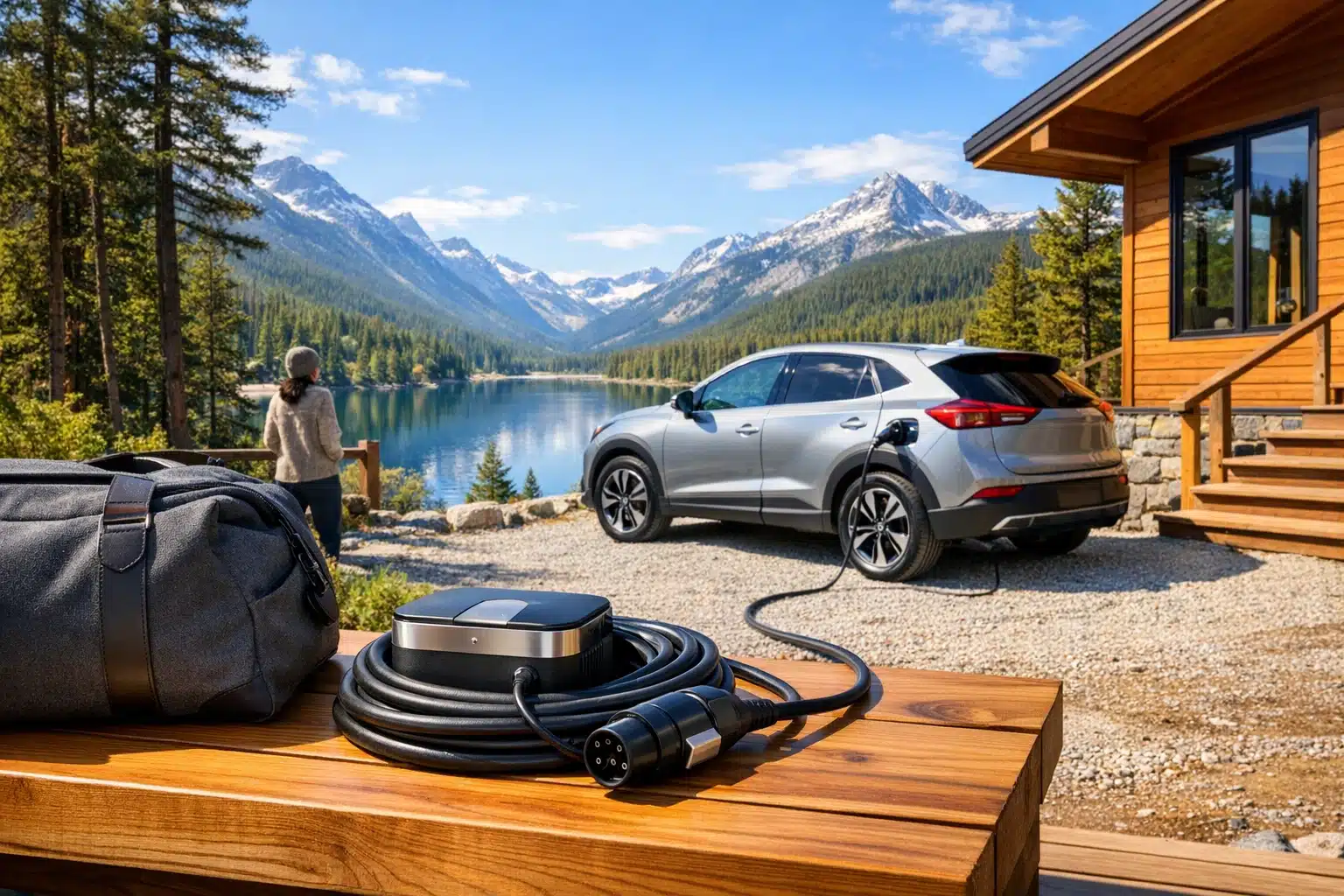
 Artificially generated image
 Portable EV Chargers: A Guide to Compact and Mini Models
Portable EV chargers are becoming a practical tool for drivers who want more freedom than a fixed wall box can offer. Compact and mini models are especially appealing because they fit easily in a trunk, apartment garage, or travel bag without turning charging into a logistical chore. This guide explains how these units work, where they make sense, and what trade-offs matter most. If you want a charger that is small in size but sensible in real-world use, the details ahead will help you choose well.
Outline and Context: Why Portable EV Chargers Matter
Before comparing models, it helps to map the road ahead. This article follows a simple outline: first, it explains why portable charging has become relevant for modern EV ownership; next, it breaks down how these devices work and what charging speeds to expect; then it compares standard portable units with smaller mini EV chargers; after that, it shows how to choose safely and realistically; finally, it closes with practical recommendations for different kinds of drivers. That structure matters because portable charging is often marketed as a universal solution, when in reality it is a tool with very specific strengths.
Portable EV chargers are especially useful because EV ownership does not look the same for everyone. A suburban homeowner with a dedicated driveway has different needs than an apartment renter, a sales representative driving across several states, or a family that wants a backup charger during holidays. In many cases, a fixed home wall unit remains the most convenient long-term setup. Yet portability introduces flexibility that can be surprisingly valuable. A charger that travels with the car can turn a regular outlet at a friend’s house, a rental cabin, or a workplace into a charging opportunity. It is a bit like carrying an umbrella on a cloudy day: most of the time it stays folded, but when the weather shifts, it suddenly feels essential.
Mini EV chargers take that idea even further by shrinking the package. These models aim to reduce weight, cable bulk, and storage space. Instead of feeling like a heavy accessory that lives under other luggage, a mini unit is designed to disappear into a side compartment or small storage bag. For city drivers, this matters. Trunks are already crowded with groceries, strollers, sports gear, and charging cables for other devices. A smaller charger can fit into everyday life more naturally.
Key questions worth keeping in mind are:
• How much power can a portable charger actually deliver?
• What makes a charger “mini” beyond simple marketing language?
• Which safety certifications and connector types matter?
• When is a portable model smart, and when is a hardwired wall unit the better answer?
The importance of this topic is growing as EV adoption expands. More electric vehicles now reach buyers who do not have perfect charging conditions at home. Portable and compact chargers will not solve every infrastructure challenge, but they can reduce friction, improve resilience, and give drivers more control over where and how they top up their battery.
How Portable EV Chargers Work: Power, Connectors, and Charging Speed
Although many people call them chargers, most portable EV chargers are technically portable EVSE units, short for Electric Vehicle Supply Equipment. The actual battery charger usually sits inside the car. The portable device mainly manages the safe flow of electricity between the outlet and the vehicle. This distinction may sound academic, but it helps explain why outlet type, amperage, and cable quality matter so much. The device is not creating power out of thin air; it is safely delivering what the circuit can provide.
In practical use, portable units usually fall into two broad categories. Level 1 charging typically uses a standard household outlet in places such as North America, often delivering around 120 volts and 12 to 16 amps. That translates to roughly 1.4 to 1.9 kilowatts. For many EVs, this may add only a modest amount of range per hour, often enough for overnight replenishment after short daily trips. Level 2 portable chargers step up to a 240-volt source and can commonly deliver 16, 24, 32, or sometimes 40 amps, depending on the model and the circuit. That can raise charging power significantly, often into the 3.3 to 7.7 kilowatt range, with some setups going higher where supported.
Charging speed depends on more than the charger alone. The vehicle’s onboard charger sets an upper limit, and the available electrical circuit may impose another. For example, plugging a 32-amp portable unit into a circuit that supports only 16 amps will not magically create faster charging. Similarly, a car with a lower onboard AC charging limit will not take full advantage of a higher-rated device. This is why compatibility matters more than headline numbers.
Connector standards also shape the experience. Depending on the market and vehicle, drivers may encounter connectors such as J1772, NACS, or Type 2 for AC charging. Some cars require an adapter, while others connect directly. A well-designed portable charger often includes clear indicators for power, fault status, and active charging, making it easier to diagnose problems without guesswork.
Important technical factors include:
• Voltage support and plug type
• Adjustable amperage settings
• Cable length and thickness
• Weather resistance and operating temperature
• Electrical safety certification from a recognized testing body
One especially important safety principle is the continuous-load rule. EV charging can run for hours, so the circuit must be able to handle sustained current, not just brief peaks. That is why many electricians and charging guides refer to the 80 percent rule for continuous loads. In short, a portable EV charger is only as good as the circuit, connector, and safety design around it. Understanding that makes the buying decision much more grounded and much less dependent on flashy marketing.
Portable EV Chargers vs Mini EV Chargers: What Changes When Size Shrinks
The phrase “mini EV charger” sounds straightforward, but size reduction changes more than appearance. Standard portable chargers already aim to be movable, yet many are still fairly bulky. They may include thick cable runs, a large control box, and a storage case that takes up a noticeable chunk of trunk space. Mini models try to solve that problem by trimming dimensions, reducing overall weight, and simplifying the body design. The result is a product that feels easier to carry, store, and deploy, especially when charging is part of an unpredictable routine rather than a fixed home habit.
The main advantage of a mini charger is convenience. Drivers who travel often, rely on destination charging, or keep emergency gear in the vehicle may prefer something that slips into a corner without becoming a permanent obstacle. For apartment residents, compactness can be even more valuable. If the charger needs to move between a parking space, a closet, and the car every day, every kilogram and every extra coil of cable becomes part of the user experience. A smaller device can turn a mildly annoying task into one that feels almost effortless.
Still, mini designs involve trade-offs. Compact units may have shorter cables, fewer cooling margins, simpler display interfaces, or lower maximum amperage than larger portable chargers. That does not make them inferior; it simply means they are optimized differently. A traveler who mainly needs a reliable backup may welcome those compromises. Someone charging a large battery EV several times a week may prefer a larger, more capable unit that offers better durability and a higher sustained power ceiling.
A useful comparison looks like this:
• Standard portable charger: usually stronger on cable reach, heat management, and feature set
• Mini EV charger: usually better for storage, daily carry, and occasional charging flexibility
• Standard portable charger: often a better fit for garages, home backup use, and repeated Level 2 charging
• Mini EV charger: often a better fit for renters, business travel, and compact vehicles with limited cargo space
There is also a design psychology at work. Products that are easier to pack are more likely to be brought along. A charger left at home because it is awkward or heavy has no emergency value at all. This is one reason compact models attract attention even when their raw specifications are modest. They are built around realistic behavior, not just maximum output. In a world where convenience often decides what actually gets used, mini chargers occupy a meaningful niche. They may not be the star athlete of EV charging gear, but they are often the dependable utility player that quietly keeps the trip moving.
Choosing the Right Model: Safety, Compatibility, Features, and Cost
Buying a portable EV charger should start with the electrical environment, not the product page. Many mistakes happen because shoppers focus on cable styling, app controls, or compact dimensions before confirming whether the charger matches the outlets they can actually use. A portable unit is only useful if it works safely with your home, workplace, travel habits, and vehicle connector standard. That means checking plug type, circuit rating, voltage availability, and the car’s AC charging limit before comparing anything else.
Safety should never be treated as a premium add-on. Look for recognized certification or testing marks appropriate to your market, robust strain relief on the cable ends, clear fault protection, and weather resistance if the device may be used outdoors. Portable chargers operate in the real world, where cords are bent, garage floors get wet, and temperatures swing from summer heat to winter cold. A well-built unit should communicate confidence without pretending to be indestructible. It should also allow sensible current adjustment where needed, because not every outlet is suited to the charger’s maximum capability.
Feature selection depends on how the charger will be used. Some drivers benefit from smart functions such as delayed charging, energy monitoring, or app-based scheduling. These can be useful when electricity rates vary by time of day. Others simply need a dependable plug-and-charge device with a small display and a solid carrying case. More technology is not automatically better. In fact, for backup travel use, simplicity can be an asset because fewer settings can mean less confusion when charging in unfamiliar places.
When comparing cost, think beyond the sticker price:
• Purchase cost of the charger itself
• Possible need for outlet upgrades or professional electrical work
• Durability over years of use
• Warranty clarity and customer support
• Accessories such as adapters, wall hooks, or cable organizers
One common misunderstanding is assuming that a more powerful portable charger always saves money by charging faster. In practice, faster charging only helps if the vehicle and circuit can support it. Another mistake is relying on random outlet adapters to bridge incompatibilities. Adapters are not inherently bad, but they must be chosen carefully and used within safe electrical limits. Improvised setups are where convenience can drift into risk.
A good buying process is simple: identify the outlets you will realistically use, confirm your vehicle connector and charging limits, decide whether your priority is speed or compactness, and then compare build quality and safety features. That method may feel less glamorous than chasing headline specs, but it leads to a better long-term match. In portable charging, the smartest product is usually the one that fits your routine with the fewest compromises.
Who Should Buy What? Practical Recommendations and Final Thoughts
The best portable EV charger is not the most expensive unit, the smallest device, or the one with the longest feature list. It is the model that fits the way a specific driver lives and charges. For commuters with predictable mileage and a stable home parking setup, a fixed wall charger may still be the better primary solution. In that case, a portable charger works best as backup equipment, useful for travel, emergencies, or temporary stays. A standard portable model with solid cable length and dependable Level 2 capability often makes sense for this audience because performance and flexibility matter more than shaving every last centimeter from the housing.
Mini EV chargers shine for drivers whose lives are less settled around a single charging point. Renters, apartment dwellers, people who alternate between multiple residences, and frequent travelers often benefit most from compact designs. A small charger is easier to store, easier to carry, and less likely to be left behind. That last point matters more than it may seem. Charging gear only provides peace of mind when it actually travels with the car. For a city driver with tight parking and limited cargo room, the mini format can feel like the difference between “I should probably bring this” and “I already packed it.”
There are also drivers who should be cautious. If you own a large battery EV, drive long daily distances, and depend heavily on home charging recovery, a mini charger may feel too limited unless it still offers the amperage and cable reach your setup requires. Likewise, anyone using older household wiring, outdoor outlets of uncertain quality, or shared building infrastructure should prioritize electrical inspection and safety over convenience. Portable charging is practical, but it is not a workaround for poor wiring.
A helpful audience-based summary looks like this:
• Daily suburban commuter: portable backup is useful, fixed wall charging may remain the main solution
• Apartment resident: compact or mini charger can be especially practical
• Frequent road tripper: portable Level 2 support and multiple plug options may be worth the extra size
• Occasional EV user or plug-in hybrid owner: a simple, reliable compact charger may be enough
• Fleet or business user: consistency, durability, and service support usually outweigh ultra-small design
In the end, portable and mini EV chargers are about reducing friction. They make electric driving more adaptable, not magical. Choose one with honest specifications, strong safety credentials, and a design that matches your real habits. If you do that, the charger stops being just another accessory and becomes a quiet, useful part of owning an EV—ready when the next parking space, destination, or detour asks for a little planning and a little power.