12-Day Tour of Australia for Seniors
Planning Australia for later-life travel is less about chasing every landmark and more about choosing the right rhythm. In twelve days, older travellers can enjoy harbour views, native wildlife, tropical coastlines, and desert light without turning the holiday into an endurance test. The secret is to pair short flights with central hotels, easy excursions, and unhurried afternoons. Done well, the journey feels expansive rather than tiring, and that is where Australia begins to show its real charm.
1. Outline of the 12-Day Australia Tour and Why It Works Well for Seniors
A 12-day tour of Australia for seniors or elderly travellers should not try to conquer the whole continent. Australia is roughly the size of the continental United States, and the distances between major highlights can be dramatic. Sydney to Melbourne is about a 90-minute flight, while Melbourne to Cairns is closer to three hours in the air. Once those numbers are understood, the smartest approach becomes clear: choose a few iconic regions, build in rest, and travel in a sequence that limits backtracking. That is why this sample route focuses on Sydney, Melbourne, Cairns, and Uluru. Together, they show four very different faces of Australia without forcing constant packing and unpacking.
This itinerary is especially suitable for older travellers because it balances urban comfort with natural beauty. Sydney offers easy sightseeing by ferry and harbour cruise. Melbourne provides culture, gardens, and a slower city style. Cairns opens the door to the Great Barrier Reef and rainforest experiences without demanding strenuous activity. Uluru adds a memorable finale that feels quietly profound rather than overwhelming. For many senior travellers, this combination works better than trying to add too many regional stops or long coach transfers.
Here is a clear outline of the journey:
- Day 1: Arrive in Sydney and settle in
- Day 2: Sydney Harbour, Opera House area, and a relaxed cruise
- Day 3: Sydney at an easy pace with optional gardens, museum, or beach visit
- Day 4: Fly to Melbourne and enjoy a gentle city introduction
- Day 5: Melbourne highlights, gardens, laneways, and river or tram touring
- Day 6: Great Ocean Road or an easier scenic alternative
- Day 7: Fly to Cairns and rest in the tropics
- Day 8: Reef day with a low-impact cruise option
- Day 9: Rainforest or scenic railway experience
- Day 10: Travel to Uluru and watch sunset in the desert
- Day 11: Cultural touring, easy walks, and rest time
- Day 12: Departure or onward flight
Compared with a fast-moving backpacker route, this plan cuts down on fatigue. Compared with a cruise-only holiday, it allows more contact with the landscapes that make Australia distinctive. It also gives room for mobility needs. Travellers who walk confidently can add short excursions, while those who prefer fewer steps can lean on guided coaches, harbour cruises, river boats, and accessible lookout points. In practical terms, this matters more than romantic ideas about seeing everything. A good senior tour is not smaller because it is limited; it is better because it is edited. Australia rewards that kind of wisdom. It invites you to look outward at great distances, but it also asks you to travel with patience, which often suits mature travellers very well.
2. Days 1 to 3: Sydney at a Comfortable Pace for Older Travellers
Sydney is an excellent first stop for a 12-day tour of Australia for seniors because it combines big-name attractions with straightforward logistics. If you stay near Circular Quay, The Rocks, or Darling Harbour, many key sights are close together and public transport is simple to understand. Ferries, light rail, and taxis make it possible to enjoy the city without excessive walking. After a long international flight, that convenience matters. Day 1 should be deliberately light: airport transfer, hotel check-in, a short stroll for fresh air, and an early dinner. Older travellers often enjoy the city more when they resist the urge to do too much on arrival.
Day 2 is ideal for classic harbour sightseeing. Start with Circular Quay, where the Opera House and Harbour Bridge create one of the world’s most recognizable waterfront scenes. A harbour cruise is often a better choice than a long day on foot because it gives broad views with very little physical strain. Many tours include commentary, comfortable seating, and refreshments, which can turn transport into part of the pleasure. If energy allows, The Rocks offers historic lanes, old sandstone buildings, and cafés where you can sit with a coffee and watch the city move around you. Sydney’s beauty often arrives in layers: ferries gliding past, gulls circling overhead, sunlight on the water like shaken silver.
Day 3 can be tailored to mobility and interests. Travellers who enjoy gardens may prefer the Royal Botanic Garden, where paths are gentler and benches are plentiful. Those interested in Australian history might choose the Australian Museum or a guided city coach tour. For a coastal taste without a demanding hike, an easy visit to Bondi can be enjoyable, especially outside peak heat. This is where comparison becomes useful. A younger visitor may spend the day climbing stairs, beach-hopping, or walking long coastal tracks. A senior-focused version of Sydney should emphasize comfort, shade, transport access, and time to pause. That does not make the experience lesser. In many ways, it makes it richer.
Practical details are worth noting. Sydney weather can change quickly, so a light jacket, hat, and refillable water bottle are sensible. Distances that look short on a map can feel longer due to slopes, traffic lights, and crowds. Choosing one morning activity and one afternoon activity is usually more realistic than stacking several major stops together. Older travellers often benefit from booking one guided excursion and keeping the rest flexible. That way, there is support when it helps and freedom when it is welcome. Sydney sets the tone for the whole trip: iconic, comfortable, and full of rewards for those who move through it with ease instead of urgency.
3. Days 4 to 6: Melbourne, Scenic Drives, and Gentler Cultural Touring
After Sydney, Melbourne offers a noticeably different mood. The flight is short, usually around 90 minutes, and the city itself feels more intimate in pace, even though it is a major urban center. For seniors and elderly travellers, this change can be refreshing. Sydney dazzles with water and scale, while Melbourne draws people in with gardens, cafés, galleries, and neighborhoods that unfold gradually. Day 4 should again be treated as a transfer day with a soft landing. Check into a centrally located hotel, preferably near the free tram zone, and spend the afternoon on a simple orientation ride. The free city trams are especially useful for older visitors because they reduce the need for repeated short walks between sights.
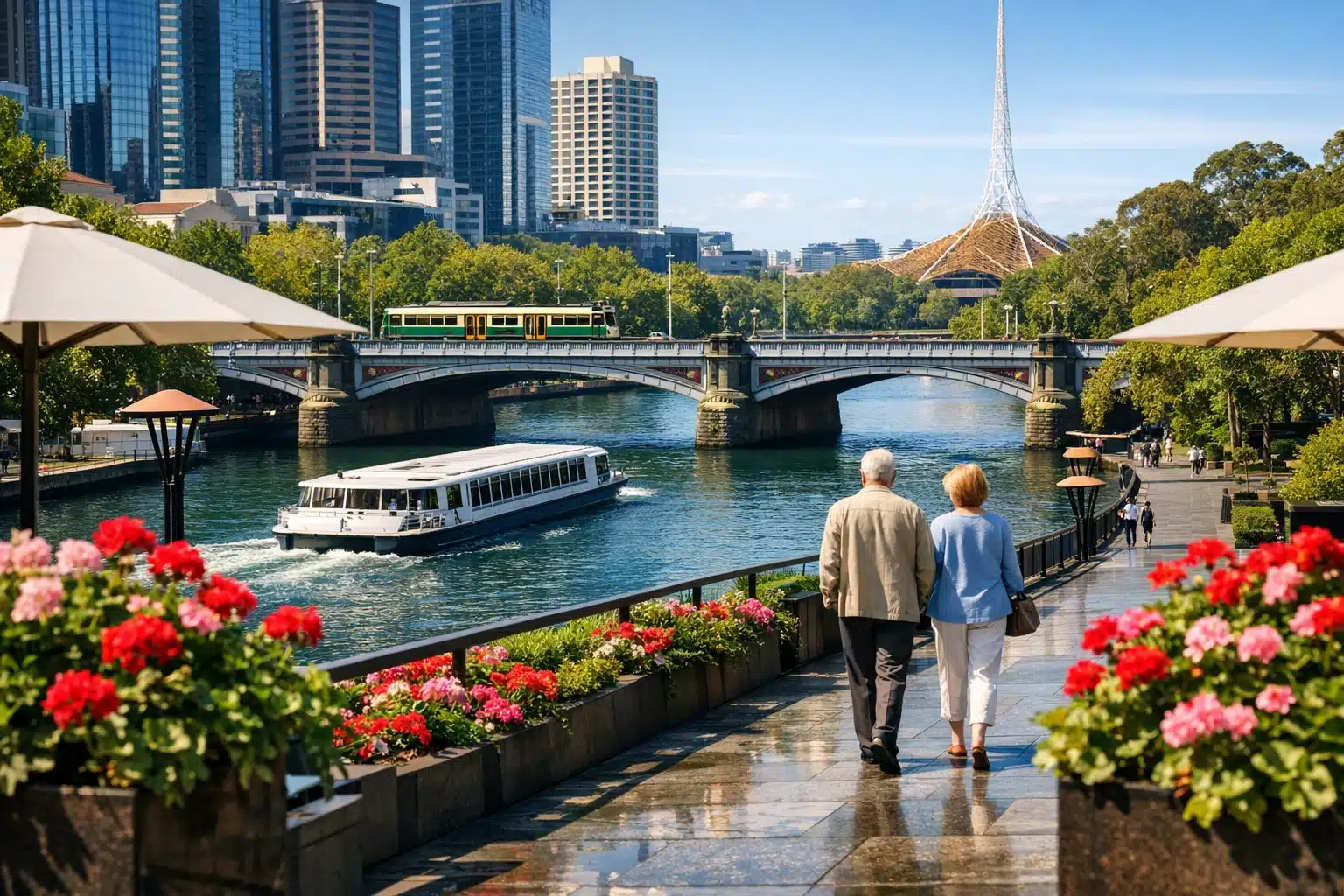
Day 5 is where Melbourne shines. Federation Square, the National Gallery of Victoria, the Royal Botanic Gardens, and a Yarra River cruise can all be combined into a satisfying day without excessive exertion. The city’s famous laneways are charming, but some surfaces are uneven, so they are best approached selectively rather than as an all-day wandering plan. Seniors who enjoy food and local character may appreciate a guided market visit or a relaxed lunch in a neighborhood such as Southbank or Carlton. Melbourne also tends to reward weather flexibility. If the day turns cool or wet, museums and galleries are easy substitutes. If the sun appears, the gardens and river areas feel inviting and calm.
Day 6 is the moment to choose between ambition and comfort. Many visitors dream of the Great Ocean Road, and it is undeniably beautiful. The Twelve Apostles, cliff views, and ocean scenery create one of Australia’s most celebrated road journeys. However, it is a long day from Melbourne, often 12 hours or more as a round trip. For some elderly travellers, that is manageable with a premium coach and frequent comfort stops. For others, it may be wiser to choose a gentler alternative such as the Dandenong Ranges, a winery lunch in the Yarra Valley, or a visit to Phillip Island with seated wildlife viewing. Comparing the options honestly is important. The Great Ocean Road offers grand spectacle but more hours in transit. A shorter regional excursion offers less mileage yet often more comfort.
When planning this part of the trip, think in terms of return on energy rather than return on distance. That mindset helps older travellers make satisfying choices. Melbourne supports that approach beautifully. It is a city where sitting down is part of the experience, where a tram ride can be sightseeing, and where culture does not require rushing. By the end of Day 6, travellers usually feel they have seen another side of Australia: less dramatic at first glance than Sydney, perhaps, but deeply enjoyable in a quieter register. For many mature visitors, Melbourne becomes the city they did not expect to love and then remember fondly long after the flight home.
4. Days 7 to 9: Cairns, the Reef, and Tropical Experiences Without Overexertion
Days 7 to 9 bring the tour north to Cairns, a practical base for both the Great Barrier Reef and the Wet Tropics rainforest. The flight from Melbourne is longer, usually around three hours, so Day 7 should once again be paced carefully. The climate will also feel different. Cairns is warmer and more humid than Sydney or Melbourne, especially in the Australian summer months. For older travellers, that means hydration, breathable clothing, sun protection, and realistic expectations about afternoon heat. A quiet evening on the Cairns Esplanade is often enough for the first day. The waterfront area is pleasant, flat in parts, and easy to enjoy without committing to a major outing.
Day 8 is often the highlight for first-time visitors: a trip to the Great Barrier Reef. The key is choosing the right style of excursion. Not every reef experience requires snorkeling or swimming. Many operators offer stable catamarans, semi-submersible reef viewing, glass-bottom boats, and pontoons with shaded seating. These options can be especially suitable for seniors who want to see coral gardens and marine life without getting into the water. Travellers who are confident swimmers may still choose a guided snorkel session, but there is no need to treat that as the default. The reef remains astonishing whether it is viewed through a mask or through wide glass panels under a bright tropical sky.
Day 9 works well as a rainforest day. One of the best senior-friendly combinations is the Kuranda Scenic Railway and Skyrail Rainforest Cableway. It offers magnificent views with relatively little physical strain and breaks up the day into manageable segments. The railway provides a classic heritage travel experience, while the cableway glides above dense green canopy in a way that feels almost dreamlike. Another option is the Daintree region, but that usually involves longer road travel, so it may suit more energetic groups. As always, comparison helps. Kuranda is easier and more contained; the Daintree is wilder and more ambitious.
This part of the itinerary also calls for practical awareness. Tropical rain can appear suddenly, boat motion may bother some travellers, and the sun is stronger than many visitors expect. A few small habits improve comfort significantly:
- Carry water and sip regularly, even if you do not feel thirsty
- Choose morning departures when possible, as they are often cooler
- Pack a light rain layer and non-slip shoes
- Ask operators in advance about boarding steps, seating, and toilet access
Cairns adds warmth, color, and softness to the tour. After the cities of the south, the north feels almost like another country within the same nation. Palms sway, parrots call, and the air seems to carry both salt and rain. For older travellers, it can be a wonderfully restorative stage of the journey, provided the pace remains measured and the choices remain sensible.
5. Days 10 to 12: Uluru, Final Planning Advice, and a Thoughtful Conclusion for Senior Travellers
The last part of this 12-day tour shifts from tropical water to desert silence. Reaching Uluru usually involves a connecting flight, so Day 10 should be planned with care and patience. It is not a day for ambitious sightseeing on arrival. Instead, the goal is to settle in, rest, and then experience one unforgettable moment: sunset at Uluru. Few places justify quiet quite like this one. As the light changes, the rock does not merely turn red. It moves through rust, amber, mauve, and deep shadow, as if the landscape is breathing in color. For many older travellers, this is the emotional peak of the trip because it asks nothing except attention.
Day 11 can include an easier base-area visit, the Cultural Centre, and selected viewpoints with limited walking. Full circumambulation of Uluru is not necessary for a meaningful visit, especially for elderly guests who prefer shorter distances. Guided coach experiences are often the best option because they combine interpretation, transport, and climate awareness. Depending on the season, sunrise can also be rewarding, though early starts should be weighed against energy levels. Another attractive addition is the Field of Light installation, which is visually memorable and generally manageable when booked with transport assistance. What matters most at Uluru is not how much ground you cover but how well you understand the place, including its significance to the Anangu people.
Day 12 is departure day, but it is also the right moment to reflect on what makes a senior-friendly Australian itinerary successful. It is not luxury alone, though comfort certainly helps. It is thoughtful design. Good later-life travel depends on hotels in central locations, realistic transfer times, and enough unscheduled time to recover from weather, flights, or simple tiredness. Group tours can reduce stress because baggage handling, tickets, and logistics are managed for you. Independent travel offers more flexibility, but it requires more decision-making. Neither style is universally better; the right choice depends on confidence, mobility, and how much structure feels reassuring.
A practical checklist for seniors and elderly travellers includes:
- Travel insurance that covers pre-existing conditions if relevant
- A written medication list and enough supply for the full journey
- Compression socks or movement breaks on longer flights
- Sun hat, layered clothing, and sturdy but comfortable shoes
- Room requests such as elevators, walk-in showers, or ground-floor access where available
In summary, Australia can absolutely be enjoyed in twelve days by older travellers when the trip is built around comfort, sequencing, and choice. Sydney offers easy icons, Melbourne adds culture and calm, Cairns brings nature within reach, and Uluru provides a powerful closing note. The route is broad enough to feel significant but measured enough to remain enjoyable. For seniors who want discovery without unnecessary strain, this kind of itinerary does not shrink the country. It opens it in the right order, at the right speed, and with the kind of care that makes travel feel generous rather than demanding.