Top 5 Peaceful Towns in South Carolina
Not every move or getaway calls for bright crowds and packed itineraries; sometimes the real luxury is a town that lets the day unfold gently. In South Carolina, that kind of calm appears in many forms, from salt-air neighborhoods and horse-country avenues to compact downtowns where people still greet one another by name. The five places below stand out not because they are flashy, but because they balance scenery, community life, and a slower rhythm in a way many readers will find deeply appealing.
This article is organized as a practical guide as much as a ranking. Rather than treating peace as a vague feeling, it looks at visible qualities that shape daily life: walkability, access to nature, noise levels, historic character, cultural depth, and how strongly each town resists the pressure of nonstop growth. The outline below previews the five featured places and the kind of calm each one offers.
- Beaufort for Lowcountry beauty, waterfront walks, and a graceful historic core
- Georgetown for riverfront charm and a quieter coastal setting than major resort zones
- Aiken for tree-lined streets, equestrian culture, and unusually strong access to green space
- Camden for inland history, small-scale living, and an easy everyday pace
- Walhalla for foothill scenery, mountain access, and a distinctly tucked-away atmosphere
1. Beaufort: Lowcountry Calm with Water, History, and Everyday Grace
Beaufort earns its place near the top of any conversation about peaceful South Carolina towns because it delivers something many communities struggle to preserve: beauty without relentless hurry. Located on Port Royal Island in the Lowcountry, Beaufort had a population of roughly 13,600 in the 2020 census, which means it is large enough to support restaurants, galleries, and civic life while still feeling intimate. The town is known for its historic district, antebellum architecture, and streets draped in live oaks and Spanish moss. Those details are visually striking, but the deeper appeal is how they shape the pace of life. Beaufort invites walking, lingering, and noticing.
Unlike busier coastal destinations that can feel crowded during peak tourism months, Beaufort tends to project a steadier rhythm. Its waterfront park is a good example of that character. People come to stroll, sit by the river, watch boats pass, or catch a local event, yet the atmosphere rarely turns frantic. The same is true of downtown, where independent shops and restaurants contribute energy without creating the sensory overload that sometimes defines larger visitor-heavy places. In practical terms, Beaufort offers a rare balance: it feels refined and well-loved, but not aggressively commercial.
Part of Beaufort’s peaceful identity comes from the range of experiences available within a short distance. Residents and visitors can enjoy quiet routines without feeling isolated.
- Walkable historic streets make casual outings feel restorative rather than stressful.
- Water access and marsh views create an almost constant sense of openness.
- Nearby destinations such as Hunting Island State Park add beaches, trails, and broader natural scenery.
Beaufort also compares well with other South Carolina coastal towns because it does not rely on just one type of appeal. It is not only scenic, and it is not only historic. It works for people who want cultural texture, a strong visual identity, and an environment where everyday errands can still feel pleasant. That matters for retirees considering a slower lifestyle, for remote workers hoping to trade noise for atmosphere, and for travelers who want a weekend that feels restorative instead of overprogrammed. If peace means hearing more birds than traffic and ending the day with light on the water instead of another rushed obligation, Beaufort makes a convincing case.
2. Georgetown: A Riverfront Town That Feels Quieter Than the Coast Around It
Georgetown is one of the most interesting choices on this list because it sits in a part of South Carolina that many people associate with beach traffic and resort movement, yet the town itself feels notably calmer than that regional backdrop. With a population of about 8,400 in the 2020 census, Georgetown remains small enough to feel manageable and personal. It is located on the Sampit River near Winyah Bay, and that waterfront setting gives the town both beauty and breathing room. The result is a place where maritime history and a measured pace coexist naturally.
One of Georgetown’s biggest strengths is contrast. It lies between Charleston and Myrtle Beach, two destinations that draw heavy attention for understandable reasons, but Georgetown offers a different coastal experience entirely. Its historic district, Harborwalk, and older homes create a sense of place rooted in continuity rather than spectacle. There is enough to do, yet the town seldom pushes itself toward the kind of constant entertainment cycle that can make other destinations feel exhausting. In Georgetown, calm is not the absence of life; it is the absence of pressure.
That distinction becomes clearer when you spend time downtown. The streets encourage browsing instead of rushing, and the waterfront is the sort of place where a short walk can easily turn into an hour of quiet observation. Fishing boats, changing light, and river breezes do a lot of emotional work here. This is a town that rewards attention to small moments. A cup of coffee, a bench with a view, and a bit of unclaimed time suddenly feel sufficient.
Georgetown also suits people who want a quieter coastal base without losing access to broader attractions. It offers a useful middle ground:
- More relaxed than major tourist centers along the coast
- Rich in history, including museums and preserved architecture
- Close enough to beaches and nature areas for easy day trips
For people deciding between a resort town and a genuinely livable small city, Georgetown can be a smart alternative. It has enough charm for visitors, enough services for residents, and enough physical beauty to make ordinary days feel textured. Families may appreciate the manageable scale, couples may enjoy the romantic waterfront atmosphere, and retirees may value the slower, more grounded pattern of life. In a state full of coastal competition, Georgetown stands out by refusing to be noisy about its qualities. It simply lets them accumulate, quietly and persuasively.
3. Aiken: Green Space, Horse Country, and a Peaceful Town with Real Substance
Aiken offers a version of peace that is different from the coast entirely. Instead of marshes, tides, and harbor views, it presents broad avenues, horse-country traditions, and one of the most distinctive landscapes in the state. With a population of roughly 31,500 in the 2020 census, Aiken is the largest town on this list, but it still feels composed rather than hectic. In fact, its size is part of the appeal. Aiken has enough infrastructure, shopping, dining, and cultural activity to support long-term comfort, yet it retains a spacious character that many growing towns lose.
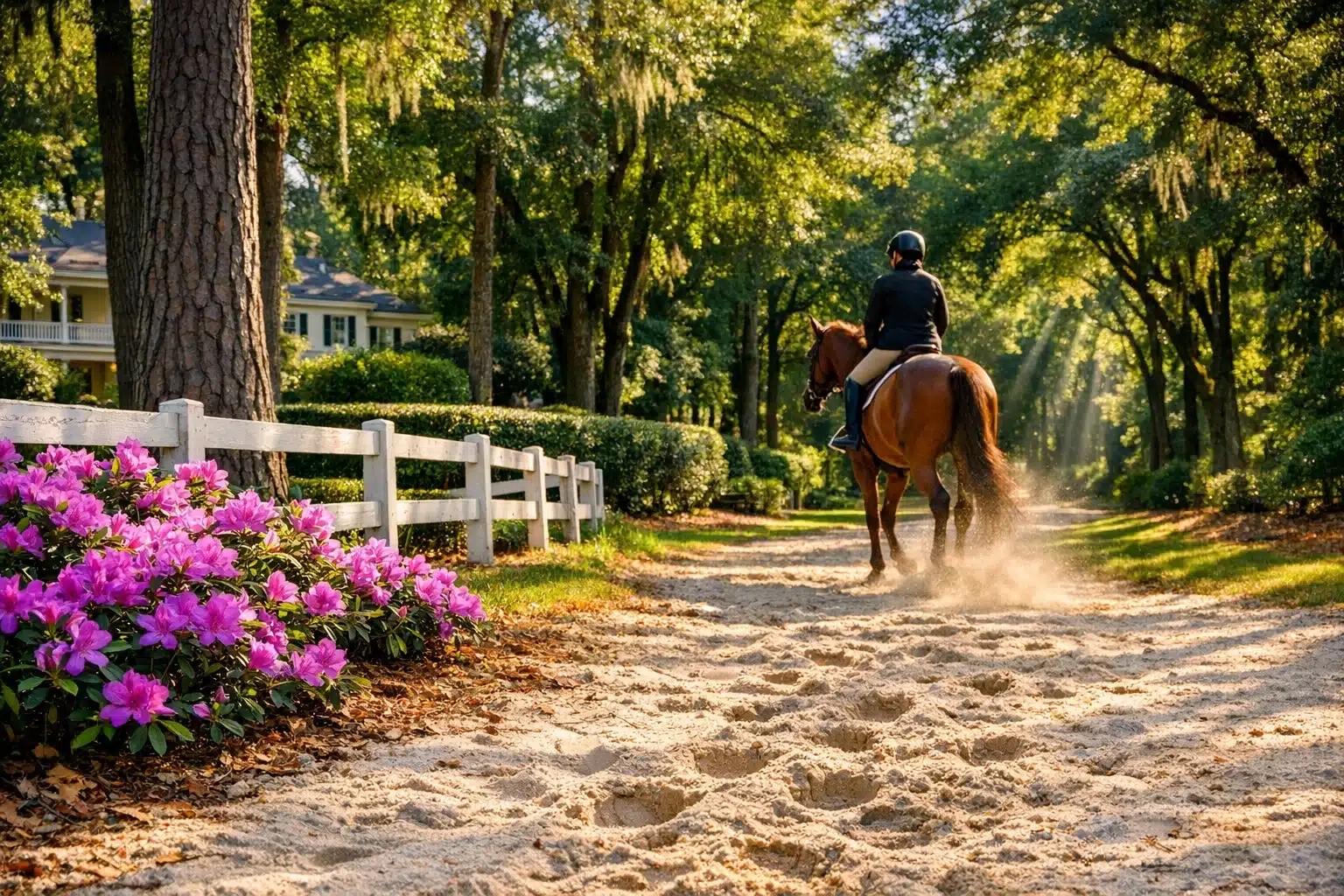
The town’s identity is inseparable from its equestrian heritage. Horses are not a decorative branding exercise here; they are part of the local rhythm. That history is visible in training tracks, riding culture, and the broad, landscaped streets that give Aiken such a distinctive look. The famous Hitchcock Woods, a roughly 2,100-acre urban forest, strengthens that atmosphere even further. Very few towns can claim access to a green space of that scale so close to daily life. For residents, that means trails, shade, and a strong visual buffer against the kind of hard-edged development that often makes communities feel noisy or overstimulating.
Aiken’s peace also comes from how well it balances elegance and practicality. Some quiet towns can feel too remote or too limited for people who still want cultural stimulation, but Aiken avoids that trap. Its downtown has shops, local restaurants, and regular community events, while the broader environment remains relaxed. The built environment matters here: tree cover, lot sizes, historic homes, and open space all contribute to a calmer sensory experience.
- Hitchcock Woods adds everyday access to trails and nature.
- Equestrian traditions shape the town’s identity in a visible, lasting way.
- Downtown provides activity without the compressed intensity of a big city center.
Compared with smaller towns such as Camden or Walhalla, Aiken offers more amenities and a broader economic base. Compared with larger South Carolina cities, it feels softer around the edges and more intentional in its pace. That makes it especially attractive for readers who want peace but do not want to sacrifice convenience. Remote professionals, retirees, and families looking for a refined but livable setting often find Aiken compelling because it blends calm with capability. If peace for you means room to breathe, mature trees overhead, and a town that feels settled in its own identity, Aiken belongs high on the list.
4. Camden: Historic Simplicity and an Unhurried Inland Rhythm
Camden is often overshadowed by South Carolina’s coastal favorites and larger urban centers, yet that relative quiet is part of what makes it appealing. With a population of roughly 8,400 in the 2020 census, Camden is small enough to feel approachable, but it carries a depth of history that gives the town more weight than its size might suggest. It is frequently described as the state’s oldest inland city, and that heritage still shapes the local atmosphere. Historic homes, established neighborhoods, and preserved sites contribute to a sense that Camden has grown carefully rather than rapidly.
What makes Camden peaceful is not dramatic scenery on the scale of the mountains or the coast, but steadiness. It has the kind of built-in calm that comes from manageable streets, familiar routines, and a downtown that has not surrendered to constant churn. For people who prefer inland living, that can be a major advantage. You get historical character and cultural identity without the tourism pressure that often affects more famous destinations. Camden’s pace feels grounded, almost quietly self-assured, as if it has no interest in competing for attention.
The town is also known for its equestrian ties and events such as the Carolina Cup, which add energy at specific moments without defining the entire year. That balance matters. A peaceful town does not have to be empty or sleepy; it simply needs a rhythm that leaves room for ordinary life. Camden succeeds there. Its residential areas feel established, and daily activities often happen at a human scale rather than under the pressure of long commutes and nonstop expansion.
Camden is especially worth considering for readers who are comparing lifestyle tradeoffs:
- It is quieter and less crowded than major metro-adjacent suburbs.
- It offers more historical texture than many similarly sized inland towns.
- It remains close enough to Columbia for broader services and regional access.
That last point is important. Camden benefits from relative proximity to the state capital without feeling absorbed by it. For retirees, that can mean practical convenience alongside a slower setting. For families, it can mean a town where routines feel more personal and less fragmented. For weekend visitors, it offers a break from louder destinations and a chance to experience South Carolina from a more reflective angle. Camden may not be the flashiest place on this list, but its calm feels durable, and for many people, durability is exactly what they are looking for.
5. Walhalla: Foothill Serenity for Readers Who Want Nature Close at Hand
If Beaufort represents coastal grace and Aiken reflects cultivated spaciousness, Walhalla speaks for another kind of peace altogether: the quiet found near mountains, forests, and small-town edges where the landscape begins to take over. Located in Oconee County in the foothills of the Blue Ridge Mountains, Walhalla had a population of roughly 4,200 in the 2020 census. That modest size is central to its appeal. Walhalla does not feel curated for tourism in the way some scenic towns do. Instead, it feels lived in, rooted, and naturally connected to the outdoors that surround it.
For many readers, Walhalla will be the most overtly serene place on this list. The town is near attractions such as Stumphouse Tunnel, Issaqueena Falls, and the broader outdoor opportunities of Sumter National Forest and the mountain corridor beyond. Those landmarks are not just nice extras for a brochure; they influence daily atmosphere. When a town is framed by ridgelines, forest roads, and cooler upland air, calm becomes part of the local texture. Mornings feel different. Even errands can seem less compressed.
Walhalla is also distinctive because it offers peace through simplicity rather than polish. Some people want boutique downtowns and layers of cultural programming. Others would rather have easy access to hiking, scenic drives, and neighborhoods where the pace remains modest. Walhalla fits the second group especially well. It may not provide the same volume of amenities as Aiken or Beaufort, but it delivers something harder to manufacture: a sense of removal from the state’s busier currents.
- Its foothill setting makes outdoor recreation part of ordinary life.
- The town’s smaller scale supports a stronger feeling of quiet and distance from congestion.
- It works well for people who value scenery, privacy, and slower routines over nonstop activity.
Compared with coastal towns, Walhalla feels cooler, more secluded, and more terrain-driven. Compared with inland historic communities such as Camden, it leans more heavily on nature as its defining asset. That makes it especially attractive for retirees seeking a restful setting, remote workers who want visual calm beyond the window, or travelers who prefer winding roads and waterfall stops over crowded boardwalks. Walhalla will not be the right fit for every reader, but for those who equate peace with mountain proximity and a lighter human footprint, it may be the most convincing choice of all.
Conclusion: Finding the Right Kind of Quiet in South Carolina
The best peaceful town in South Carolina depends less on abstract rankings and more on the kind of life you want to build or experience. Beaufort offers graceful coastal living with strong historic character. Georgetown provides a calmer alternative to louder seaside destinations while keeping water close at hand. Aiken brings green space, equestrian culture, and the convenience of a larger small town. Camden appeals to readers who value inland history and a steady everyday rhythm. Walhalla stands out for foothill scenery and the restorative pull of nearby mountains and forests.
For travelers, these towns show that South Carolina is richer than its busiest postcard locations. For retirees and remote workers, they suggest several practical paths toward slower living without giving up identity, community, or natural beauty. For families, they offer examples of places where routine can feel more grounded and less rushed. If your goal is to find a town where noise eases, scenery matters, and daily life becomes easier to inhabit, any of these five places is worth serious consideration. The real question is simple: do you want your peace to arrive with tides, trees, history, or hills?