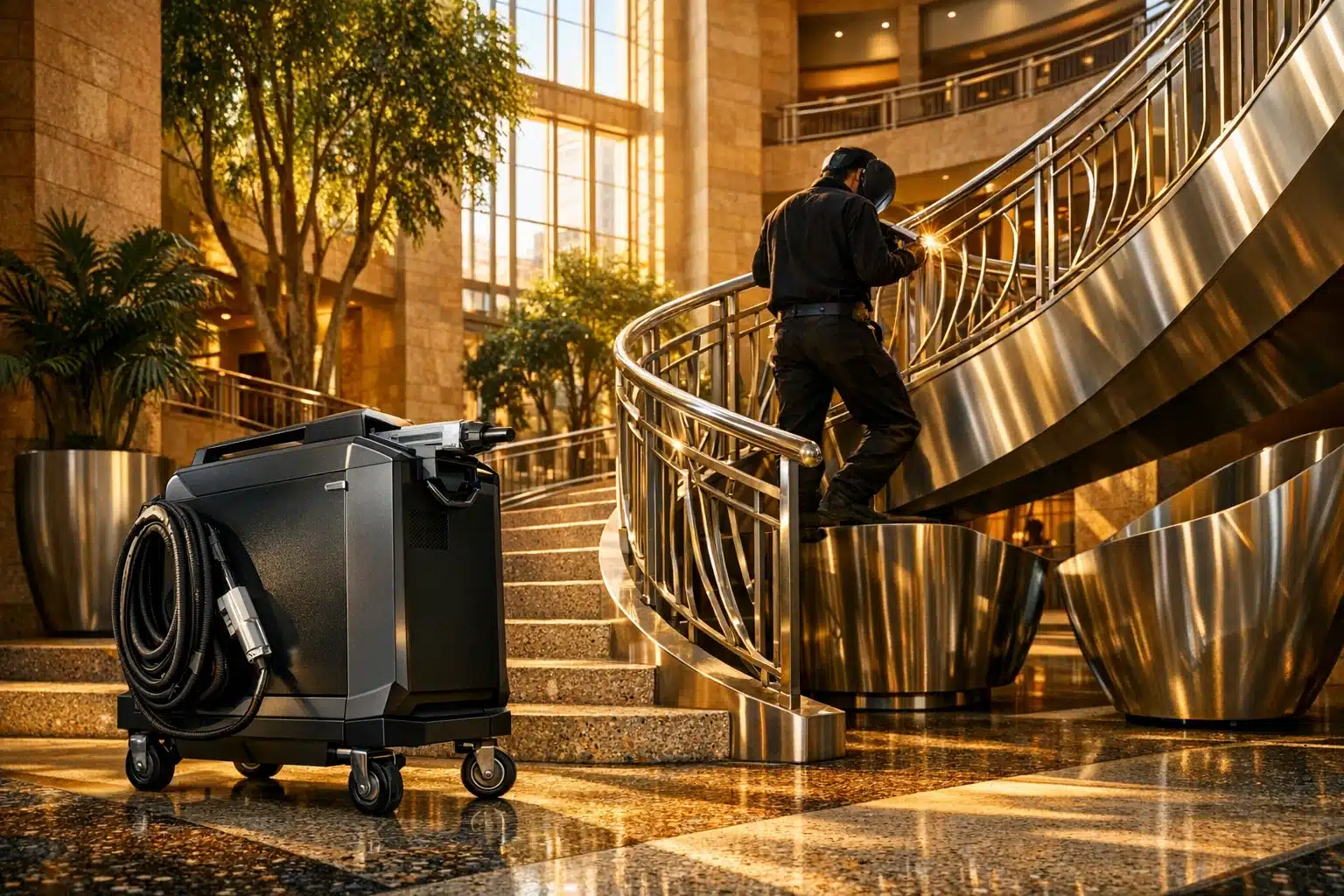
Guide to Portable Laser Welding Machine
Laser welding used to feel like the domain of large production floors, sealed rooms, and specialist budgets, but portable and mini systems have changed that picture dramatically. Today, a compact unit can travel to a job site or sit neatly on a small bench while still producing narrow, precise welds on metals such as stainless steel, carbon steel, and selected aluminum parts. For fabricators, repair shops, and precision makers, that shift matters because space, speed, and finish quality now matter at the same time.
Outline of the article:
- What portable and mini laser welding machines are, and how they differ
- How the welding process works and which components shape weld quality
- A practical comparison of performance, workflow, and ownership considerations
- Real-world applications across fabrication, repair, and precision industries
- How to choose the right machine with safety, maintenance, and return on investment in mind
Understanding Portable and Mini Laser Welding Machines
A portable laser welding machine and a mini laser welding machine may sound similar, yet they usually serve different working styles. A portable machine is commonly designed around mobility. In many cases, it consists of a laser source, cooling system, controls, and cable assembly mounted in a compact cabinet or wheeled frame, paired with a handheld welding head. The main advantage is obvious the moment a shop floor gets crowded or a part becomes awkward to move. Instead of bringing the workpiece to a large cell, the operator can often bring the machine to the job.
A mini laser welding machine, by contrast, often refers to a compact system built for small parts, fine seams, or tight bench space. Depending on the application, it may be a benchtop precision welder used in jewelry, dental, mold repair, electronics, or small-part fabrication. Some mini systems are low-power precision tools with microscope-assisted alignment, while others are simply scaled-down industrial welders with smaller footprints and reduced output. The term can therefore cover more than one design philosophy, but the common thread is compactness and close control over small weld areas.
The easiest way to picture the difference is this one machine thinks like a field technician, the other thinks like a careful instrument maker. Portable units are prized when productivity and movement matter. Mini units shine when access, delicacy, and bench efficiency take center stage.
Typical distinctions include:
-
Portable laser welders are often used for sheet metal fabrication, stainless assemblies, cabinets, railings, tanks, and repair work.
-
Mini laser welders are often chosen for tiny components, cosmetic repairs, molds, jewelry pieces, small brackets, and precision parts.
-
Portable systems usually emphasize reach, operator freedom, and quicker setup at different stations.
-
Mini systems usually emphasize control, visibility, and repeatability on smaller features.
Both categories have become more relevant because manufacturers increasingly want cleaner welds with less distortion and less finishing work than traditional methods can require. Laser welding can help on all three counts when the joint design, material preparation, and machine settings are suitable. That does not make it a magic wand, but it does explain why interest has grown across workshops that once relied only on TIG or MIG. In practical terms, these machines represent a broader move toward compact, high-value equipment that earns its space rather than merely occupying it.
How Laser Welding Works and What Determines Weld Quality
At its core, laser welding joins metal by focusing highly concentrated light energy onto a very small area. That energy heats the joint rapidly, melts the material, and creates a fusion zone that solidifies into a weld. Because the beam is focused so tightly, the heat-affected zone can be smaller than with many conventional welding methods. This is one reason laser welds are often associated with lower distortion, finer seams, and less post-weld cleanup on suitable jobs.
Portable and mini machines both rely on this principle, but they can apply it in different ways. Many portable industrial units use fiber laser sources and handheld welding heads. These are often configured for relatively fast travel speeds on thin to medium sections, especially in stainless steel and carbon steel applications. Mini precision machines may use pulsed output, very fine spot control, and a bench-based setup that gives the operator closer visual control. In mold repair or jewelry work, for example, the goal is not broad seam coverage but careful energy placement.
Several technical factors shape results:
-
Power output: Handheld portable systems are commonly seen in the 1000 W to 3000 W range, while compact precision units may operate at much lower levels depending on the task.
-
Spot size and focus: A smaller spot can increase energy density and precision, but it also demands cleaner alignment.
-
Travel speed: Faster movement can improve productivity, but only if penetration and bead consistency remain acceptable.
-
Shielding gas: Argon or nitrogen may be used to protect the weld area and support appearance.
-
Joint fit-up: Laser welding generally prefers tighter, more consistent gaps than forgiving arc processes.
-
Material condition: Surface contamination, coatings, and reflectivity can affect energy absorption and weld stability.
One useful comparison is with TIG welding. On thin stainless assemblies, handheld laser welding can often run significantly faster and leave less discoloration, though the exact gain depends on thickness, edge preparation, and operator skill. A poor fit-up can quickly erase the advantage. Laser equipment rewards preparation. If the parts are square, clean, and repeatable, the beam behaves like a disciplined craftsperson. If the parts are inconsistent, the same machine becomes far less forgiving.
Quality also depends on system design. Stable cooling, reliable beam delivery, consistent wire feeding where filler is used, and intuitive controls all matter. In real shops, the machine is only half the story. The other half is the process around it material handling, part design, setup discipline, safety routines, and training. When those elements align, portable and mini laser welders can deliver results that feel almost understated at first glance clean lines, reduced spatter, and a finish that asks for less rescue work later.
Portable vs Mini Machines: Performance, Workflow, and Cost Considerations
Choosing between a portable laser welding machine and a mini laser welding machine is less about which one is better in the abstract and more about which one matches the rhythm of your work. If your day involves long seams, larger fabricated parts, or multiple welding points across a workshop, portability can save time in ways that are not obvious on a specification sheet. If your day revolves around tiny joints, cosmetic accuracy, or delicate components that need a steady bench environment, a mini system often makes more sense.
Portable machines usually stand out in workflow efficiency. They let operators move around cabinets, frames, ducts, enclosures, and repair jobs without repeatedly repositioning large parts. In many fabrication settings, that mobility reduces handling time and may lower the chance of scratching finished surfaces. Portable handheld laser welders also tend to support faster travel speeds than traditional TIG on thin materials, especially where appearance matters and cleanup time is expensive. For a busy shop, those minutes add up quickly.
Mini machines, however, can outperform portable units when precision becomes the central metric. A small benchtop system may offer finer pulse control, better visibility, or a layout that supports close hand positioning. That matters in applications such as tool repair, small stainless parts, jewelry, dental frameworks, sensor housings, or intricate component assembly. On these tasks, ultimate mobility is less valuable than confidence at a tiny weld point.
Key comparison points include:
-
Mobility: Portable units clearly lead when the workpiece is large or fixed in place.
-
Precision on tiny parts: Mini systems often have the advantage because the working environment is more controlled.
-
Power and thickness range: Portable industrial welders usually handle broader production duties, although exact capability varies by model and material.
-
Footprint: Mini units fit more easily into labs, studios, and tight workshops.
-
Training needs: Both require instruction, but handheld welding technique and bench precision work challenge operators in different ways.
-
Upfront investment: Both are typically more expensive than basic arc equipment, though mini units and portable units occupy different price bands depending on output and features.
Cost should be evaluated beyond purchase price. Laser systems can reduce grinding, polishing, rework, and heat distortion, which means labor savings may offset a higher initial investment. On the other hand, buyers should account for eye protection, fume extraction, maintenance, training, and spare parts. A machine that looks affordable on day one can become a poor fit if service support is weak or the actual workload falls outside its sweet spot.
In simple terms, portable machines tend to win on reach and general shop flexibility, while mini machines often win on fine control and compact precision. The smartest decision usually comes from examining the parts you weld most often, not the brochure that sounds most impressive.
Where These Machines Excel: Real-World Applications and Practical Examples
The appeal of portable and mini laser welding machines becomes clearest when you look at actual tasks rather than abstract features. In production, repair, and specialty fabrication, the value of a machine is measured by the problems it removes from the day. Laser welding has gained ground because it can reduce visible heat marks, keep distortion manageable, and speed up finishing on suitable joints. Those benefits play out differently depending on the machine type.
A portable laser welding machine is often at home in metal fabrication workshops. Think of stainless cabinets, decorative railings, kitchen equipment, light-gauge frames, exhaust components, sheet metal boxes, or food-service assemblies. In these jobs, appearance matters almost as much as strength. A cleaner weld can save polishing time, and lower heat input can help preserve the shape of thin material. Repair teams also value portability when working on tanks, brackets, covers, or fabricated structures that are difficult to relocate. In that setting, the machine becomes less like a stationary tool and more like a practical companion rolling from one task to the next.
Mini laser welding machines are strong in smaller and more specialized fields. They are often used in:
-
Jewelry repair and assembly, where small seams and cosmetic finish are critical
-
Dental and laboratory work involving delicate metal frameworks
-
Mold and die repair, where precise material addition can extend tool life
-
Electronics housings and miniature metal components
-
Prototype development, where tiny batches need control more than raw speed
Consider two simple scenarios. In the first, a fabrication shop produces brushed stainless enclosures for commercial interiors. The challenge is not merely joining panels but doing so without turning every seam into a grinding project. A portable laser welder can help the operator move efficiently between stations and keep the finish intact. In the second scenario, a technician repairs a small mold edge or a fine metal clasp. Here, a mini precision welder offers the calm, close-up control that large handheld equipment would struggle to match.
Material choice matters too. Stainless steel is often a comfortable starting point for laser welding because it generally responds well when surfaces are clean and settings are correct. Carbon steel can also be welded effectively. Aluminum is possible, but it usually demands closer attention to reflectivity, cleanliness, and process setup. The same is true for dissimilar metal combinations, which may be technically possible in some cases but require careful qualification.
The most important lesson from real-world use is that laser welding is not just about making smaller sparks. It is about matching a highly focused process to a clearly defined task. When that match is right, the result is not dramatic noise or spectacle. It is quiet efficiency the kind that shows up in smoother workflow, fewer corrections, and parts that look finished sooner.
Choosing the Right Machine: Safety, Maintenance, and Final Advice for Buyers
If you are considering a purchase, the best starting point is not the highest wattage or the newest control panel. It is your actual workload. A fabrication shop joining thin stainless seams every day needs a different machine from a jewelry studio, a mold repair bench, or a mobile maintenance crew. Buyers often make better decisions when they list their five most common jobs, their typical material thicknesses, and the finish standard customers expect. That simple exercise cuts through marketing language quickly.
A practical buying checklist should include:
-
Primary materials, such as stainless steel, carbon steel, aluminum, or precious metals
-
Typical thickness range and joint style
-
Whether the work stays on a bench or moves around the shop or site
-
Available electrical supply, cooling requirements, and floor space
-
Need for filler wire, pulse control, or precision viewing aids
-
After-sales service, spare parts, training support, and software usability
-
Expected duty cycle and realistic output targets
Safety deserves equal weight. Industrial laser welders are not casual tools, and many systems fall into high-risk laser classifications that require disciplined control measures. Operators need wavelength-appropriate eye protection, controlled work areas, training on reflective hazards, and attention to fume extraction. Shiny metal surfaces can reflect energy unpredictably, and even a compact machine can be dangerous if used without proper procedures. Fire prevention, interlocks where applicable, clear signage, and routine inspection should be part of daily practice rather than an afterthought.
Maintenance is usually more straightforward when a machine is kept clean and used within its intended range. Lenses, protective windows, nozzles, cooling systems, cable condition, and gas supply should be checked regularly. Mini systems may demand careful bench cleanliness and fine alignment habits. Portable units may need extra attention because movement exposes them to dust, vibration, and accidental cable strain. In both cases, consistent preventive care is cheaper than emergency downtime.
For target buyers, the conclusion is fairly clear. If you run a fabrication shop, repair service, or production line that benefits from movement, broader part access, and faster seam work on thin metal, a portable laser welding machine is often the stronger fit. If your world revolves around fine details, tiny components, controlled bench work, or cosmetic precision, a mini laser welding machine usually offers better control and efficiency. Neither option is automatically superior. The right choice is the one that fits your materials, your space, your people, and the kind of welding problems you need solved every single week. Choose with that in mind, and the machine becomes more than impressive equipment it becomes a reliable part of how your work gets done.