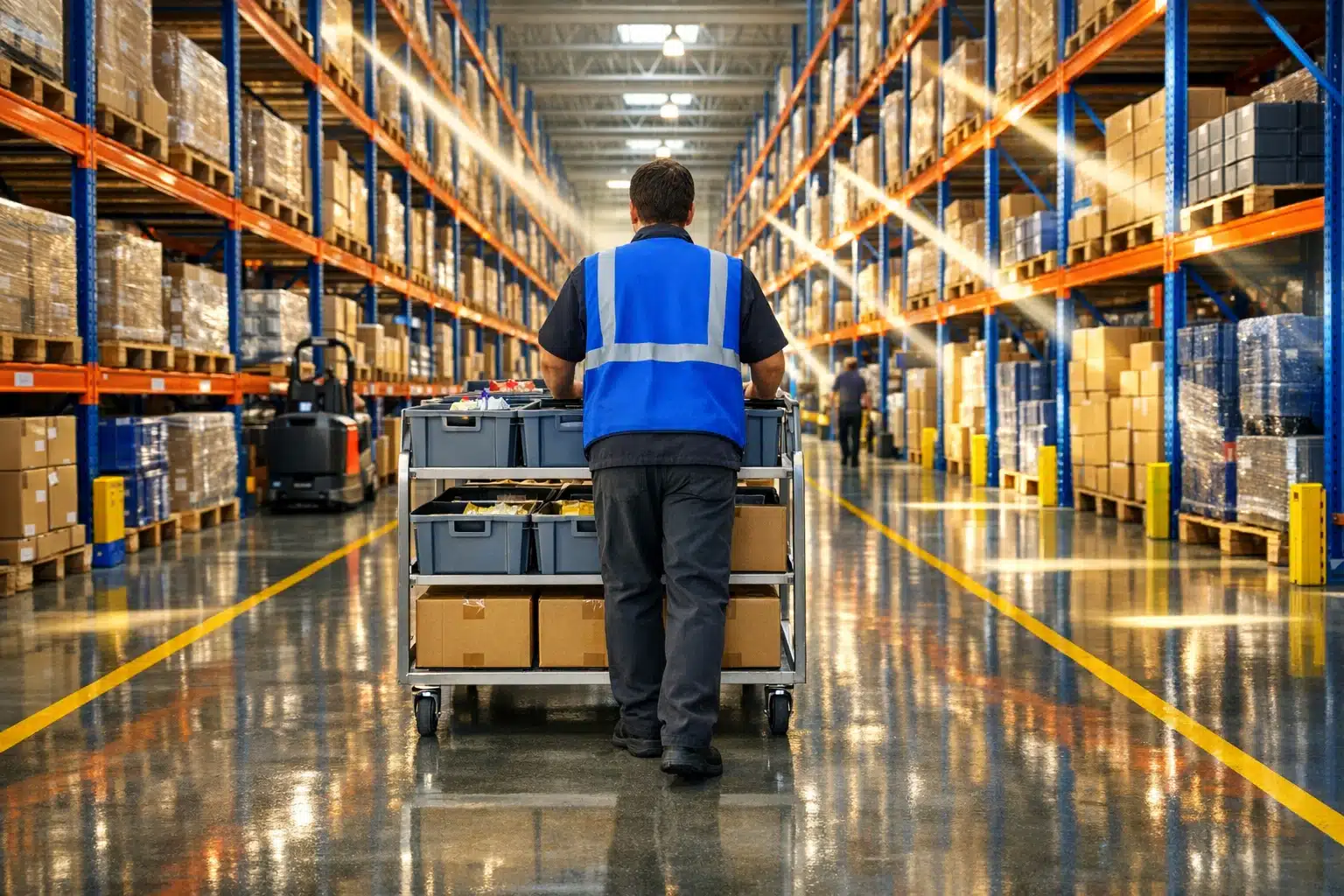
 Artificially generated image
 Warehouse Picking and Packing Roles: Duties, Skills, and Work Environment
Warehouses rarely get the spotlight, yet they keep modern commerce moving with quiet precision. Every online order, store replenishment run, and spare-part shipment depends on people who can pick the right items, pack them securely, and send them out on time. For job seekers, managers, and curious readers alike, understanding these roles reveals how speed, accuracy, and teamwork turn shelves into steady customer service. Step inside, and the routine quickly becomes a carefully timed system worth exploring.
Article Outline and Why Warehouse Picking and Packing Matter
Before diving into job duties and daily routines, it helps to see the whole map. Warehouse picking and packing are not isolated tasks; they are central links in the supply chain that connect inventory to customers. A warehouse can store thousands of products, but stored goods create value only when they can be found quickly, selected correctly, packed safely, and shipped on schedule. That is why these roles matter across ecommerce, wholesale distribution, manufacturing, food supply, healthcare logistics, and retail replenishment.
This article is organized around five practical themes so readers can move from the big picture to the details with ease. First comes an outline of the subject and its relevance in today’s economy. Next is a closer look at what warehouse picking and packing actually involve as processes, including the differences between common operating methods. After that, the focus shifts to the roles themselves, covering responsibilities, workflow, and typical expectations for pickers, packers, and related staff. The fourth section explores the skills, equipment, and work environment that shape performance. The final section brings everything together with productivity measures, common challenges, career prospects, and a conclusion for people considering this line of work.
- What a warehouse does in the wider supply chain
- How picking differs from packing, and why both must work together
- The duties attached to common warehouse roles
- The physical, technical, and interpersonal skills needed on the job
- The realities of the work environment, from safety rules to peak-season pressure
The importance of these topics has grown as customer expectations have changed. Fast shipping used to feel like a premium feature; now it is often treated as a basic standard. That shift has increased pressure on warehouses to improve order speed without sacrificing accuracy. A misplaced item can delay delivery, increase returns, and damage customer trust. A poorly packed carton can create breakage, waste, and extra transport cost. Behind every smooth delivery is a chain of careful decisions made by warehouse teams, often in a setting that rewards consistency more than drama.
There is also a human side to the story. Warehouse work is one of the clearest examples of operations management becoming visible through individual effort. A picker may walk long distances during a shift, relying on concentration to avoid errors. A packer may need to judge the right box size in seconds while checking labels and protective materials. A supervisor must balance labor, deadlines, inventory flow, and safety. In that sense, the warehouse is a place where logistics stops being an abstract business term and becomes hands-on, measurable work. That combination of practical skill and operational importance makes picking and packing roles highly relevant for employers, workers, and anyone interested in how goods move through the modern economy.
Understanding Warehouse Picking and Packing as Core Operations
Warehouse picking and packing sound simple at first glance, but they form a carefully structured process that can determine whether an operation runs smoothly or struggles with delays. Picking is the task of locating and retrieving the correct items from storage to fulfill an order. Packing is the next stage, where those items are checked, protected, labeled, and prepared for shipment. Together, they sit between inventory storage and outbound delivery, making them essential to order fulfillment.
To understand their role, imagine a warehouse as a busy backstage area rather than a silent room full of shelves. Goods arrive through receiving, are inspected and stored, and then wait for demand. Once an order enters the system, a picker must find the correct stock keeping unit, quantity, size, color, or batch number. Accuracy matters deeply here. If the wrong product is selected, the problem ripples outward into returns, refunds, wasted labor, and disappointed customers. Packing then takes over, making sure the order is complete, protected against transport damage, and matched with the right shipping documents or labels.
Different warehouses use different picking methods depending on order volume, product range, and layout. Common approaches include:
- Single-order picking, where one worker completes one order at a time
- Batch picking, where several similar orders are picked together for efficiency
- Zone picking, where workers stay in designated areas and orders move between zones
- Wave picking, where groups of orders are released at planned times to match shipping schedules
Each method has trade-offs. Single-order picking can be easier to manage and verify, but it may involve more walking. Batch picking often improves productivity when many orders contain similar items, though it requires careful sorting afterward. Zone picking reduces travel distance and suits larger facilities, while wave picking helps synchronize labor with carrier deadlines. The “best” method depends less on fashion and more on the operation’s size, inventory profile, and service targets.
Packing also has its own logic. Good packing is not just about putting goods in a box. Workers choose carton sizes, cushioning materials, sealing methods, labels, and documentation based on item type and shipping conditions. Fragile goods need protection. Heavy items may need reinforced packaging. Apparel, electronics, industrial components, and food products all have different handling needs. A skilled packer balances protection, presentation, cost, and speed without turning the station into chaos.
Technology has added another layer. Many warehouses use barcode scanners, warehouse management systems, digital pick lists, and label printers to reduce errors and track progress in real time. In more advanced sites, conveyors, sortation systems, or voice-directed picking guide movement. Yet even in a technology-rich facility, the human role remains vital. Systems can point to a location, but workers still make judgments about condition, count, packaging, and exceptions. In short, warehouse picking and packing are not merely repetitive tasks. They are the operational heartbeat of order fulfillment, where structure, timing, and attention to detail all meet on the warehouse floor.
Warehouse Picking and Packing Roles: Duties, Responsibilities, and Daily Flow
The phrase “warehouse picking and packing roles” covers more than two job titles. In many facilities, these tasks are split among several positions, while in smaller warehouses one person may handle multiple stages of an order. The exact structure depends on business size, product type, shift design, and technology. Still, the core purpose stays the same: move the right goods to the right customer in the right condition at the right time.
A warehouse picker is primarily responsible for retrieving items from storage locations based on an order list or scanner instruction. This means reading pick tickets, traveling through aisles, verifying product codes, checking quantities, and moving items safely to a packing station or staging area. The work can be physically demanding, especially in large facilities where walking, lifting, bending, and reaching are constant parts of the shift. Accuracy is as important as pace. A fast picker who makes frequent mistakes can cost the operation more than a slower worker with strong consistency.
A warehouse packer takes over once the items arrive. The packer checks that the order contents match the documentation, inspects goods for visible damage, selects suitable packaging, adds protective materials when needed, seals the shipment, and applies labels. In some operations, the packer may also print invoices, include promotional inserts, or route the parcel to a specific carrier area. Good packers work with a mixture of rhythm and judgment. One moment is routine, the next requires solving a small puzzle: which box size reduces empty space without crushing the product or driving up freight cost?
Other related roles often support the process:
- Receiving associates unload incoming stock and confirm quantities
- Putaway staff move products from receiving to storage locations
- Inventory clerks monitor stock accuracy and cycle counts
- Material handlers transport goods with carts, pallet jacks, or forklifts
- Team leaders coordinate labor, solve bottlenecks, and monitor output
- Shipping associates stage completed orders for dispatch
The daily flow of work usually follows a predictable sequence, even if the workload changes by the hour. Orders enter the system, are prioritized, and released for picking. Pickers retrieve products and bring them forward. Packers verify and prepare each shipment. Completed cartons move to staging, sortation, or loading docks. Throughout the day, supervisors watch order volume, staffing levels, stock shortages, and cut-off times for carriers. When everything clicks, the process feels almost musical: scanners beep, carts roll, labels print, and pallets fill in a steady pattern. When one step fails, the effect is immediate.
Employers often value workers who can handle more than one function because flexibility helps during busy periods. A picker who can pack, or a packer who understands replenishment, can reduce delays when volume suddenly spikes. That is especially useful during holidays, promotions, or seasonal demand surges. For job seekers, this means versatility can improve both employability and advancement potential. The roles may begin with straightforward tasks, but strong workers quickly learn that performance depends on reliability, focus, communication, and the ability to keep quality intact when the pressure rises.
Skills, Tools, Safety, and the Real Warehouse Work Environment
Warehouse work often gets described in plain terms, yet the skills behind effective picking and packing are broader than many people expect. Physical stamina matters, but it is only one piece of the job. The strongest workers are usually those who combine endurance with accuracy, spatial awareness, discipline, and the ability to follow procedures. In a fast-moving operation, one careless decision can undo the benefit of ten quick ones.
Among the most valuable skills is attention to detail. A picker must distinguish between similar product codes, package sizes, or storage slots. A packer must notice missing units, damaged packaging, or incorrect labels before the order leaves the building. Time management also plays a major role. Workers are often expected to maintain steady productivity while handling interruptions such as low stock, urgent orders, or system updates. Communication matters too, because warehouse teams depend on clean handoffs. If one person spots an issue and says nothing, the mistake simply travels forward.
Useful skills and habits often include:
- Reading and following digital or paper instructions accurately
- Basic numeracy for counts, quantities, and product verification
- Safe lifting technique and awareness of load limits
- Comfort with handheld scanners or warehouse software
- Adaptability when priorities shift during the shift
- Reliability, punctuality, and steady concentration
The tools of the job range from simple to highly automated. In a smaller site, workers may use pick lists, tape dispensers, utility knives, carts, scales, and label printers. In larger operations, handheld barcode scanners, mobile computers, warehouse management systems, conveyor belts, dimensioning equipment, and voice-picking headsets are common. Some warehouses also use forklifts, pallet jacks, pallet wrappers, or sortation systems to support the flow. Automation can reduce travel time and increase throughput, but it does not remove the need for human judgment. A scanner can verify a barcode, but it cannot always identify subtle packaging damage or decide when a carton needs extra protection.
The work environment is equally important. Warehouses vary widely. Some are climate-controlled and brightly organized, while others involve cold storage, high shelves, loading dock traffic, or loud machinery. Shift patterns can include early mornings, late evenings, nights, or weekends. During peak periods, the pace intensifies. Workers may spend long hours on their feet and cover significant distances in a single day. Because of that, safety is not a decorative poster on the wall; it is part of the job’s foundation.
Key safety practices usually include clear walkways, proper lifting, equipment training, correct footwear, hazard reporting, and careful separation between pedestrians and moving machinery. Employers with strong safety cultures tend to communicate procedures clearly, refresh training regularly, and design workstations to reduce unnecessary strain. From a worker’s perspective, a good warehouse environment is not merely fast. It is orderly, predictable, and equipped in a way that supports both output and wellbeing. That balance is what turns demanding work into sustainable work.
Performance, Challenges, Career Growth, and a Practical Conclusion for Readers
Warehouse picking and packing are measured jobs. That is one reason they are so important in business planning and labor management. Employers usually track performance through metrics such as picks per hour, order accuracy, packing accuracy, damage rates, on-time shipment percentages, and labor cost per order. These numbers are not just management paperwork. They show whether the warehouse is serving customers efficiently and whether daily routines are strong enough to hold up under pressure.
Metrics, however, need context. A worker in a compact warehouse with small, lightweight products may naturally move faster than someone handling heavy or fragile items in a larger facility. A packing station dealing with simple apparel orders will look different from one preparing industrial parts with special documentation. Good operations compare performance fairly and look at quality alongside speed. Pushing output without guarding accuracy often creates a loop of mistakes, returns, and rework that erases any short-term gain.
Common warehouse challenges include:
- Sudden spikes in volume during holidays or promotions
- Inventory discrepancies between system records and shelf counts
- Congested aisles or poor slotting that increase travel time
- Packaging shortages or unsuitable carton sizes
- Damaged goods, incorrect labels, or missed carrier cut-off times
- Fatigue, turnover, and inconsistent training among staff
When warehouses address these issues well, picking and packing become more efficient and less stressful. Better slotting can reduce walking distance. Cross-training can keep orders moving when one area becomes overloaded. Clear standard operating procedures can lower error rates. Even small improvements, such as placing high-demand items in accessible locations or organizing packing materials more logically, can save meaningful time across hundreds or thousands of orders.
For workers, these roles can also become entry points into broader logistics careers. Someone who starts as a picker or packer may move into inventory control, quality checking, team leadership, shipping coordination, forklift operation, scheduling, or warehouse supervision. The path often rewards reliability and curiosity. Workers who learn the system, understand why tasks are done a certain way, and show calm under pressure tend to stand out. In a sector that depends on dependable execution, trust is a serious career asset.
For job seekers, the main takeaway is simple: warehouse picking and packing are practical roles with clear expectations, visible results, and transferable operational skills. For employers and managers, the lesson is equally direct: strong performance comes from process design, training, safety, and respect for the people doing the work. A warehouse may look like rows of racks and cartons from a distance, but up close it is a living system built on timing, discipline, and coordination. If you are considering this field, whether as a worker, recruiter, or business owner, understanding these roles provides a much sharper view of how everyday products make their way from storage shelf to customer doorstep.