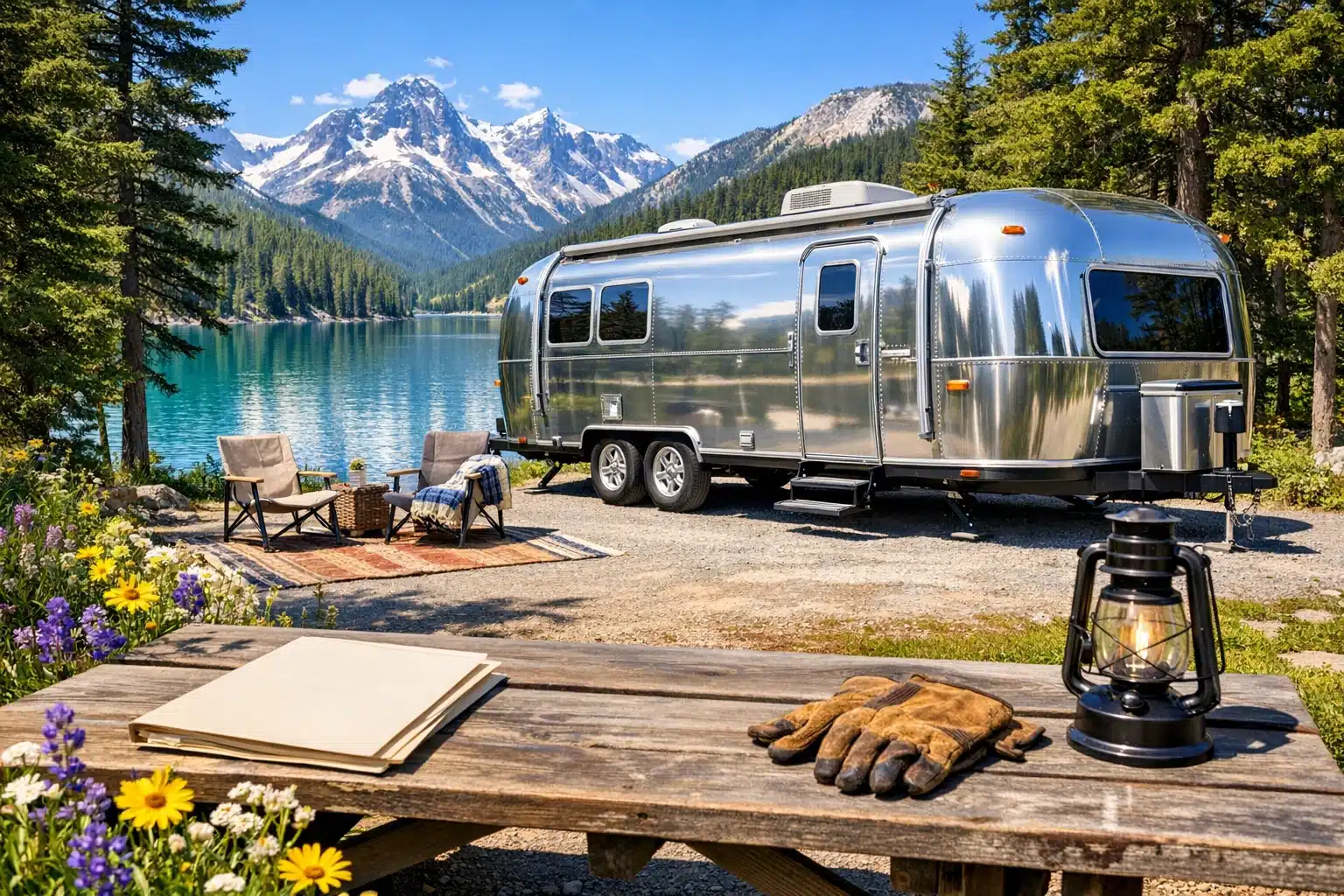
 Artificially generated image
 Practical Guide on How to Buy Police Impound Travel Trailers
Police impound travel trailers can look like hidden bargains, but they reward careful buyers more than impulsive bidders. A low auction number may hide repair bills, title problems, or storage fees that quickly change the math. This guide explains how impound sales work, how travel trailers compare with other RVs for sale, and how to inspect a unit with clear eyes. If you want value without buying trouble, the next sections will help you separate opportunity from risk.
Outline and Market Basics: Why Buyers Watch Police Impound Travel Trailers
Before getting into bidding tactics and inspection routines, it helps to map the road ahead. This article follows a simple outline: first, understand why impound trailers appear on the market; second, learn how auction sales and municipal disposal processes usually work; third, inspect the trailer with a repair-minded eye; fourth, calculate the real cost of ownership; and finally, compare an impound unit with other RVs for sale through dealers and private sellers. That structure matters because buyers often lose money when they jump straight to price and ignore process.
A police impound travel trailer is usually a trailer that has been seized, towed, abandoned, held for unpaid fees, or left unclaimed after a legal process. Not every impound trailer is a dramatic story from a crime show. Quite often, the explanation is mundane: expired registration, parking violations, unpaid storage bills, or a lien situation. Once the holding period and legal notice requirements are met, the trailer may be sold through a public auction, a contracted auction platform, or a government surplus process. That is where bargain hunters start paying attention.
Travel trailers occupy a useful middle ground in the RV world. They give you sleeping space, a kitchen, storage, and often a bathroom, yet they do not come with an engine or drivetrain like a motorhome. That distinction matters. When shopping for an impound trailer, you are usually focused on structural condition, water intrusion, appliances, axles, brakes, tires, and title status rather than engine hours or transmission service history. In practical terms, that can make a travel trailer easier to evaluate than a motorized RV, though no less risky if damage has been ignored.
Buyers are drawn to impound trailers for one obvious reason: price. A clean retail travel trailer on a dealer lot may include reconditioning, financing support, and a warranty package, which raises the sticker price. An impound unit is commonly sold as-is, where-is, with no promises and little hand-holding. That lack of support can create opportunity, especially for people who already own a capable tow vehicle, know how to inspect roofs and floors, and can handle minor repairs. Still, the lower entry price is only part of the story. A cheap trailer with hidden delamination, a soft floor, or missing paperwork can become far more expensive than a modestly priced RV sold through traditional channels.
If you are browsing travel trailers or searching broadly for an RV for sale, this niche deserves attention because it sits at the intersection of value and risk. Think of it less like a retail shopping trip and more like buying a project with potential. Some units need little more than tires, a battery, and a deep cleaning. Others are rolling reminders that rainwater, neglect, and time always collect interest.
How Police Impound Sales Work and What the Fine Print Really Means
Police impound travel trailers are typically sold through one of several channels: local sheriff or police auctions, municipal surplus sales, contracted online auction sites, towing company lien sales, or county disposal programs. The exact path depends on state law, agency policy, and why the unit was impounded in the first place. In many areas, the seller must follow a notice period and verify that prior claims have been addressed before the trailer can be transferred to a new buyer. That legal framework is important because buyers should never assume that every auction listing comes with the same documentation or transfer process.
Most impound sales share a few common rules. Registration is often required before bidding. Some auctions require a refundable deposit. Payment deadlines can be short, with cash, cashier’s check, or wire transfer preferred over conventional financing. The trailer is usually sold as-is, where-is, which means you accept its present condition and location without a warranty. There may be no refund if the refrigerator does not run, the plumbing leaks, or the awning turns out to be missing hardware. Many buyers focus on the bid price and forget the rest of the invoice. In reality, the total often includes:
• buyer’s premium
• sales tax if applicable
• title or transfer fees
• document processing charges
• storage fees if pickup is delayed
Preview periods are your friend. Some auctions allow only photos, while others offer an in-person inspection day. If you can attend in person, do it. Auction photos tend to highlight the sunny side of a trailer, not the soft spot near the shower pan or the gap where roof sealant failed two summers ago. Bring a flashlight, gloves, a notebook, and a calm mindset. The winning bidder is not the person who gets the cheapest number; it is the person who understands the downside before bidding begins.
Another critical step is title verification. Ask whether the trailer comes with a clear title, salvage title, lien paperwork, court order, or bill of sale only. Rules differ by state, and some states are stricter than others when you try to register a trailer with incomplete records. A bargain becomes much less attractive if you cannot legally title it without a long administrative process. Contact your state motor vehicle agency before bidding if anything in the listing feels vague.
Market timing also affects value. Used RV prices rose sharply during the pandemic travel boom and then cooled as supply improved and discretionary spending normalized. That shift created more variation in the marketplace. Retail lots may still ask a premium for clean, ready-to-camp units, while rougher auction inventory can look especially tempting. The gap is real, but it only benefits disciplined buyers who treat paperwork and condition as seriously as price.
Inspecting an Impound Travel Trailer: What to Check Before You Bid
Inspection is where smart buying begins. A travel trailer may seem simple from the outside, but the expensive problems are often quiet ones: roof leaks, rot inside walls, frame damage, neglected bearings, failing brakes, or appliances that look complete but no longer function. At an impound auction, you may not get water hookups, shore power, or a full systems demonstration. That means your inspection has to rely on signs, patterns, and practical judgment rather than wishful thinking.
Start with the shell and structure. Walk slowly around the trailer and look down the body lines. Ripples, bulges, and bubbling fiberglass can indicate delamination caused by water intrusion. Check roof edges, front caps, rear seams, corner trim, and every spot where sealant should still be flexible and intact. Step carefully inside and feel the floor, especially near the entry door, kitchen sink, shower, toilet, and front corners. Softness underfoot is one of the loudest warnings a quiet trailer can give. Open cabinets and smell the interior. Musty odors, staining, swollen paneling, and discolored ceiling trim often point to chronic leaks.
Then move to running gear and towing safety. Tires older than five to seven years may need replacement even if tread looks acceptable, because age and sun exposure matter on RV tires. Check the DOT date codes if visible. Inspect leaf springs, hangers, equalizers, axle alignment, electric brake wiring, and the condition of the coupler and safety chains. If the trailer cannot be safely towed away, your bargain may require a flatbed or mobile repair before it ever reaches your driveway.
Inside the trailer, look at systems with a buyer’s checklist in mind:
• refrigerator present and undamaged
• stove, furnace, and water heater intact
• converter or power center installed
• air conditioner secured and not obviously leaking
• holding tank valves accessible
• windows opening and sealing properly
• VIN plate matching the sale documents
Do not assume missing parts are small issues. A stolen battery is minor. A missing converter, compromised propane lines, or stripped interior components can signal broader neglect. If the trailer is a newer model, compare the floor plan and standard equipment to the manufacturer’s brochure or archived listings so you can see what has been removed or altered. It is also wise to price common repair items before auction day. Roof resealing, tire replacement, brake service, subfloor repair, and appliance replacement add up quickly. In a good inspection, you are not searching for perfection. You are deciding whether the trailer is a light project, a heavy project, or a financial sinkhole wearing decent curtains.
The Real Budget: Title Costs, Repairs, Towing, Insurance, and Setup
The winning bid is not the purchase price. It is the opening number in a longer calculation, and this is where many first-time buyers stumble. Travel trailers from police impound sales often look inexpensive because the listing price isolates one part of the transaction while hiding the practical costs that arrive immediately afterward. A disciplined buyer builds an all-in budget before bidding, not after the excitement fades.
Start with the predictable costs. Add the bid price, buyer’s premium if the auction charges one, taxes where applicable, title transfer fees, registration, and any temporary permit required to move the trailer. Then add towing or transport. If you own a truck with adequate tow rating, brake controller, and hitch equipment, you may still need a fresh trailer battery, working lights, aired tires, and a quick inspection of wheel bearings and brakes before heading onto public roads. If you hire a transporter, the quote can range from a few hundred dollars for a short local move to much more for a long-distance haul or a unit that cannot roll safely. Distance, trailer length, roadworthiness, and scheduling all affect the price.
Repairs and reconditioning usually form the largest variable. Even a decent impound trailer often needs:
• tires because of age rather than tread wear
• battery replacement
• resealing around roof penetrations
• new propane regulators or hoses
• brake and bearing service
• mattress, upholstery, or flooring refresh
• deep cleaning and pest treatment if it sat unused
Insurance and financing deserve attention too. Some lenders hesitate to finance older auction purchases, salvage-title units, or trailers bought without standard retail documentation. That means many impound buyers pay cash or use a personal loan rather than RV financing. Insurance may also depend on the trailer’s title status and condition. Contact an insurer with the VIN before purchase if possible. It is much better to hear “we can cover that” before bidding than to discover a problem afterward.
A useful approach is to create three budget levels: best case, likely case, and worst case. For example, a trailer bought for a low price may still need $2,000 to $5,000 in tires, seals, batteries, service, and interior repairs, while a leak-damaged unit can run much higher. The exact amount varies widely by size, age, and condition, so the point is not the precise number. The point is to protect yourself from magical thinking. If the likely-case total lands close to the cost of a clean private-party RV for sale, the impound unit may not be the deal it first appeared to be. Good buyers do not merely ask, “What can I win it for?” They ask, “What will it cost me to camp in it safely and legally?”
Impound Trailer or Regular RV for Sale? Final Advice for Different Types of Buyers
Once you understand process, condition, and total cost, the final decision becomes more strategic: should you buy a police impound travel trailer, or would a dealer or private-party RV for sale better fit your needs? The answer depends less on your excitement level and more on your skills, timeline, and tolerance for uncertainty.
An impound trailer tends to suit buyers who are methodical and somewhat self-reliant. If you already tow confidently, can inspect for water damage, understand trailer brakes and bearings, and have room in your budget for surprise repairs, this market can produce genuine value. Some buyers specifically seek older, simpler travel trailers because they are easier to rehab than heavily automated new models. For them, an auction unit is not a gamble; it is a project with a clear ceiling and a satisfying finish line.
By contrast, a dealer purchase usually works better for buyers who want speed, support, and predictability. Dealers often provide cleaned and serviced inventory, walk-through demonstrations, financing options, and paperwork handling. You pay more, but some of that extra cost buys reduced friction. A private-party sale sits in the middle. Prices can be better than dealer pricing, and you may get detailed ownership history, maintenance records, and a chance to see the trailer set up in real use. On the other hand, private sellers vary widely in honesty, care, and documentation.
A quick comparison helps:
• Impound sale: lower entry price, higher uncertainty, limited inspection, strict terms
• Dealer sale: higher price, more support, easier paperwork, possible warranty options
• Private-party sale: flexible pricing, better conversation with the owner, mixed consistency
For first-time buyers eager to camp next month, a standard used travel trailer with verifiable history may be the safer path. For experienced bargain hunters, handypeople, and budget-focused campers who can absorb repairs, a police impound trailer can make excellent sense. The key is to match the purchase method to your real situation rather than your idealized one.
In summary, the target audience for impound travel trailers is not simply “anyone who wants cheap RVs.” It is buyers who can evaluate risk, confirm title status, inspect structural condition, and budget beyond the hammer price. If that sounds like you, this niche can open the door to affordable camping and a solid long-term value play. If it does not, there is no shame in paying more for clarity, convenience, and a trailer that starts its next chapter without a mystery attached.