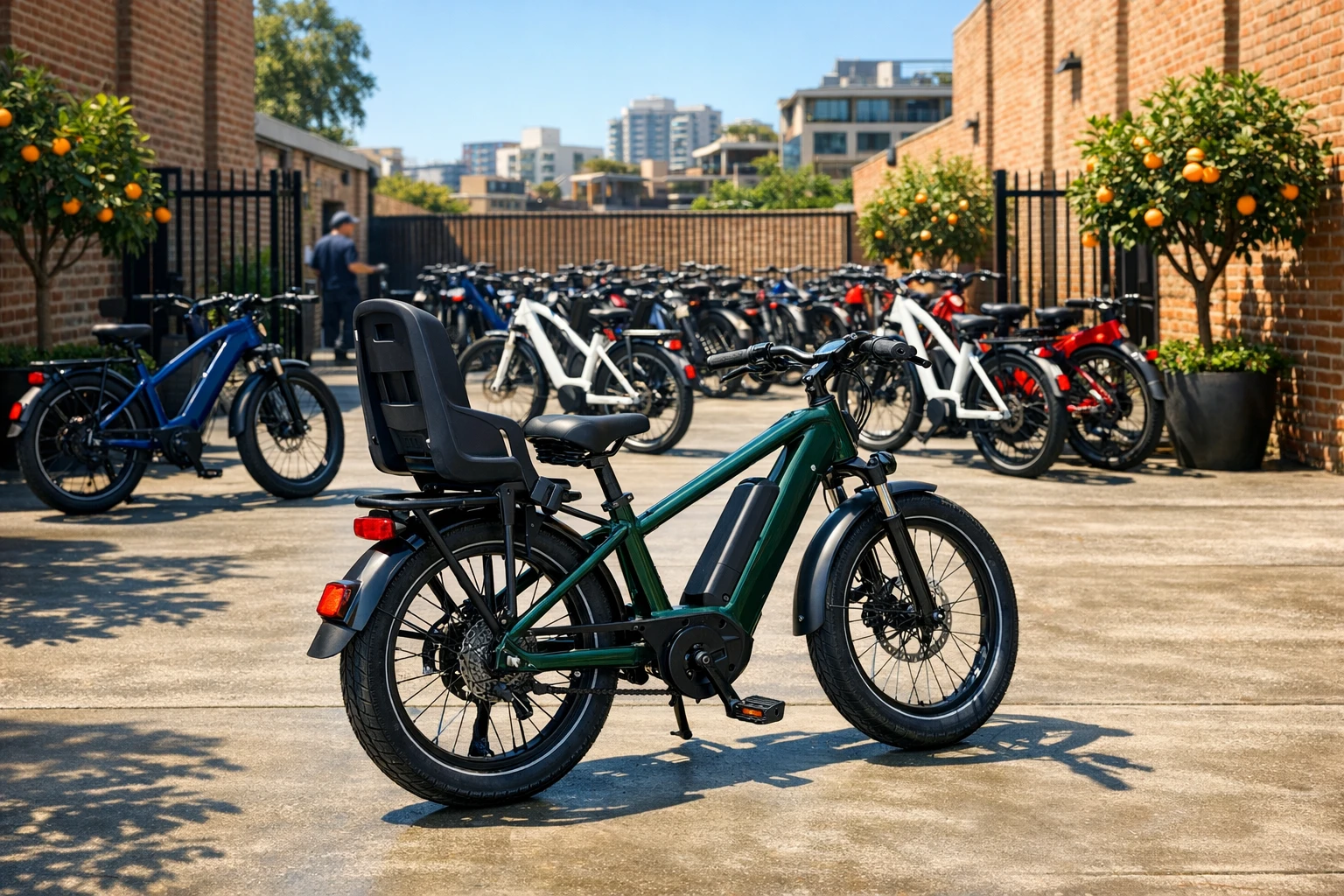
 Artificially generated image
 Why Police Impound E-Bikes and What Riders Should Know
An e-bike can feel like the perfect city tool: quick off the line, cheaper than a car, and nimble enough to slip past traffic jams that stretch like long gray ribbons. Yet the same machine can become a legal headache when its speed, equipment, paperwork, or condition puts it outside local rules. Police impounds are not random in most cases; they usually follow a classification problem, a safety concern, or an enforcement action linked to another offense. Understanding that chain of events helps riders protect both their bike and their time.
Article Outline: Why This Issue Deserves Attention
Before getting into rules, fees, and recovery steps, it helps to understand why police impound e-bikes at all. The answer sits in a gray zone that many riders do not see until it is too late. An e-bike is often sold as a bicycle, used like a bicycle, and parked like a bicycle, but law enforcement may evaluate it according to motor vehicle rules if its speed, power, or modifications push it beyond the local definition of a standard electric bicycle. That mismatch creates confusion, and confusion on the street can become a tow order, a storage bill, or a long wait for a hearing.
This article follows a practical outline designed for riders, buyers, delivery workers, parents, and commuters. Instead of treating impoundment as a rare event, it looks at the common situations that make it more likely. In many cities, enforcement has grown as e-bike use has expanded. More riders on the road means more interactions with police, more complaints about sidewalk riding, and more scrutiny of batteries, speeding, and vehicle classification.
Here is the roadmap the article follows:
- Why police may have legal authority to seize an e-bike in the first place
- Which rider behaviors, technical changes, or paperwork issues commonly trigger an impound
- What usually happens after a bike is taken, including notice, storage, and release requirements
- How costs, deadlines, and local procedures can turn a small problem into a bigger one
- What riders can do before and during a police stop to reduce risk and protect their rights
This structure matters because not every impounded e-bike is illegal, and not every illegal setup leads to immediate seizure. Sometimes officers issue a warning or citation. In other cases, an e-bike becomes evidence after a crash, suspected theft, reckless riding complaint, or street enforcement operation. The practical lesson is simple: riders need to understand not only the machine they bought, but also how police and regulators classify it. That difference between expectation and legal reality is where most surprises begin.
Why Police Have the Power to Impound Certain E-Bikes
Police generally do not impound property without a legal basis. With e-bikes, that basis often comes from one of three places: traffic law, public safety law, or criminal investigation procedures. The exact rules vary by city, state, and country, but the pattern is familiar. If an officer reasonably believes the vehicle is being operated unlawfully, is unsafe for public use, is stolen, or is evidence connected to an offense, seizure may become an available enforcement tool.
The first legal issue is classification. In many parts of the United States, e-bikes fall into common classes. Class 1 usually means pedal assist up to 20 mph. Class 2 often allows throttle assistance up to 20 mph. Class 3 usually allows pedal assist up to 28 mph and may face extra age or helmet requirements. When a bike exceeds those limits, has a motor setup that no longer fits the class system, or lacks required features such as functioning pedals, it may be treated less like a bicycle and more like a moped or motorcycle. If that happens, the rider may need registration, insurance, a driver license, lights, mirrors, or other equipment depending on the jurisdiction. When those requirements are missing, police may cite the rider and, in some areas, impound the vehicle.
Safety rules also play a large role. Authorities may seize an e-bike if it appears dangerously modified, especially when braking performance does not match the speed capability. Battery condition can matter too. Poorly installed packs, damaged cells, or unsafe charging modifications can draw attention after fires or public complaints. In dense cities where delivery riders rely heavily on e-bikes, fire safety enforcement has become a serious concern.
Another major category is ownership. If a serial number is removed, altered, or inconsistent with registration records, officers may suspect theft. An e-bike recovered during an unrelated stop may be held as evidence until ownership is verified. Likewise, a bike involved in a collision may be impounded while investigators document damage, speed capability, and the scene.
Put simply, police authority usually comes down to this comparison:
- A compliant e-bike used lawfully is often treated much like a bicycle
- A modified or misclassified vehicle may be treated like an unregistered motor vehicle
- A bike tied to suspected theft or a crash may be held as evidence regardless of its class
That legal shift is the hinge on which the whole impound question turns.
Common Reasons E-Bikes Get Impounded on the Street
Most impounds do not begin with a dramatic chase. They start with something ordinary: a stop for riding the wrong way, a complaint about sidewalk use, a collision, or a closer look at a bike that seems faster than normal. Once officers start examining the machine, several red flags can move the encounter from a citation to a seizure.
One of the most common triggers is modification. Riders may install higher-output controllers, unlock speed limiters, replace displays with programming features, or add batteries that increase performance beyond the legal category of the bike. From a rider’s point of view, that may feel like a harmless upgrade. From an enforcement perspective, it can transform the vehicle into something that requires registration and equipment the rider does not have. A throttle-powered machine with motorcycle-like acceleration but bicycle-style parts often attracts attention for exactly that reason.
Unsafe operation is another frequent cause. Police are more likely to impound when riding behavior suggests immediate risk to the public. Examples include weaving through pedestrians, ignoring signals, carrying oversized loads, racing in traffic, or operating at night without lights. A compliant e-bike can still be seized if its use creates a serious hazard or if the stop leads to discovery of other violations.
Ownership issues matter as well. E-bikes are expensive enough to make theft a real concern, and many cities have seen rising reports of bike and battery theft. If a rider cannot explain missing serial numbers, cannot provide proof of purchase when the bike matches a theft report, or is found with a bike that appears to have identifying marks removed, officers may hold it pending investigation. In that scenario, the impound is less about the rider’s traffic behavior and more about property verification.
There are also administrative reasons that surprise people. A bike may be removed if it is abandoned, parked in a prohibited location for an extended period, or involved in an enforcement sweep targeting illegal mopeds and high-speed electric vehicles. Delivery workers sometimes face greater scrutiny because they ride longer hours and are more visible in congested areas, though the legal standard should still be based on conduct and classification rather than occupation alone.
Typical street-level triggers include:
- Modified speed or power beyond local e-bike limits
- No pedals, nonfunctional pedals, or motorcycle-style setup
- Reckless riding, repeated moving violations, or crash involvement
- Suspected theft, altered serial numbers, or unclear ownership
- Unsafe batteries or damaged equipment that raises public safety concerns
The practical takeaway is that impound usually follows a combination of factors, not just one small mistake.
What Happens After an E-Bike Is Seized
The moment after an impound can feel strangely quiet. One minute the rider is arguing about speed, paperwork, or where the bike was parked; the next, the machine is loaded into a van or onto a truck and disappears behind a gate. What follows is less cinematic and more administrative, but it can be just as stressful. Recovery often depends on deadlines, documents, and fees that vary sharply by location.
In many jurisdictions, the officer or agency must provide some form of notice. That may be a receipt, property voucher, citation, tow slip, case number, or written explanation of where the bike is being stored. If the e-bike was seized as evidence, the process may differ from a routine traffic impound. Evidence holds can last longer, and release may require approval from investigators or prosecutors rather than a simple payment at a storage lot.
For a standard impound tied to vehicle classification or road use, the rider may need to prove ownership before the bike is released. Useful records often include:
- Government identification
- Proof of purchase or sales receipt
- Serial number records or manufacturer documentation
- Registration or insurance papers if the vehicle is legally treated as a moped or similar vehicle
- Photos showing the bike before the stop, especially if it has custom parts
Costs can rise quickly. Some agencies charge towing fees, daily storage fees, administrative processing charges, or citation payments before release. Even when the original violation seems minor, the total can become significant after several days. In some places, unclaimed vehicles are eventually auctioned, dismantled, or destroyed, especially when the owner misses the deadline to contest the seizure or reclaim the property.
Riders should also understand the difference between getting the bike back and winning the legal issue. A department might release the e-bike after payment and verification, while the underlying citation or charge remains unresolved. On the other hand, if the machine itself is unlawful in that jurisdiction, release may be conditioned on correcting defects, presenting registration, or arranging legal transport rather than riding it home.
The smartest response after an impound is orderly, not emotional. Record every name, date, case number, and instruction. Ask whether there is a hearing process. Confirm storage location and office hours. If the circumstances involve injury, alleged theft, or a serious charge, legal advice from a qualified local attorney may be appropriate. Small errors in follow-up can turn a recoverable situation into a permanent loss.
How Riders Can Reduce the Risk and Respond the Right Way
Avoiding impound starts long before a police stop. It begins when the rider chooses the bike, reads the specifications, and decides whether convenience is worth cutting corners. Many problems arise because buyers assume every electric two-wheeler with pedals is legally an e-bike. That is not always true. Some machines are essentially light motorbikes dressed in bicycle clothing, and the law may treat them accordingly.
The first layer of protection is knowing the local definition of an e-bike where you ride, not just where the product was advertised. Online listings can be vague, and some sellers emphasize speed while glossing over registration or equipment rules. Riders should verify maximum assisted speed, motor power, throttle behavior, age restrictions, helmet rules, and whether access differs by bike lane, road, or trail.
Good recordkeeping matters more than many people expect. Keep receipts, frame serial numbers, battery serial numbers if available, and clear photos of the bike from multiple angles. Save manufacturer specifications and any written communication from the seller. If ownership is ever questioned, those records can make the difference between a short inconvenience and a prolonged investigation.
Practical prevention steps include:
- Do not remove or obscure serial numbers
- Avoid speed-unlocking modifications unless you fully understand the legal consequences
- Maintain brakes, lights, tires, and reflectors in working order
- Use batteries and chargers that match the manufacturer or a reputable certified source
- Learn where e-bikes are prohibited, especially sidewalks, parks, transit platforms, or certain shared paths
If police stop you, calm behavior helps. Arguing on the curb rarely fixes a classification dispute. Provide identification when required, avoid sudden movements, and ask respectful questions about the reason for the stop. If the bike is taken, request documentation and ask how to recover it. Take notes as soon as possible afterward. If you believe the impound was mistaken, challenge it through the proper process rather than through confrontation.
There is also a broader lesson for regular riders and delivery workers alike. An e-bike is not just a gadget or a fitness accessory. In legal terms, it is a vehicle whose status depends on measurable facts: speed, equipment, design, and use. Treating it with that level of seriousness may feel less exciting than an online video showing a hidden settings menu, but it is often the cheaper and wiser path in the long run.
Conclusion for Riders and Buyers
Police impound e-bikes for reasons that usually trace back to classification, safety, ownership, or conduct on the road. For riders, the key is not panic but preparation. Know what your machine legally is, keep records that prove it is yours, and avoid modifications that push it into a different regulatory category without the required paperwork. If an impound does happen, move quickly, document everything, and follow the release process carefully. The more e-bikes become part of everyday transport, the more important it is for riders to understand that freedom on two wheels still comes with rules.