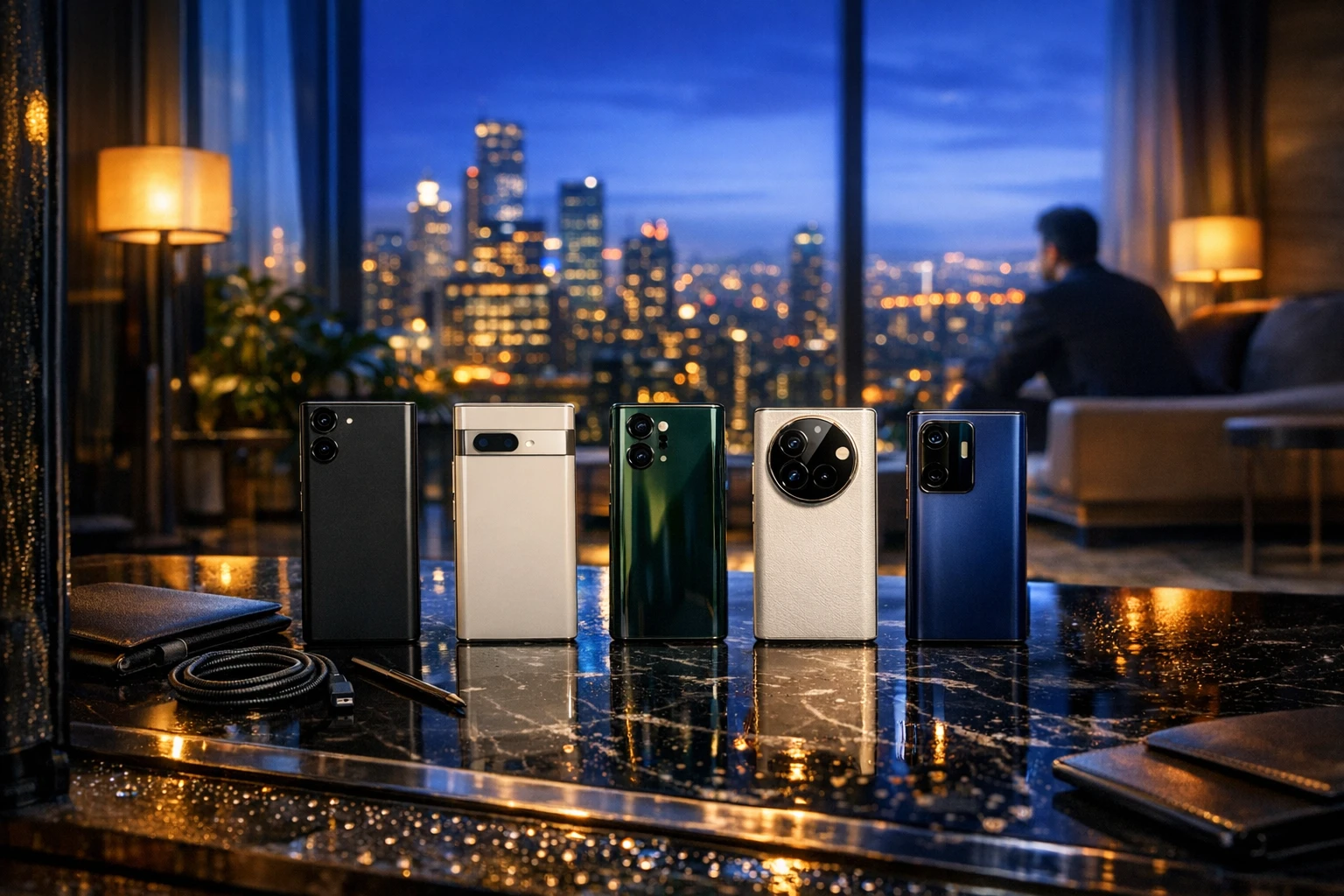
Practical Guide on 5 Android Phones Considered Better Than iPhone 17
Choosing a new phone is no longer about chasing the loudest launch event; it is about finding the device that fits your photos, work, travel, and downtime. That is why the Android vs iPhone debate still matters. When shoppers compare the iPhone 17 with leading Android models, they are really weighing ecosystems, camera styles, battery habits, and long-term value. This guide makes that decision easier.
Outline and Buying Framework: What “Better Than iPhone 17” Really Means
Before diving into the phones themselves, it helps to set a clear outline. The phrase “better than iPhone 17” should not be treated like a universal law carved into stone. Smartphones are personal tools, and the right choice depends on what kind of user you are. A traveler may care about zoom photography and dual-SIM flexibility. A gamer may want a cooler-running device, a brighter display, and faster charging. A busy professional may value multitasking, file access, and stylus support more than brand familiarity. In other words, better is not a crown; it is a match.
Here is the structure of this guide and the five Android phones discussed in detail:
- Samsung Galaxy S24 Ultra
- Google Pixel 8 Pro
- OnePlus 12
- Xiaomi 14 Ultra
- Vivo X100 Pro
These phones stand out because they challenge the iPhone formula from different angles. Some compete on pure hardware. Others win on software features, charging speed, camera versatility, or pricing. Android’s great strength is variety. Apple tends to offer a tightly controlled experience with strong ecosystem integration, while Android gives buyers more room to decide what matters most. That difference shapes almost every part of this comparison.
When judging Android vs iPhone, the most useful criteria usually include:
- Camera flexibility, especially zoom options and manual control
- Battery life and charging speed
- Software support and long-term updates
- Display quality and refresh rate
- Productivity features such as split-screen, file access, and desktop modes
- Value for money at different price levels
Many Android flagships are considered better than an iPhone 17 not because they beat it in every single test, but because they offer strengths Apple still handles more cautiously. Fast charging is a perfect example. Several premium Android devices recharge dramatically faster than the average flagship iPhone experience. Camera hardware is another. Android makers often experiment more aggressively with periscope zoom, large sensors, and creative image tuning. Then there is customization: Android still feels more like a workshop, while iPhone often feels like a beautifully arranged showroom.
That said, Apple remains strong in areas that matter to many users. The iPhone is often praised for polished app optimization, smooth video capture, strong resale value, and easy integration with products like the Mac, Apple Watch, AirPods, and iPad. So this article is not a victory parade for one side. Think of it as a practical map. If you already know what roads you travel most, the “best” phone becomes much easier to spot.
Samsung Galaxy S24 Ultra: The Premium Android That Feels Like a Complete Toolkit
If one Android phone consistently enters the conversation as a real alternative for someone considering the iPhone 17, it is the Samsung Galaxy S24 Ultra. This is not simply because it is powerful, although it certainly is. The bigger reason is that Samsung has packed so many mature features into one device that it feels less like a phone and more like a pocket workstation with a very good camera attached.
The S24 Ultra offers a large, high-resolution LTPO AMOLED display with a 120Hz refresh rate, a built-in S Pen, robust multitasking, and Samsung DeX for a desktop-like experience on a larger screen. These are not gimmicks for spec-sheet collectors. For students, creators, sales professionals, and heavy travelers, they translate into real convenience. Need to mark up a PDF at the airport, pull a file from cloud storage, and send it with a quick note before boarding? Samsung handles that sort of workflow with a natural ease that many buyers still prefer over Apple’s more controlled environment.
Its camera system is another reason many people place it above an iPhone in practical terms. The main sensor is strong, but the real advantage is flexibility. Samsung’s zoom setup gives users more shooting options across daylight, stage events, sports, architecture, and travel photography. If your phone camera is your only camera, those extra focal lengths matter. Apple often delivers highly consistent results, especially for video, but Samsung gives adventurous users more room to play. It is a little like carrying a compact set of lenses in your coat pocket.
The S24 Ultra also benefits from Samsung’s long software support policy, which adds confidence to a premium purchase. Buyers keeping a phone for four, five, or even six years care about this more than launch-day buzz. Add in a large battery, premium build, strong brightness, and features like anti-reflective display protection, and the S24 Ultra becomes easy to recommend.
Why might someone choose it over an iPhone 17?
- Better multitasking with split-screen and pop-up windows
- Built-in stylus for notes, editing, and precision work
- More flexible zoom photography
- Faster-feeling power-user features and broader customization
- A desktop mode that expands what a phone can do
Its weaknesses are worth noting too. Samsung’s software can feel busy to users who prefer simplicity, and some people still prefer iPhone video color consistency or Apple’s ecosystem polish. Still, if your idea of a great phone is one that gives you options instead of guardrails, the Galaxy S24 Ultra is one of the clearest cases where Android can feel better, not just different.
Google Pixel 8 Pro: Smart Software, Clean Design, and a Camera That Thinks Before It Shouts
The Google Pixel 8 Pro takes a very different route from Samsung, and that is exactly why it deserves a place on this list. Where the Galaxy S24 Ultra tries to be everything at once, the Pixel 8 Pro aims for a cleaner, calmer kind of excellence. It is the phone for people who want Android at its most refined: less clutter, fewer duplicate apps, and software that feels thoughtfully stitched together rather than piled on.
One of the Pixel 8 Pro’s strongest advantages is computational photography. Google has spent years shaping a camera experience that wins people over not through exaggerated saturation, but through balance, speed, and reliability. Skin tones are often handled well, high-contrast scenes tend to look natural, and Google’s processing remains one of the easiest to trust if you simply want to tap, shoot, and move on. For many buyers, that is more valuable than a stack of flashy camera modes. A good smartphone camera should disappear in use, not demand a seminar before sunset.
The Pixel 8 Pro also stands out in software intelligence. Features such as strong voice typing, call-related tools, clean Android navigation, and Google’s tightly integrated services create a friction-light experience. Combined with seven years of software and security support, the phone becomes especially appealing to users who want longevity without the learning curve of a heavily skinned interface. If the iPhone 17 appeals to you because you want something cohesive, the Pixel 8 Pro may be the Android answer that feels closest in spirit while still offering more customization and flexibility.
Compared with an iPhone, the Pixel often wins in subtle but meaningful areas:
- A cleaner file system and easier interoperability with Google services
- More flexible home screen customization
- Excellent still photography with Google’s signature image processing
- Strong long-term update support
- Useful AI-assisted features that focus on everyday tasks rather than theater
The trade-off is straightforward. The Tensor chip inside the Pixel 8 Pro is capable for normal use, but it does not carry the same reputation for raw gaming power as the top chips found in some rivals. Heavy gamers may prefer a Snapdragon-based flagship. Battery performance is generally solid, though charging speeds are not as aggressive as OnePlus or some Chinese flagships. In other words, the Pixel 8 Pro is not the loudest phone in the room. It is the one that quietly gets the details right.
For buyers who care about clean software, dependable photos, smart daily features, and a phone that ages gracefully, the Pixel 8 Pro can feel more satisfying than an iPhone 17. It does not try to win with fireworks. It wins with rhythm, balance, and the kind of thoughtful design that makes a device easier to live with every day.
OnePlus 12 and Xiaomi 14 Ultra: Two Very Different Reasons to Pick Android Over iPhone
Not every buyer wants the same kind of flagship, which is why the OnePlus 12 and Xiaomi 14 Ultra belong in the same discussion even though they target different instincts. One is the speed-and-value champion that appeals to people who want premium power without paying the highest possible price. The other is a camera-first machine that treats mobile photography with almost theatrical seriousness. Together, they show how broad the Android market can be compared with Apple’s more uniform approach.
Start with the OnePlus 12. This phone has earned attention because it delivers flagship-grade performance, a bright high-resolution display, strong battery life, and notably fast charging at a price that is often more approachable than the most expensive premium phones. That matters. For many buyers, the question is not “Which phone is best at any cost?” but “Which phone gives me the most useful flagship experience for my money?” OnePlus answers that question extremely well.
Its fast wired charging remains one of its most practical advantages over the iPhone line. A phone that can recover a large amount of battery in a short time changes daily habits. Instead of guarding your battery percentage like a candle in the wind, you can top up quickly before leaving the house. The OnePlus 12 also feels fast in motion: smooth animations, responsive performance, and strong thermal behavior in ordinary use. If the iPhone 17 is your benchmark, OnePlus makes a compelling case by giving you premium speed with fewer pricing bruises.
Xiaomi 14 Ultra takes a more specialized route. This is the phone for buyers who care deeply about camera hardware. Its large main sensor, variable camera tools, and Leica-tuned image style push it into a more enthusiast-friendly category. While Apple often leads in dependable video workflows and broad social app optimization, Xiaomi can feel more exciting for still photography, experimentation, and manual shooting. For someone who treats a smartphone as a real creative tool rather than a casual snapshot device, that difference can be significant.
Reasons these two phones may be considered better than an iPhone 17 include:
- OnePlus 12 offers stronger charging speed and often better price-to-performance value
- Xiaomi 14 Ultra offers unusually ambitious camera hardware for mobile photographers
- Both provide high-refresh displays and flexible Android customization
- Android makes file management and app defaults easier to control
There are caveats, of course. OnePlus camera consistency has improved, but many shoppers will still rank Samsung, Google, or Apple higher for total camera reliability. Xiaomi’s global software experience and regional availability can vary, so buyers should check local support, warranty, and network compatibility before purchasing. Even so, these phones highlight an important truth in the Android vs iPhone conversation: sometimes the best alternative is not the most famous phone, but the one that aligns with how you actually use your device. OnePlus is for buyers chasing practical speed and value. Xiaomi is for buyers who want their phone camera to feel a little closer to a dedicated creative instrument.
Vivo X100 Pro and the Final Verdict for Android vs iPhone Buyers
The Vivo X100 Pro rounds out this list because it represents one of Android’s most interesting strengths: innovation that is highly focused rather than broadly branded. Depending on your region, Vivo may not be as familiar a name as Samsung or Apple, but among smartphone camera enthusiasts, the X100 Pro has been widely discussed for good reason. It combines premium hardware, strong battery performance, fast charging, and an especially capable camera system shaped in partnership with ZEISS. For many photography-minded users, that alone is enough to put it in the conversation above a current-generation iPhone.
What makes the Vivo X100 Pro stand out is not just image quality in ideal conditions. It is the way the device approaches portrait photography, telephoto performance, and low-light shooting with a level of ambition that feels deliberate. Apple often wins praise for consistency, natural video results, and a familiar user experience. Vivo, by contrast, aims to impress users who want more range and more visual personality from a smartphone camera. If your gallery is full of travel scenes, food shots, portraits, night city streets, and distant subjects that need real zoom help, the X100 Pro can be deeply appealing.
Battery and charging also strengthen its case. Like several premium Android rivals, Vivo understands that modern users do not want a phone that only lasts; they want a phone that recovers quickly when it does not. Fast charging is one of those features that sounds ordinary on paper but becomes hard to give up once you rely on it. Combined with flagship-tier performance and a polished display, the X100 Pro feels less like a niche pick and more like a serious premium contender.
Still, Android vs iPhone is rarely settled by one camera test or one battery graph. The choice often comes down to personal fit:
- Choose Samsung Galaxy S24 Ultra if you want the broadest all-around toolkit
- Choose Google Pixel 8 Pro if you value clean software and dependable point-and-shoot photos
- Choose OnePlus 12 if speed, charging, and value matter most
- Choose Xiaomi 14 Ultra if mobile photography is near the top of your priority list
- Choose Vivo X100 Pro if you want a premium camera-focused flagship with strong charging and battery performance
If you are deeply invested in Apple services, own a Mac, use AirDrop daily, and prefer a tightly managed ecosystem, the iPhone 17 may still be the better fit for your life. There is nothing wrong with that. But if your priorities include faster charging, more hardware choice, richer zoom options, easier multitasking, and a phone that bends more readily to your habits, these five Android phones make a persuasive case.
Conclusion for Smartphone Shoppers
For most buyers, the smartest question is not whether Android or iPhone is “objectively” superior. It is which phone will feel better after six months of commuting, taking photos, answering messages, watching videos, and living in your pocket. The five Android phones in this guide each outperform the iPhone 17 in specific ways that matter to real users, not just reviewers with benchmark charts. If you want variety, flexibility, and hardware that often feels more adventurous, Android is a very strong place to shop. If you want simplicity through a tightly integrated ecosystem, Apple still has a clear appeal. The good news is that the choice is no longer between good and bad; it is between two mature platforms, and the better one is the one that fits your routine with the least friction.