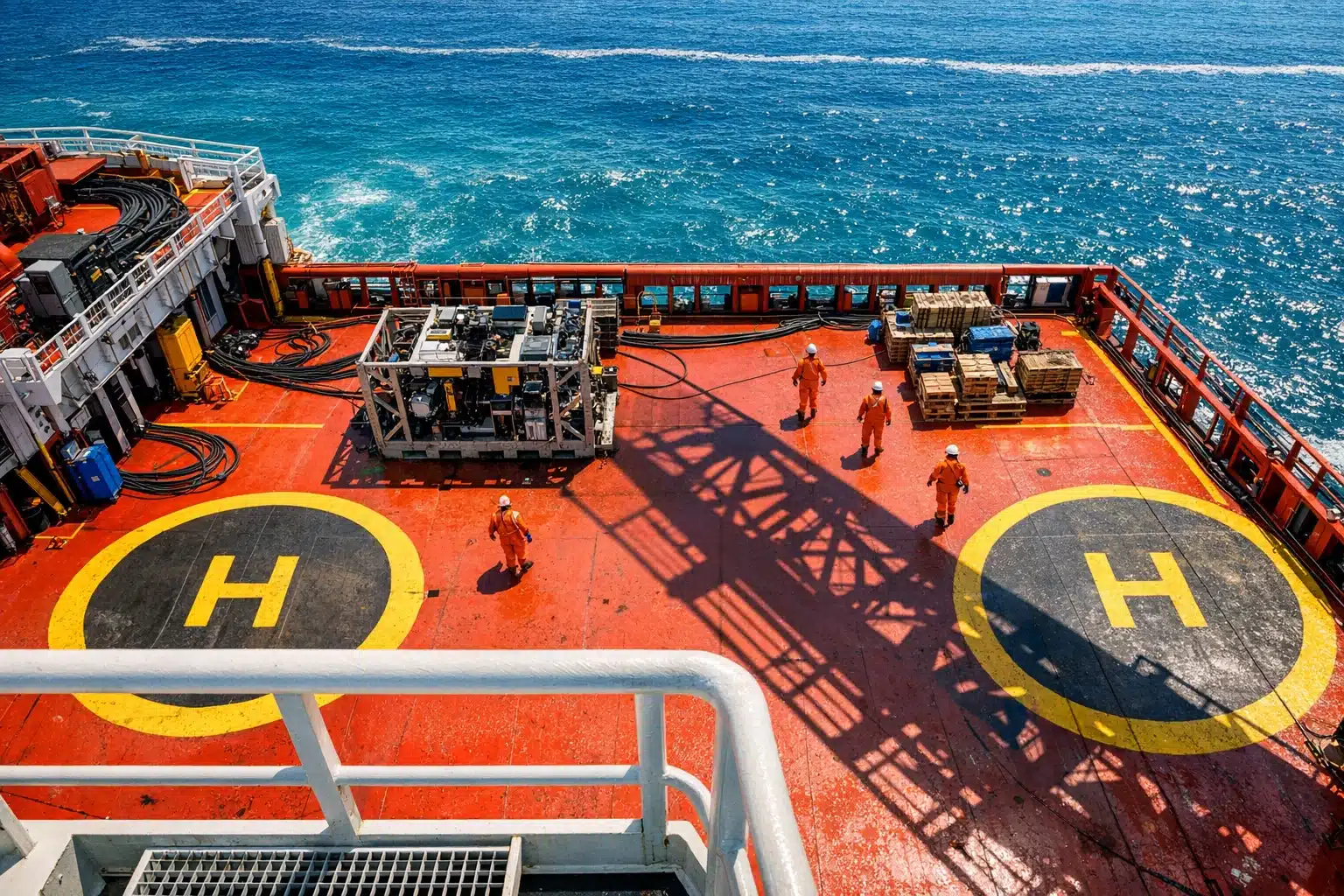
 Artificially generated image
 Short-Term Offshore Careers: Roles, Requirements, and What to Expect
Short-term offshore careers sit at the crossroads of technical skill, travel, and highly structured teamwork. They draw people who want concentrated work periods, flexible contracts, or a gateway into sectors such as offshore wind, marine construction, survey operations, and oil and gas support. The appeal is real, but so are the demands: long shifts, strict safety systems, unpredictable weather, and time away from shore that can test even experienced workers.
Outline
- What short-term offshore careers are and where they are found
- The main roles available across energy, marine, and support services
- Qualifications, medical checks, and training employers usually expect
- Daily life offshore, including schedules, living conditions, and safety culture
- Pay, contracts, career planning, and who this path suits best
1. Understanding Short-Term Offshore Careers and Where the Opportunities Are
Short-term offshore careers are project-based or rotation-based jobs carried out at sea or on offshore installations for limited periods. Unlike permanent offshore positions, which may involve long-term employment with one operator or contractor, short-term roles are often tied to maintenance campaigns, seasonal construction windows, vessel mobilizations, inspections, shutdowns, or specialist interventions. In simple terms, you may be hired for a two-week turbine service job, a month-long survey campaign, or a temporary vessel assignment rather than an open-ended career post from day one.
The offshore world is wider than many newcomers expect. Oil and gas remains a major employer in some regions, but offshore wind has expanded rapidly and created demand for technicians, marine crew, safety staff, and logistics workers. Marine construction, subsea inspection, cable laying, dredging, geotechnical investigation, and research support also generate short-term roles. A person who starts as a deckhand on a support vessel may later move into crane assistance, ROV support, or survey operations. The pathways are not always linear, but they are often more open than outsiders assume.
Common short-term offshore roles include:
- Roustabouts and general deck crew
- Welders, fabricators, and pipefitters
- Electricians and instrument technicians
- Mechanical technicians and hydraulic specialists
- Rope access technicians for inspection and maintenance
- ROV pilot technicians and subsea support staff
- Surveyors and geotechnical technicians
- Offshore medics, cooks, stewards, and housekeeping staff
- HSE advisors, QA inspectors, and logistics coordinators
These jobs differ sharply in entry barriers. A catering role may require food safety certificates, offshore survival training, and experience in hospitality under pressure. A turbine technician role may require electrical competence, manufacturer-specific training, and wind industry safety modules. A subsea inspection contractor might want years of trade experience plus NDT or rope access credentials. So, while the phrase short-term offshore sounds like a single category, it actually covers several industries with different standards, technologies, and risk profiles.
Another key distinction is location. North Sea offshore work, Gulf of Mexico projects, West African marine campaigns, and Asia-Pacific wind developments can all operate under different regulations, visa rules, weather conditions, and employer expectations. A short assignment in one region does not automatically make someone ready for another. Think of the offshore labor market less like a single harbor and more like an archipelago: connected, but made up of very different islands.
2. Requirements, Certifications, and the Skills Employers Usually Expect
For most short-term offshore jobs, enthusiasm alone does not open the door. Offshore employers prioritize safety, reliability, and proof of competence because the working environment is remote, expensive to staff, and unforgiving when things go wrong. Even entry-level support roles usually require basic compliance documents before a candidate can be mobilized. That is why the first serious step is not sending out dozens of applications, but understanding the minimum requirements for the sector you want to enter.
Several certifications appear again and again in offshore recruitment. Which ones matter depends on whether you are going to an installation, a vessel, or a wind asset, but the most common categories include:
- Offshore survival training such as BOSIET or FOET
- Helicopter underwater escape training where required
- Offshore medical certification
- Sea survival or STCW courses for marine vessel assignments
- GWO Basic Safety Training for offshore wind roles
- Trade licenses or technical qualifications relevant to the job
- Additional modules such as H2S awareness, confined space, or first aid
Medical fitness is a particularly important filter. Offshore employers usually need workers who can manage stairs, ladders, confined spaces, vessel movement, and emergency procedures. Depending on the role, hearing, vision, respiratory health, and general physical condition may be assessed. This does not mean every offshore worker must be an athlete, but it does mean that stamina and baseline health are treated as operational issues, not personal extras.
Experience expectations vary. A chef with years in remote camps or large industrial kitchens may transition into offshore hospitality more easily than someone from a small café. A domestic electrician may still need additional industrial exposure before being considered for offshore maintenance. Likewise, a mechanically minded newcomer might find a route into support roles, but specialist technical jobs often demand documented field experience. Employers want evidence that you can follow permit systems, communicate clearly in safety-critical settings, and work without constant supervision.
Soft skills matter more than many candidates realize. Offshore work rewards people who stay calm, respect procedures, and function well in close quarters. You are not only being hired for what you know, but for how you behave when plans change, weather worsens, or a 12-hour shift runs into a complex handover. People who are punctual, adaptable, and easy to work with often receive repeat calls. In short-term offshore careers, reputation travels almost as fast as the helicopter manifest.
3. Life on Rotation: Schedules, Living Conditions, and the Reality of the Job
From shore, offshore work can look dramatic in a cinematic way: steel decks, spray in the air, turbines on the horizon, and work crews moving with practiced urgency. In reality, the daily rhythm is usually less glamorous and far more disciplined. Many short-term offshore jobs run on 12-hour shifts, often with day and night crews. Rotation patterns vary by company and sector, but 7 days on and 7 off, 14 on and 14 off, or 21 on and 21 off are familiar formats. Some construction and survey campaigns last longer, especially when vessel schedules are tight.
Life offshore is built around routines. Wake up, eat, attend toolbox talks or handovers, work, document what was done, eat again, rest, and repeat. Accommodation ranges from basic to surprisingly comfortable depending on the installation or vessel. You may share cabins, follow strict meal times, and have limited privacy. Internet access can be inconsistent, and even where connectivity exists, it may not feel anything like home. For some workers, the hardest part is not the labor itself but the compressed social environment: the same faces, the same steel corridors, the same operational focus, day after day.
Most newcomers adjust more smoothly when they understand a few practical realities:
- Safety paperwork is a major part of the job, not an interruption to it
- Weather can delay crew changes, cargo transfers, and task plans
- Fatigue management is taken seriously, especially during long rotations
- Personal discipline matters, from hydration to sleep routines
- Team chemistry can influence whether a difficult hitch feels manageable or draining
There are major differences between offshore sectors. On a wind farm support vessel, the tempo may be linked to weather windows and technician transfers. On an oil and gas platform, maintenance and compliance routines may dominate the day. On a survey vessel, operations can become highly technical and data-driven, with specialists coordinating equipment, software, and deck activity in close sequence. Hospitality roles offshore have their own demands too, with catering and housekeeping staff helping maintain morale and order in what can otherwise become a repetitive environment.
The emotional pattern is also distinctive. Some workers enjoy the sharp divide between work time and home time, finding that rotational life creates a cleaner mental boundary than a five-day urban commute. Others discover that extended absences strain family routines or make social planning harder. The truth is that offshore work does not merely change where you work. It reshapes how your weeks are built, how your energy is spent, and how you think about time itself.
4. Pay, Contracts, Career Progression, and How to Judge the Opportunity
One of the strongest reasons people look at short-term offshore careers is compensation. Offshore work can offer higher pay than comparable onshore roles, especially where the job includes specialist technical skills, remote logistics, or safety-critical responsibilities. However, the financial picture is rarely as simple as a headline day rate. Two candidates may both say they work offshore while having completely different earnings, tax obligations, benefits, and travel arrangements. A short-term galley role, for example, sits in a very different pay band from a rope access inspector or a subsea electronics technician.
When comparing offers, it helps to look beyond the top line. A contract may include travel, accommodation, meals, and rotational allowances, or it may expect the worker to manage part of that process independently. Some roles are employee contracts with leave entitlement and employer contributions. Others are contractor arrangements where you invoice for your time and carry more personal responsibility for taxes, insurance, and gaps between assignments. Short-term offshore careers can feel financially attractive during busy periods, but they may also be uneven. A strong month can be followed by a quiet one.
Useful questions to ask before accepting a role include:
- What is the exact rotation or campaign length?
- Is the rate hourly, daily, or project-based?
- Are travel days paid?
- Who covers flights, hotels, and mobilization costs?
- What certifications must be current before joining?
- Is there overtime, standby pay, or weather downtime compensation?
- What are the notice periods and cancellation terms?
Career progression in short-term offshore work often happens through credibility rather than formal promotion ladders. If you show up prepared, work safely, and solve problems without drama, agencies and contractors remember you. Repeat mobilizations can lead to better assignments, longer campaigns, or direct-hire opportunities. In some cases, workers use short-term contracts strategically: they build offshore sea time, save money for more training, and then pivot into higher-value specialties such as inspection, electrical commissioning, subsea robotics, or wind turbine maintenance.
The wisest approach is to treat each contract as both income and evidence. It is a paycheck, yes, but it is also a reference point on your CV, a chance to build contacts, and a test of whether the sector suits you. The offshore world rewards technical growth, but it also rewards judgment. Taking the right modest contract can sometimes do more for a career than chasing the flashiest rate on paper.
5. Who These Careers Suit Best and Final Advice for Newcomers
Short-term offshore careers are not only for thrill-seekers, nor are they reserved exclusively for veteran energy workers. They tend to suit people who are comfortable with structure, prepared for physical and logistical demands, and motivated by concentrated periods of work rather than a conventional weekly routine. If you like variety, can adapt quickly to new teams, and do not mind being judged on practical competence, the model can work well. If you need highly predictable evenings, daily family presence, or constant social freedom, the trade-offs may feel heavier.
The strongest candidates often share a few traits. They take paperwork seriously, ask sensible questions, and understand that safety culture is part of professional identity offshore. They also resist the temptation to romanticize the lifestyle. There can be striking moments, of course: a cold dawn over the helideck, a transfer vessel rising and falling beside a tower, a midnight shift that feels suspended between industry and weather. But a sustainable offshore career is built on consistency more than spectacle. Reliability beats bravado.
If you are considering this path, a practical starting plan might look like this:
- Choose a target sector such as offshore wind, marine vessels, oil and gas support, or offshore hospitality
- Research the baseline training and medical requirements in that sector
- Match your current trade or work history to realistic entry points
- Budget for certifications and document renewals before expecting fast returns
- Build a CV that highlights safety, shift work, technical competence, and remote-site experience
- Apply through established agencies, contractors, and operator-approved recruitment channels
For career changers, the smartest move is often to begin with a role adjacent to existing experience. A mechanic might target offshore maintenance support. A cook with remote camp experience might step into galley operations. A mariner with vessel time may transition into offshore support shipping. This reduces the training gap and gives employers a clearer reason to take your application seriously.
In the end, short-term offshore careers make the most sense for readers who want strong earning potential, clear blocks of work and rest, and exposure to technically demanding industries without assuming that every contract will be easy or permanent. If that sounds like you, approach the field with preparation rather than impulse. Learn the standards, respect the environment, and evaluate each job for what it truly offers. Offshore work can open doors, but it tends to open them for the people who arrive ready.