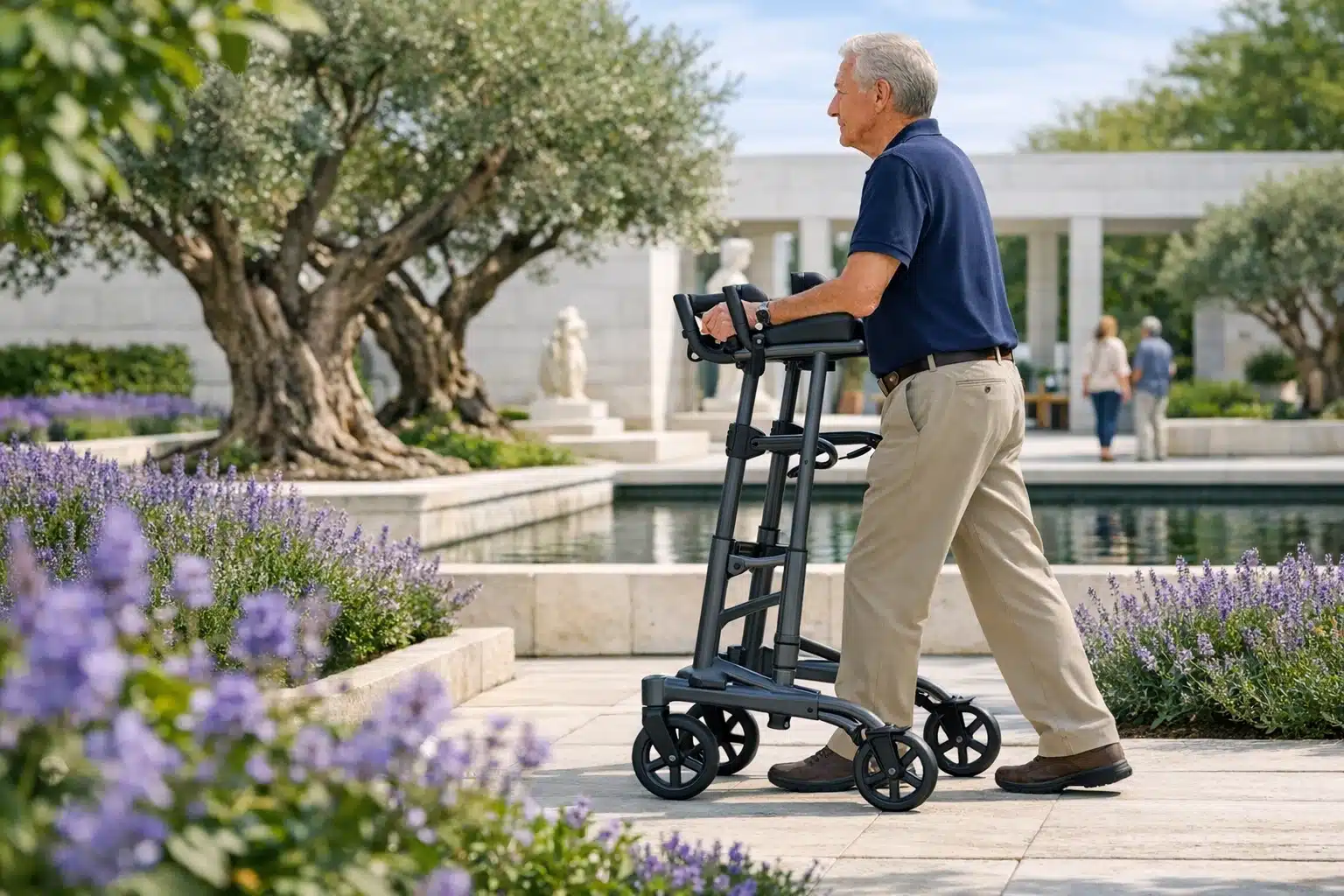
 Artificially generated image
 Exploring Modern Mobility Solutions What Seniors Are Actually Using
Picture the mobility aisle today and the scene is very different from a decade ago. Seniors can choose lighter frames, easier brakes, better seats, and designs that fit apartments, sidewalks, and grocery trips instead of hospital corridors. That shift matters because the right device can support balance, reduce fatigue, and make everyday routines feel possible again. In the sections ahead, we compare modern walkers, newer walking devices, and broader mobility solutions people are genuinely using.
Outline: This article begins with why mobility tools matter more than ever for aging adults. It then compares the main types of modern walkers and explains where each one fits. After that, it looks at other walking devices and wider mobility options that often work better in specific situations. The final sections focus on choosing safely, matching a device to real life, and offering practical conclusions for seniors and families.
Why Modern Mobility Solutions Matter More Than Ever
Mobility is not just about moving from room to room. For many older adults, it is tied to privacy, social life, confidence, and even identity. When walking becomes tiring or unsteady, the effects travel far beyond the body. A person may stop going to the park, turn down lunch invitations, avoid church or community events, or feel nervous in a crowded pharmacy line. That is why modern mobility solutions matter: they are not simply aids, they are tools that can preserve participation in daily life.
The need is growing. The World Health Organization has noted that by 2030, one in six people in the world will be aged 60 or older. At the same time, falls remain a major concern. In the United States, the CDC has long reported that roughly one in four adults aged 65 and older experiences a fall each year. Not every fall leads to serious injury, but the fear of falling can be almost as limiting as the event itself. A senior who feels unstable may begin walking less, and less walking can contribute to weaker muscles, reduced endurance, and lower balance confidence. It becomes a quiet cycle.
Modern devices aim to interrupt that cycle. Older walkers were often basic aluminum frames built mainly for support. Today’s designs reflect a much wider understanding of how people actually move through life. Manufacturers now think about turning radius, hand comfort, storage bags, seat height, wheel size, curb handling, foldability, and posture. Some even account for how a device looks, which matters more than people admit. If a mobility aid feels clinical, awkward, or noisy, users may leave it at home. If it feels practical and dignified, it is more likely to become part of the routine.
A useful way to understand today’s mobility market is to think in layers:
• support for balance
• support for endurance
• support for safety in different environments
• support for independence during errands and social outings
That last point is easy to overlook. A senior may be able to walk from bedroom to kitchen, yet still struggle with sidewalks, parking lots, museum visits, or long clinic corridors. In those moments, a modern mobility solution can act less like a symbol of limitation and more like a bridge back into ordinary life. The best devices do not promise perfection. They simply make motion less draining, less risky, and more realistic for the places people actually go.
Modern Walkers: How Today’s Designs Compare With Older Models
The phrase modern walker covers several very different products, and the differences matter. The simplest model is still the standard walker, usually a lightweight frame with four legs and no wheels. It offers strong stability because the user lifts it and places it forward before stepping. That can be helpful after surgery or during rehabilitation, especially when maximum support matters more than speed. The trade-off is effort. Standard walkers can feel slow, and lifting them repeatedly may be tiring for people with arthritis, shoulder pain, or limited grip strength.
The next step up is the two-wheel walker, often called a front-wheel walker. It keeps the stable frame but adds wheels in front, reducing the need to lift the device completely. For many seniors, this is a sweet spot indoors. It moves more smoothly than a standard walker but still discourages the quick rolling that can happen with less controlled devices. It is often recommended when a person needs consistent support and a simple walking pattern. Compared with older all-rubber-tip frames, these models usually glide more naturally across tile, vinyl, or low-pile carpet.
Then there is the rollator, probably the most visible modern walker in public spaces. Most rollators have four wheels, hand brakes, a seat, and a storage pouch or basket. That combination explains their popularity. Seniors who are fairly mobile but tire easily often like having a place to sit while waiting in line or walking through a large store. Typical models weigh roughly 14 to 25 pounds, though lighter and heavier versions exist. Weight capacity commonly ranges from about 250 to 450 pounds depending on design. Larger wheels tend to handle cracks, sidewalks, and outdoor paths better, while compact wheels often suit indoor use and small apartments.
One of the most talked-about categories is the upright walker, sometimes called a posture walker. These models place the user’s forearms on padded supports so the body remains more upright. For people who hunch over a traditional rollator, that can feel like a major improvement. The benefit is not automatic, however. Upright models are often bulkier, sometimes cost more, and may require careful fitting. They can be helpful for users with neck, shoulder, or back discomfort, but they are not ideal for everyone.
When comparing modern walkers, the real distinctions usually come down to daily needs:
• standard walker: maximum stability, slower pace, often better for early recovery
• two-wheel walker: good indoor control, less lifting, familiar frame
• rollator: best for active users who want speed, a seat, and storage
• upright walker: useful for posture support and longer walks if properly fitted
The old image of a squeaky metal frame parked by the hallway wall is no longer the whole story. Modern walkers are more specialized, more user-friendly, and far closer to lifestyle tools than their predecessors. The right model depends less on trends and more on where, how, and how far a person truly walks.
Beyond the Walker: Modern Walking Devices and Wider Mobility Options
Not every senior needs a walker, and not every walking problem is solved by one. That is where modern walking devices enter the picture. These tools fill the space between complete independence and heavier mobility equipment. They are especially useful for people whose needs change by location, energy level, or time of day. A person may use a cane indoors, a rollator for longer outings, and a scooter only at airports or large attractions. That mix is more common than many families expect.
The cane remains one of the most widely used devices because it is simple, portable, and socially familiar. Modern canes, however, are far more varied than the classic single-tip stick. Today’s options include offset-handle canes for better wrist alignment, foldable travel canes, quad canes for a wider base, and ergonomic grips designed to reduce hand strain. Some newer models add small LED lights, secondary handles to help with standing, or shock-absorbing features. A cane is generally best for mild balance issues or for unloading one side slightly, not for substantial instability. If someone is leaning hard on it, the device may be too minimal.
Trekking-style walking poles have also found a place among older adults, especially active seniors who enjoy walking outdoors. Used as a pair, they can increase points of contact with the ground and encourage a more rhythmic gait. They are not a substitute for a walker in someone with significant balance loss, but they can be useful for fitness walking, park trails, or maintaining pace on uneven surfaces. Some people simply feel more natural with poles than with a traditional medical-looking aid.
At the more advanced end are smart and specialty devices. These include posture-support frames, brake-assisted rollators, laser-guided cues sometimes used in neurological care, and electronic features such as fall alerts or GPS in select models. It is worth noting that the most high-tech device is not always the best device. Smart features can be helpful, but they can also add cost, charging needs, and complexity. Many seniors prefer mechanical simplicity over digital novelty.
Broader mobility solutions also matter. A walking aid works better when the rest of the environment supports it. That may include:
• lightweight transport chairs for appointments that involve long corridors
• mobility scooters for longer community distances when walking endurance is limited
• portable ramps for thresholds
• grab bars and railings that improve transitions in and out of the home
• well-fitted shoes with stable soles
In practice, modern mobility is rarely one device doing everything. It is usually a small system. The best solution might be a cane for short household tasks, a rollator for errands, and a scooter for a day at the zoo with grandchildren. That flexibility is not a failure of walking ability. It is often a smart response to real-world demands.
How to Choose the Right Mobility Solution for Real Homes and Real Routines
Choosing a mobility device well is less about buying the newest product and more about matching the tool to actual life. That sounds obvious, yet many poor purchases happen because decisions are based on appearances, advertising, or assumptions from a single store visit. A walker that feels smooth in a showroom may be awkward in a narrow bathroom. A stylish rollator may look ideal until it needs to fit into a small car trunk. Good choices come from honest observation: where does the person walk, what surfaces are involved, how much support is needed, and how much lifting can the user or caregiver manage?
Fit is one of the first essentials. Handles that are too low can encourage stooping, while handles that are too high may reduce control and strain the shoulders. Seat height on a rollator also matters because a user should be able to sit and stand without collapsing down or struggling upward. Width matters just as much. Many interior doorways are around 28 to 32 inches wide, so a device that feels fine in a big store may be a headache at home. This is why measurement is not a fussy detail; it is basic planning.
Environment changes everything. Indoor users often benefit from lighter, narrower frames with easy turning. Outdoor walkers may need larger wheels, stronger brakes, and steadier performance over pavement seams, ramps, or rough sidewalks. Seniors who ride in a family car need a device that folds easily and is not too heavy to lift. Common buying priorities often include:
• manageable weight
• reliable brakes
• a comfortable grip
• easy folding
• a seat if fatigue is an issue
• a basket or pouch for medication, keys, water, or groceries
Professional guidance is often worth it. A physical therapist or occupational therapist can watch a person walk, check posture, evaluate hand strength, and identify whether the problem is balance, endurance, pain, or a mix of all three. That matters because a device can help one problem while making another worse if it is poorly matched. For example, a rollator may encourage better community mobility for one person, while another may move too quickly on it and lose control on slopes or thresholds.
Maintenance is another quiet issue. Modern devices still need routine attention. Brakes loosen, wheels wear, rubber tips age, folding latches can stiffen, and seat fabric may fray. A safe device is not just bought; it is kept in working order. The best mobility solution is the one that fits the body, the home, the travel pattern, and the level of confidence the user actually has. If a product seems impressive but does not match those realities, it is probably the wrong choice.
Conclusion for Seniors and Families: What People Are Actually Using and What Usually Works
If there is one clear lesson from modern mobility, it is that seniors are not all choosing the same tool, and that is a good thing. The most common real-world pattern is practical variety. Many older adults with mild balance changes still rely on a well-fitted cane. Those who need more support indoors often use a two-wheel walker. Active seniors who want to shop, walk outdoors, or rest when needed frequently choose four-wheel rollators with seats. People with posture issues sometimes move toward upright walkers, while those with limited endurance for long outings may add a scooter or transport chair for distance. The market has expanded because everyday life is varied, not because one product became universally better.
For seniors themselves, the best approach is to focus on what helps you move more confidently and more consistently. A mobility aid should not feel like a verdict on independence. In many cases, it protects independence by making movement safer and less exhausting. The real question is not, “Can I get by without it?” but “Does this let me do more of what matters to me?” That might mean attending a grandchild’s recital, walking through the farmers market, cooking without worrying about the trip from counter to table, or simply getting outside without second-guessing every crack in the sidewalk.
For adult children and caregivers, the goal is not to push the most advanced device or the least visible one. It is to support the most usable one. Helpful questions include:
• Does this device match the person’s current strength and balance?
• Can it be used safely in the home?
• Is it easy enough that the person will actually keep using it?
• Does it solve a real problem such as fatigue, pain, or instability?
• Can it be transported and maintained without daily frustration?
Modern mobility solutions work best when they respect real habits. Seniors are actually using devices that fit their kitchens, sidewalks, cars, hands, budgets, and routines. That may sound less dramatic than futuristic advertising, but it is more useful. A good mobility solution is not the flashiest machine in the catalog. It is the one that quietly expands daily life, supports confidence, and makes ordinary movement feel open again.