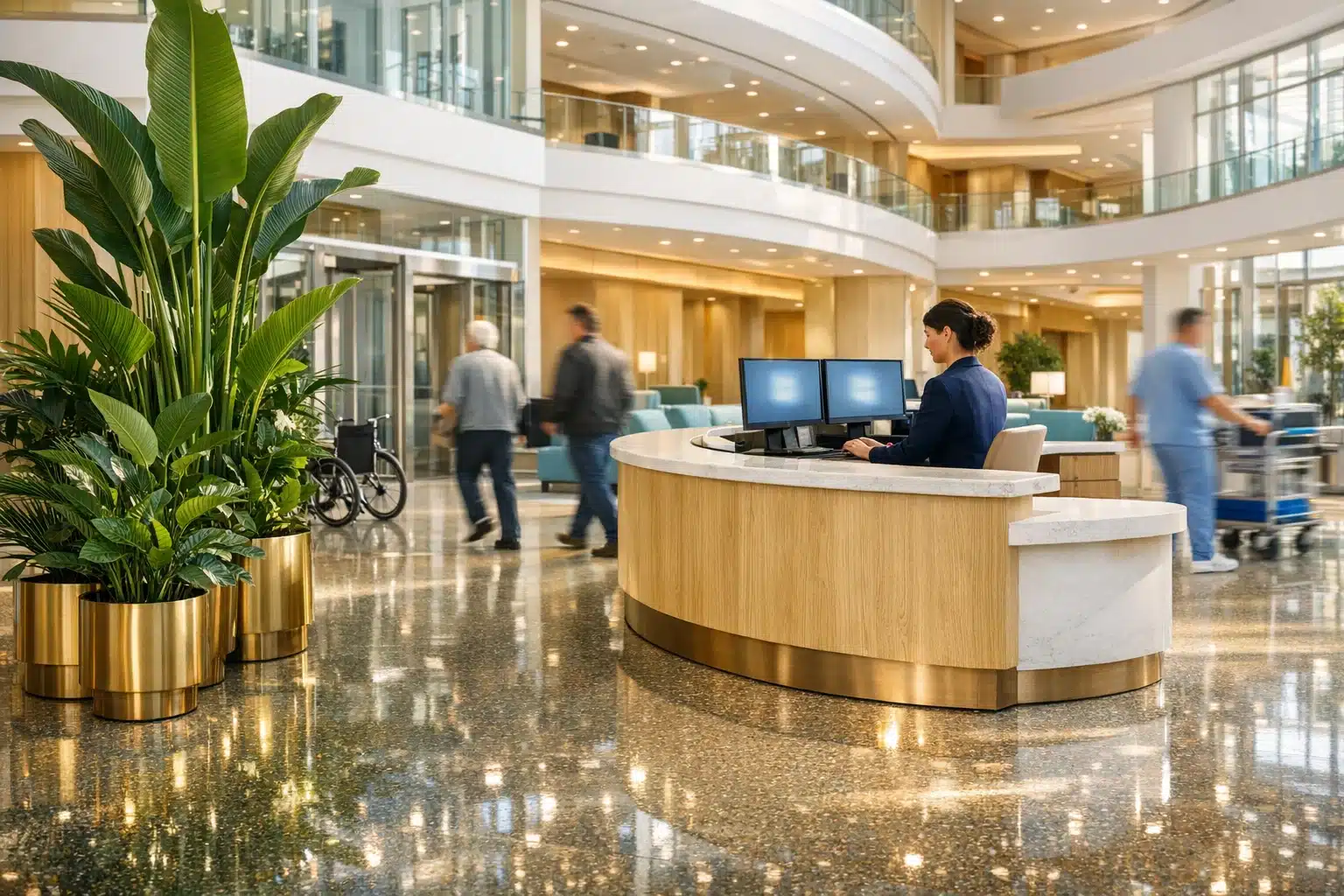
Hospital Receptionist Work Guide: Careers, Duties, and Skills
Hospital receptionists do far more than answer phones and greet visitors. They guide patients through one of the most stressful moments in healthcare: arrival, registration, scheduling, and those first uncertain questions. In busy clinics and major hospitals alike, their accuracy influences waiting times, privacy protection, billing flow, and patient confidence. This guide explores what the job involves, how careers grow from it, and which habits help new professionals succeed from the start.
Outline: This article begins with a clear look at what hospital receptionist work includes in practice. It then follows the rhythm of a typical shift to show how pace, pressure, and patient needs shape the role. The third section explains the skills, training, and tools that matter most. The fourth section examines career paths, advancement options, and the factors that influence earnings and long-term prospects. The final section serves as a practical work guide with realistic advice for aspiring and current hospital receptionists.
1. Understanding Hospital Receptionist Work in Real Terms
At first glance, the hospital receptionist may seem to occupy a simple front-desk role, but the reality is far more layered. In many healthcare settings, this position blends customer service, administration, information handling, and emotional intelligence into one continuous stream of work. The receptionist is often the first person a patient or family member encounters, which means the role carries both practical and human weight. A clear voice, accurate data entry, and a calm expression can set the tone for the entire visit.
Hospital receptionist work usually begins with patient intake. This can include confirming appointments, checking identification, verifying insurance details, updating demographic information, and directing patients to the correct department. In outpatient centers, the flow may be heavily schedule-based. In hospitals with walk-in traffic, the rhythm can shift quickly as unexpected cases, delayed appointments, or distressed visitors arrive. Unlike a standard office receptionist, someone in a hospital must work within stricter privacy standards, more complex workflows, and a broader mix of medical departments.
Core responsibilities often include: • greeting patients and visitors professionally • managing phone calls and internal extensions • registering new patients or updating existing files • confirming insurance and payment details • coordinating with nurses, physicians, and transport staff • explaining forms and basic visit procedures • maintaining waiting area order and confidentiality. Each of these tasks sounds manageable on its own, but together they form a role that demands sustained concentration.
One useful comparison is this: a hotel receptionist focuses on service and logistics, while a hospital receptionist must balance service, logistics, urgency, and legal sensitivity. A missed room number in hospitality is inconvenient; an inaccurate date of birth or insurance field in healthcare can delay treatment, create billing issues, or place protected information at risk. That difference explains why employers value reliability so highly in this role.
The work also varies by department. Receptionists in emergency settings deal with unpredictable surges and emotionally charged situations. Those in radiology or surgery scheduling may spend more time coordinating paperwork and pre-visit instructions. In maternity, oncology, or pediatrics, communication style matters even more because patients and families may be anxious, fatigued, or overwhelmed. Across all these settings, the central purpose stays the same: to create an orderly, informed, respectful entry point into the hospital system.
2. A Day at the Front Desk: Pace, Pressure, and Patient Experience
If you want to understand hospital receptionist work, imagine a desk that operates like a small control tower. Phones ring, appointment times shift, visitors ask for directions, clinicians request updates, and patients arrive carrying everything from insurance cards to quiet fear. The receptionist keeps the visible side of the system moving, often while solving small problems before they grow into larger disruptions. That is why the job rewards people who can stay composed when the room changes mood in a matter of minutes.
A typical shift may begin before the first patient enters the lobby. The receptionist might log into scheduling software, review the day’s appointments, note cancellations, print forms, and check messages left overnight. Once the front desk opens, the pace can accelerate quickly. Some patients are early, some are late, some forgot documents, and some are visiting a hospital for the first time and need careful direction. In that first hour alone, the receptionist may welcome families, answer external calls, transfer internal lines, and notify departments of arrivals.
The patient experience is strongly influenced by how this moment is handled. Research and patient satisfaction trends consistently show that communication and waiting transparency matter almost as much as speed. People are often more patient when they know what is happening. A receptionist who says, “Your appointment is delayed by about fifteen minutes, and I’ll update you if that changes,” provides structure in a situation that otherwise feels uncertain. That clarity can reduce frustration before it reaches clinical staff.
The job also involves pressure points that outsiders may not see. For example, receptionists must guard privacy while speaking in public-facing spaces. They need to confirm sensitive details without exposing personal information to the waiting room. They may also interact with individuals who are frightened, grieving, confused, or angry. In those moments, soft skills become operational skills. Calm listening, brief explanations, and a neutral tone can prevent escalation.
Work conditions differ by facility. In a small community hospital, the receptionist may handle a wider variety of tasks and know frequent patients by name. In a large urban medical center, the role may be more specialized, but the volume is usually higher and the systems more layered. Evening, weekend, and holiday shifts can bring different challenges, especially in 24-hour settings. Yet the through line remains steady: every shift depends on accuracy, patience, and the ability to move from one need to the next without losing focus.
3. Essential Skills, Training, and Tools for Success
Hospital receptionists are rarely hired for charm alone. Employers usually look for a practical mix of communication ability, digital competence, discretion, and resilience. The role may be entry-level in some organizations, but it is not low-skill. In fact, it can be one of the clearest examples of how “soft skills” and “hard skills” work together. A receptionist must handle software, forms, and scheduling rules while also reading the room, adjusting tone, and keeping people informed.
Communication is the foundation. This includes speaking clearly, listening carefully, and writing short, accurate notes. Receptionists often need to explain routine procedures without sounding rushed or robotic. They may also need to redirect patients diplomatically when they cannot answer clinical questions. Good wording matters. Saying, “I can help with your appointment and registration, and I’ll connect you with the nurse for medical questions,” is more useful than simply saying, “I don’t know.”
Attention to detail is equally important. Hospitals rely on precise records, and even minor errors can create avoidable delays. Names, dates of birth, insurance numbers, phone numbers, referral details, and department locations all need to be handled carefully. Familiarity with electronic health record systems, scheduling platforms, and secure messaging tools is now standard in many facilities. A strong receptionist does not need to be a programmer, but they do need to navigate digital systems confidently and learn new workflows without panic.
Important skills and knowledge areas include: • patient registration procedures • basic insurance verification • appointment scheduling • confidentiality and privacy practices • conflict de-escalation • switchboard or multi-line phone handling • time management • accurate data entry. In many countries and organizations, privacy training is mandatory because reception staff regularly encounter protected health information.
Formal education requirements are often modest, with many employers accepting a high school diploma or equivalent, especially when paired with relevant experience. However, additional training can improve job prospects. Courses in medical terminology, healthcare administration, customer service, or office software can make a candidate more competitive. Some receptionists move into the field from retail, hospitality, or call-center work because those environments build patience and service awareness. The difference is that healthcare adds confidentiality, documentation standards, and a stronger need for precision.
Perhaps the most underrated skill is emotional steadiness. Hospitals are full of urgency, but receptionists cannot absorb every emotion in the room. The best professionals learn how to stay compassionate without becoming overwhelmed. They treat each interaction seriously, but they do not carry the entire building on their shoulders. That balance is not flashy, yet it is one of the quiet skills that separates an average front desk from an excellent one.
4. Hospital Receptionist Careers: Entry Routes, Opportunities, and Growth
For many people, hospital receptionist careers offer a practical entry point into healthcare without requiring years of clinical education. That is one reason the role attracts career starters, career changers, and professionals returning to work after a break. It provides exposure to medical systems, patient service, scheduling operations, and administrative procedures, all of which can open doors to broader healthcare careers over time.
The most common entry route is straightforward: a candidate with general administrative or customer-facing experience applies for a receptionist, patient access, or front-desk coordinator role in a hospital or outpatient unit. Employers often value previous experience in reception, retail service, hospitality, or office support because those jobs build habits that transfer well: handling multiple requests, staying polite under pressure, and keeping records organized. Candidates who add medical terminology knowledge or healthcare software familiarity can stand out more quickly in the hiring process.
Career progression can move in several directions. Some receptionists deepen their expertise and become senior reception staff, patient access specialists, admissions coordinators, or unit clerks. Others move into medical office administration, billing support, health information management, scheduling supervision, or departmental coordination. In some cases, the role becomes a stepping stone into formal healthcare administration programs. Someone who starts at the desk may later understand patient flow, insurance challenges, and operational bottlenecks better than a person who entered management through theory alone.
Factors that influence pay and opportunity typically include: • region and local labor market • hospital size and funding structure • level of specialization • evening or weekend shift differentials • years of experience • software and insurance knowledge • supervisory responsibilities. A receptionist in a small private practice may have a narrower task range, while one in a major hospital may manage higher volume and more complex systems, which can affect compensation and advancement prospects.
Another useful comparison is between static jobs and career-building jobs. A static role asks you to repeat the same tasks indefinitely. A career-building receptionist role teaches transferable knowledge: patient registration, documentation control, interdepartmental communication, and service recovery. When job seekers evaluate openings, they should look beyond the title and ask what the environment will teach them. A unit with strong training, updated systems, and cross-functional exposure may provide more long-term value than a slightly higher starting wage in a poorly organized setting.
For those who enjoy structure, people contact, and healthcare environments, this career can be more durable than it first appears. Hospitals continue to need organized professionals who can bridge the gap between human concern and administrative order. The front desk may not wear scrubs, but it remains part of the machinery that helps care happen on time and with fewer preventable problems.
5. Hospital Receptionist Work Guide and Final Advice for Aspiring Professionals
If you are considering this role, the most helpful approach is to treat it as a professional discipline, not just a desk job. The strongest hospital receptionists build routines that protect both speed and accuracy. Before your first day, learn the layout of the facility if possible, review common department names, and become familiar with the difference between scheduling support and clinical advice. Patients often assume the front desk can answer everything. A prepared receptionist knows how to help without crossing professional boundaries.
During the first weeks, focus on consistency. Learn how the hospital checks in patients, verifies identification, handles missed appointments, processes urgent add-ons, and protects private information in public spaces. Keep a written reference for common extensions, department locations, and recurring procedures. Small systems save time. A receptionist who pauses to check a reliable note is usually more effective than one who guesses and creates extra work for others later.
A practical day-to-day guide looks like this: • greet each person promptly, even if you are still finishing another task • confirm details carefully rather than relying on memory • explain delays honestly and briefly • document actions as you go • escalate medical or security concerns immediately • maintain a calm tone, especially when others do not • reset your workspace between rushes. These habits sound simple, but together they create trust. In healthcare, trust is often built through ordinary moments handled well.
It is also wise to develop language for common situations. For example: “Let me confirm that for you,” buys time without sounding evasive. “I’ll contact the department now,” shows action. “I’m not able to give medical advice, but I can connect you to the right team,” protects boundaries while remaining helpful. Having a few reliable phrases reduces stress and prevents reactive communication.
For long-term success, pay attention to what the role teaches you. Notice how insurance questions affect scheduling, how unclear signage creates confusion, how patient anxiety changes communication, and how clinicians depend on clean administrative handoffs. These observations can help you improve in the current job and prepare for future steps in healthcare administration.
Conclusion for job seekers and current staff: hospital receptionist work is demanding because it sits where systems and emotions meet. If you value meaningful routines, human contact, and organized problem-solving, this path can be a strong fit and a credible starting point for a broader healthcare career. Enter it with patience, precision, and a willingness to learn, and the role becomes more than a seat at the front desk. It becomes a position of trust that helps patients feel guided from the moment they walk through the door.