Portable and Mini Espresso Machines: A Practical Buying Guide
Introduction and Outline: Why Portable and Mini Espresso Machines Matter
Portable and mini espresso machines matter because they solve a very modern problem: people want better coffee in places where a full-size setup makes little sense. A hotel room, a tiny apartment, a train commute, a camper van, or a crowded office desk can all become workable espresso stations when size, weight, and power needs stay manageable. What once felt like a novelty niche now looks far more practical for anyone who values convenience but still cares about aroma, texture, and routine.
That shift is easy to understand. Traditional espresso equipment can be expensive, heavy, and demanding. Even entry-level home machines take up counter space, need regular cleaning, and often work best when paired with a separate grinder. Portable and mini machines try to reduce those barriers. Some are fully manual and lightweight enough to fit in a backpack. Others use rechargeable batteries or compact plugs to heat water and create pressure on their own. A different branch of the category includes mini countertop espresso machines: small enough for limited kitchens, yet still built for everyday use.
The appeal is not only about travel. These machines are relevant to students in dorms, remote workers who want coffee between calls, drivers who spend long days on the road, and apartment dwellers who cannot justify a large appliance for one or two drinks a day. They also attract people who simply enjoy the ritual of making coffee in unusual places. There is something undeniably satisfying about producing a short, rich shot from a machine no bigger than a water bottle.
This guide follows a simple outline so the buying process feels less confusing:
- What portable and mini espresso machines actually do, and how close they come to true espresso
- The main types on the market, from manual handheld brewers to compact electric machines
- The strengths and trade-offs of each design, including taste, portability, speed, and maintenance
- The features worth checking before you buy, such as pressure, heating, battery life, and compatibility
- Which kind of user benefits most from each option, plus realistic final recommendations
If you are hoping for a clear answer to the question, “What should I buy without regretting it later?” this guide is built for exactly that moment.
How Portable and Mini Espresso Machines Work
To judge a compact espresso machine properly, it helps to understand what espresso requires. True espresso is not just strong coffee in a small cup. It is brewed by forcing hot water through finely ground coffee under pressure, usually with a target close to 9 bars at the coffee bed. The water temperature is typically kept in a range around 90 to 96 degrees Celsius, and the extraction often lands near 25 to 35 seconds depending on the coffee, grind, and recipe. When a machine is tiny, delivering those conditions consistently becomes the real engineering challenge.
Portable machines solve that challenge in different ways. Manual models rely on hand pumping, lever action, or piston pressure. These can be impressively compact, and many work best when you add preheated water from a kettle or thermos. They often reward careful technique, but they also ask more from the user. Electric portable machines usually add a small pump and, in some cases, a built-in heater. That reduces effort, though it increases weight, cost, and charging needs. Mini countertop machines take another approach: they are not pocketable, but they shrink the footprint of a conventional espresso setup while keeping a more familiar brewing process.
Several variables shape the final cup:
- Pressure generation: manual force, battery pump, or electric pump
- Water heating: external hot water, internal heating element, or stovetop support
- Coffee format: ground coffee, capsules, or dual compatibility
- Brew chamber size: smaller baskets can limit shot volume and strength options
- Thermal stability: a tiny water path can cool quickly if the design is weak
One common source of confusion is marketing around pressure. Some compact machines advertise 15 or even 20 bars, but that number alone does not guarantee better espresso. In practice, stable pressure, suitable grind size, even saturation of the coffee puck, and adequate heat matter more than a large figure on the box. A portable machine that uses preheated water and a good grind can outperform a more automated model with poor temperature control.
The smallest devices also require realistic expectations. They can produce espresso-style coffee that is concentrated, pleasant, and surprisingly layered, but they may not match the thermal consistency of larger home equipment. That does not make them a poor choice. It simply means the best portable or mini machine is the one that fits your use case, your patience, and your willingness to trade a little perfection for a lot of flexibility.
Main Types Compared: Manual, Electric, Capsule, and Mini Countertop Models
The portable and mini espresso market is easier to navigate when you separate products into four broad groups. Each one serves a different kind of drinker, and the gap between them is larger than it first appears. The person who wants coffee on a mountain trail is not shopping for the same machine as the person outfitting a small city kitchen.
First are manual handheld espresso makers. These are usually the lightest and most travel-friendly machines in the category, often weighing only a few hundred grams. They tend to work with ground coffee, though some accept adapters for capsules. Their biggest strengths are portability, low dependence on electricity, and mechanical simplicity. Their weaknesses are equally clear: you need hot water from another source, and the quality of the shot depends heavily on your grind, tamp, and pumping technique. For hikers, campers, and minimalists, that trade can be worth it.
Second are electric portable machines with built-in batteries or vehicle charging options. These appeal to commuters, drivers, office workers, and travelers who want convenience first. Many can heat water themselves, while others perform more shots per charge if you start with hot water. Battery life varies widely, but it is common for heating-and-brewing cycles to be more limited than brew-only cycles. In plain terms, a model might manage only a handful of fully heated shots on one charge, yet produce many more if the water is already hot. That matters if you plan to use the machine far from power.
Third are capsule-focused machines, some of which are portable and some of which are simply very small. Their advantage is speed and consistency. Capsules reduce mess, eliminate guesswork, and make it easier to brew in unstable environments such as cars, trains, or shared workspaces. The downside is cost per drink, reduced flexibility, and the fact that capsule flavor quality is only as good as the pod you buy. For users who value zero fuss, they can still be a sensible option.
Fourth are mini countertop espresso machines. These are best understood as compact home machines rather than truly portable ones. They may weigh several kilograms, include steam wands or milk systems, and offer a workflow closer to traditional espresso equipment. They suit studio apartments, small kitchens, dorm rooms, and offices where counter space is precious.
A quick practical comparison looks like this:
- Manual handheld: best for travel and independence from power
- Electric portable: best for convenience away from home
- Capsule mini machine: best for speed and easy cleanup
- Mini countertop machine: best for regular home use in limited spaces
The right choice depends less on what sounds impressive and more on where, how often, and with how much effort you want to brew.
What to Look for Before Buying
A smart buying decision starts with one question: where will this machine spend most of its life? In a suitcase, a backpack, a car, a small kitchen, or on an office shelf? The answer quickly narrows your options. Buyers often get distracted by sleek photos and pressure claims, but practical details decide whether a machine becomes a daily habit or an expensive drawer resident.
The first feature to assess is heating. Some portable machines require you to add already hot water, while others heat water internally. Built-in heating sounds more convenient, and it often is, but it adds time, weight, and battery demand. If you regularly have access to a kettle, hot water dispenser, or thermos, a brew-only machine can be lighter and more dependable. If you want true independence, built-in heating may justify the extra bulk.
Next comes coffee compatibility. Ground-coffee machines usually offer better control over flavor, strength, and freshness, especially if you have a capable grinder. Capsule machines win on simplicity and consistency. Dual-compatible models can be attractive because they let you switch formats, but the best option depends on your routine rather than the spec sheet. If you hate cleanup before your first morning meeting, capsules may be the calmer path. If you like tuning your shot and changing beans, ground coffee is the better long-term fit.
It is also worth checking the following points carefully:
- Water capacity and basket size, which affect whether you can pull a short shot or something closer to a lungo
- Battery life, charging method, and recharge time for electric models
- Weight and packed dimensions, especially if you travel with strict luggage limits
- Build materials such as stainless steel, aluminum, or BPA-free plastic
- Ease of cleaning, including whether parts rinse quickly without tools
- Availability of replacement seals, baskets, cables, and adapters
Pressure marketing deserves a second look. A machine that advertises high bar numbers may still brew poorly if the grind is wrong, the basket is inconsistent, or the water is not hot enough. In real use, temperature stability and puck preparation usually matter more than headline pressure. That is why reviews that discuss taste, workflow, and reliability are often more useful than technical claims alone.
Price should be considered as total ownership cost, not shelf price only. Manual handheld models are often the most affordable. Electric portable machines usually cost more because of batteries, heaters, and pumps. Capsule systems may seem inexpensive upfront, but the cost per cup can rise over time. Mini countertop espresso machines can offer better long-term value for frequent home use, especially if you drink several shots a day and want milk drinks as well.
Finally, think about expectations. If you want café-level espresso and textured milk every morning, a mini countertop machine may be the better fit than a pocket brewer. If you want a solid shot on the road and are willing to accept a little ritual, portable models make much more sense.
Who Should Buy Which Machine and Final Recommendations
The best portable or mini espresso machine is not the one with the longest feature list. It is the one that matches your actual routine without creating friction. Coffee gear has a strange way of becoming either a beloved ritual or a tiny domestic argument with yourself. If setup feels awkward, cleanup feels annoying, or charging feels unreliable, even a clever machine can lose its charm surprisingly fast.
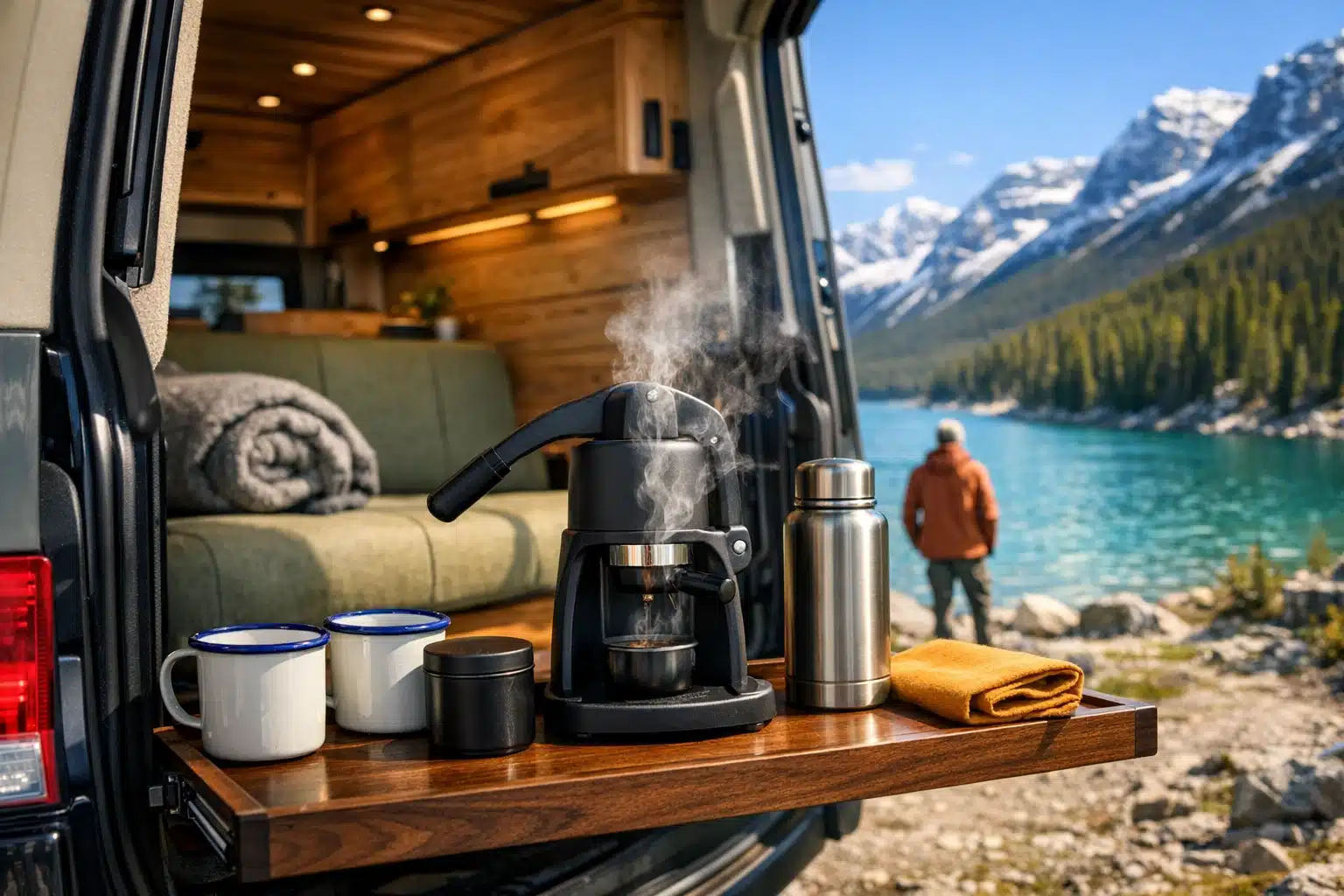
For frequent travelers, campers, and van-life users, manual handheld machines often make the most sense. They are easier to pack, less fragile, and not dependent on a battery at the exact moment you want coffee. Pair one with a small grinder and a vacuum flask of hot water, and you have a flexible system that works almost anywhere. For commuters and drivers, an electric portable model is often the better compromise. It reduces effort, streamlines the brew process, and can fit neatly into a bag or vehicle setup. For office users, capsule-based compact machines shine because they are fast, tidy, and socially easier to use in shared spaces.
Mini countertop espresso machines are ideal for people with limited room but stable daily habits. If you live in a small apartment, a student flat, or a compact home where every centimeter counts, a good mini machine can deliver far more consistency than most fully portable devices. It is also the better route if milk drinks matter to you, because handheld units rarely offer the steam performance needed for real cappuccino or flat white preparation.
Here is a simple audience-based guide:
- Choose a manual portable machine if you prioritize mobility, durability, and independence from power
- Choose an electric portable machine if you want convenience while traveling or commuting
- Choose a capsule mini machine if speed, consistency, and low mess matter most
- Choose a mini countertop machine if you want a small home setup with stronger everyday performance
Maintenance should also shape your final choice. Machines with fewer moving parts are often easier to own over time. Regular rinsing, descaling when needed, replacing seals, and keeping coffee oils from building up will protect flavor and extend service life. A compact machine may be small, but neglected coffee residue can make it taste tired very quickly.
In conclusion, portable and mini espresso machines are best for readers who want flexibility without abandoning quality altogether. They are especially valuable for travelers, small-space living, remote work, and anyone trying to avoid café dependence while keeping a satisfying coffee ritual. Buy for your real environment, not the fantasy version of your lifestyle, and you are far more likely to end up with a machine that earns its place every day.