 Artificially generated image
 Portable Container Pools: A Practical Guide for Homeowners
Portable container pools sit at an interesting crossroads between convenience, design, and outdoor living. For homeowners who want a place to cool off without committing to a lengthy construction project, they offer a compact alternative that feels modern rather than makeshift. Their appeal has grown as yards become more multifunctional and budgets more carefully planned. Understanding how these pools work can help buyers avoid expensive surprises and choose a setup that truly fits their space.
Outline: 1. What portable container pools are and how they compare with other pool types. 2. Site planning, permits, and utility requirements. 3. Costs, value, and practical trade-offs. 4. Maintenance, safety, and seasonal ownership. 5. Choosing the right model and deciding whether it suits your home and routine.
1. What Portable Container Pools Are and Why They Appeal to Homeowners
A portable container pool is usually a prefabricated swimming pool built within a structure designed for transport, often inspired by the shape and durability of a shipping container. Some are made from retired freight containers that have been reinforced, lined, insulated, and fitted with filtration systems. Others are purpose-built modular shells that simply borrow container dimensions for easy delivery. In both cases, the idea is similar: the pool arrives mostly assembled, travels by truck, and can be placed on a prepared site far faster than a conventional in-ground installation.
This concept appeals to homeowners for several reasons. First, the footprint is efficient. Many container-style pools follow familiar 20-foot or 40-foot lengths, which makes planning easier in narrow side yards, compact urban lots, or secondary outdoor spaces. Second, the visual style is clean and contemporary. A rectangular shell can look striking against timber decking, stone paving, or a minimalist garden. Third, installation can be simpler. A traditional in-ground pool often involves excavation, steel, plumbing trenches, inspection stages, and longer site disruption. A container pool can compress much of that complexity into factory preparation, which shifts more work off-site.
That said, the word portable needs context. These pools are movable, but not casually so. Relocation usually means draining the vessel, disconnecting utilities, arranging lifting equipment, and transporting the unit on a truck. It is more accurate to think of them as relocatable rather than something that can be pushed around a patio on a whim.
Compared with other pool types, container pools sit in an interesting middle ground:
• They often feel more permanent and architecturally integrated than basic above-ground pools.
• They can be quicker to install than fully custom concrete pools.
• They may offer less shape flexibility than a pool designed from scratch.
• Their narrow width can limit lap swimming unless a current system is added.
There is also a lifestyle dimension to their popularity. Many buyers are not looking for a resort-sized feature; they want a manageable place for cooling off, relaxing after work, supervising children, or enjoying a small gathering on a hot weekend. A container pool answers that need with a practical sort of elegance. It can turn an underused corner of the yard into something memorable, not with grand scale, but with clever use of space.
2. Site Planning, Utilities, and Installation Realities
The most common mistake homeowners make is assuming that a portable container pool eliminates planning. It reduces some construction steps, but it does not erase the need for thoughtful preparation. Before ordering anything, buyers should verify local building rules, setback requirements, fencing standards, drainage rules, and any homeowners association restrictions. In many places, a pool is still a regulated structure even if it arrives prebuilt. Permits, inspections, and safety requirements may apply just as they would to other backyard pool projects.
Access is another crucial issue. A container pool may look sleek in a brochure, but it still has to reach the property. That means measuring gate widths, driveway strength, overhead power lines, tree branches, slope, and turning space for trucks or cranes. A beautiful model is of little use if it cannot be delivered safely into the yard. On some sites, crane placement becomes the deciding factor, and that can influence both logistics and cost.
The base underneath the pool matters just as much as the shell itself. Manufacturers often specify a concrete pad, engineered footings, or another stable foundation capable of supporting the combined weight of the pool, the water, and the occupants. Water is heavy, and even a compact pool can weigh many tons when full. If the support system is poorly prepared, problems such as settling, misalignment, drainage issues, or structural stress can follow.
Utility planning deserves equal attention. Most container pools need:
• a dedicated electrical supply for pumps, lights, heaters, or control panels
• a water source for filling and topping up
• a drainage strategy for overflow, maintenance, or seasonal shutdown
• space for filtration equipment, unless it is fully integrated into the unit
Timelines are often shorter than with custom excavation, yet the total schedule still depends on manufacturing lead time, permitting, transport coordination, weather, and site readiness. In other words, faster does not mean instant. Homeowners should also think beyond the pool itself. Will there be decking, privacy screening, an outdoor shower, seating, or shade? A pool rarely lives alone; it becomes part of a larger outdoor composition. Planning that setting in advance helps the final result feel intentional rather than improvised, like a well-placed room outdoors instead of a large object dropped onto the lawn.
3. Cost, Value, and How Container Pools Compare With Traditional Options
Price is often the hinge on which the whole decision swings, and container pools require a wider view of cost than the advertised shell alone. A homeowner may see an appealing base price and assume the project is straightforward, only to discover that delivery, crane service, site preparation, electrical work, permits, fencing, decking, heating, insulation, and landscaping can materially change the final total. The pool itself is a major line item, but it is rarely the whole invoice.
In broad terms, basic container pools often begin in the low five figures, while more refined models with premium finishes, built-in seating, automation, heating systems, current generators, glass panels, or custom cladding can rise substantially beyond that. Exact figures vary by region, manufacturer, material choice, and access difficulty. Shipping distance also matters. A unit that must travel across a long route or require specialized lifting equipment may cost meaningfully more than a similar pool placed on an easier site nearby.
Compared with a traditional in-ground pool, a container pool can offer value through speed and predictability. Factory fabrication can reduce weather-related delays and limit the messy uncertainty that sometimes follows excavation. For some buyers, that streamlined path is worth paying for. Time has a cost, especially when a backyard remains unusable for months during a larger build. There is also aesthetic value in the crisp, modern look. In compact gardens, the efficient geometry may feel more deliberate than a bulky above-ground setup.
However, value is not only about purchase price. It also includes fitness for purpose. A classic above-ground pool is often less expensive, especially for families focused mainly on seasonal recreation. A custom concrete pool, by contrast, may cost more but allow deeper customization in shape, depth, finish, and integration with the landscape. Container pools fit between those poles. They tend to reward buyers who appreciate modern design, controlled installation, and a compact footprint more than buyers who want total creative freedom.
When comparing options, homeowners should weigh several categories:
• upfront purchase and delivery cost
• foundation and site preparation
• utility connection work
• operating expenses such as heating, filtration, and cleaning
• future flexibility, including potential relocation or resale appeal
The smartest approach is to build a full-project budget rather than a pool-only budget. That wider lens reveals whether the idea remains practical after all supporting costs are included. For many households, container pools make the most financial sense when space is limited, construction time matters, and the desired experience is more plunge, lounge, and refresh than Olympic ambition.
4. Maintenance, Safety, and the Everyday Reality of Ownership
Owning a portable container pool is usually easier than managing a large custom pool, but easier does not mean effortless. The same core responsibilities still apply: keeping water clean, balancing chemistry, protecting swimmers, maintaining equipment, and adjusting routines for seasonal weather. The smaller scale simply changes how those tasks feel. Instead of a sprawling body of water demanding constant attention, you are caring for a more compact system where changes can happen quickly and visibly.
Because water volume is often lower than that of a large in-ground pool, container pools may heat faster, which many owners appreciate. That same feature can also make temperature and chemistry more responsive to weather, sunlight, heavy use, or missed maintenance. A few neglected days in high summer can have a stronger effect on a smaller pool than people expect. Regular testing remains important, whether the system uses chlorine, salt chlorination, or another treatment approach approved by the manufacturer.
A simple care routine usually includes skimming debris, cleaning filters, brushing surfaces, checking water level, and testing sanitizer and pH. Covers can reduce evaporation, cut heat loss, and limit leaves or dust entering the water. In cooler climates, winterization may be necessary, especially if freezing temperatures could affect plumbing lines or exposed equipment. Some insulated models support extended seasonal use more comfortably, but the local climate still shapes operating patterns and energy demand.
Safety should never be treated as an accessory. Even a compact pool can present serious risk, especially for children and pets. Homeowners should follow local rules on barriers, self-closing gates, covers, slip-resistant surrounding surfaces, and supervision. A stylish pool deck is not enough if the approach becomes slick when wet or the entry steps are awkward for older users. Clear sightlines from the home can also improve day-to-day supervision.
Good ownership habits often include:
• choosing a reliable cover
• scheduling filter maintenance before problems appear
• storing chemicals correctly and securely
• checking lights, steps, and handholds regularly
• planning off-season care rather than improvising it later
There is a quiet pleasure in a well-kept pool. Water that is balanced and still has a way of making a backyard feel composed, almost like the space has exhaled. Yet that calm surface is supported by routine. Buyers who respect the maintenance side of ownership tend to enjoy the design side far more, because the pool remains a place of relief instead of becoming another neglected household chore.
5. How to Choose the Right Portable Container Pool for Your Home
If you are seriously considering a portable container pool, the most useful question is not “Which model looks best?” but “How will this actually be used?” A household that wants a cool plunge after exercise has different needs from a family with young children, and both differ from a homeowner creating a stylish entertaining area. The right choice depends on use pattern, climate, available yard space, and tolerance for operating costs. A visually impressive pool that does not match everyday habits can become an expensive sculpture.
Start with the basics of fit. Measure not only the intended pool location, but also the route into the property. Then think about depth, bench layout, entry style, and whether swimmers need room for exercise, floating, or simple relaxation. Some buyers benefit from added features such as jets, a swim current system, built-in heating, underwater lighting, or insulated walls. Others are better served by a simpler setup that keeps purchase and maintenance costs under control. In many cases, restraint is the better luxury.
It is also wise to ask manufacturers direct, practical questions:
• Is the unit made from a repurposed shipping container or a purpose-built shell?
• What foundation specification is required?
• Which equipment is included, and what must be purchased separately?
• How are warranties handled for structure, liner, pumps, and electrical components?
• What delivery access is needed, and who is responsible if site access proves difficult?
• What maintenance schedule is recommended for this exact model?
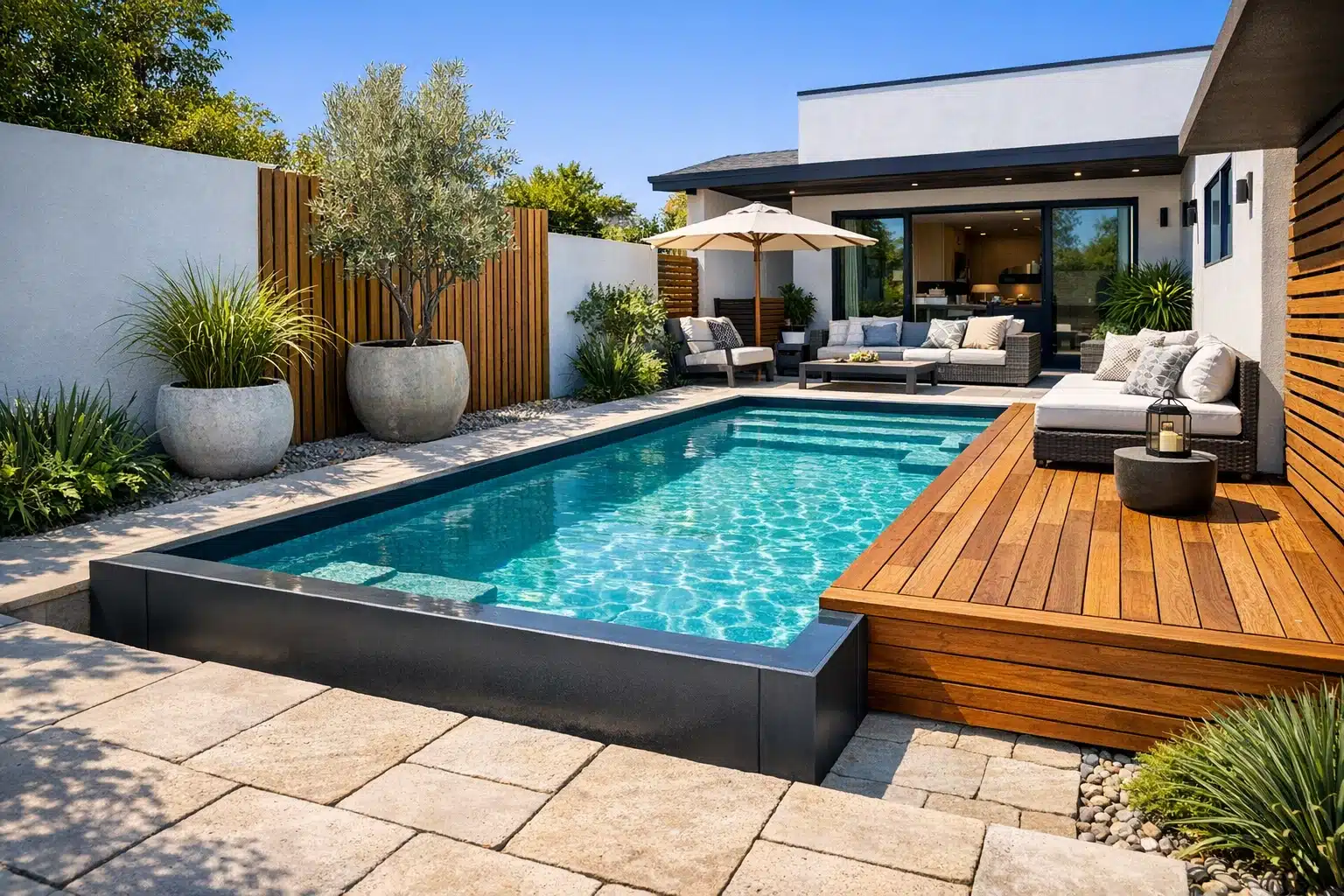
For homeowners focused on design, finish details matter. Exterior cladding, window panels, decking transitions, and equipment concealment can dramatically change the final look. A well-integrated installation can feel like part of the architecture. A poorly planned one may resemble a temporary object parked in the yard. This is where thoughtful landscaping, privacy screens, lighting, and seating make a major difference.
For the target audience of this guide, the most sensible conclusion is straightforward. A portable container pool is often a strong choice for homeowners who want a modern, space-efficient water feature with a shorter installation path than a fully custom pool. It is less ideal for buyers seeking wide swim lanes, highly organic shapes, or the lowest possible upfront cost. When chosen with clear expectations, proper site planning, and a realistic budget, it can deliver a satisfying balance of style and practicality. Think of it as a smart backyard investment for the household that values function, speed, and design in equal measure.