Portable Laser Welding Machine: Features, Uses, and Buying Guide
Introduction
Portable laser welding machines have moved welding out of the fixed cell and into workshops, construction sites, repair bays, and small fabrication studios. Their appeal lies in a rare mix of speed, precision, and lower cleanup, making them relevant to manufacturers that want cleaner seams without oversized equipment. As labor costs rise and product tolerances tighten, understanding what these systems can and cannot do has become practical rather than trendy. This guide explains the technology, where it fits, and how to choose one with clear eyes.
Outline
1. What a portable laser welding machine is and how it works. 2. The key features and technical specifications that shape performance. 3. Where these machines are used and how different metals respond. 4. How portable laser welding compares with TIG and MIG processes. 5. What buyers should review before purchasing, including safety, costs, and after-sales support.
1. What a Portable Laser Welding Machine Is and How It Works
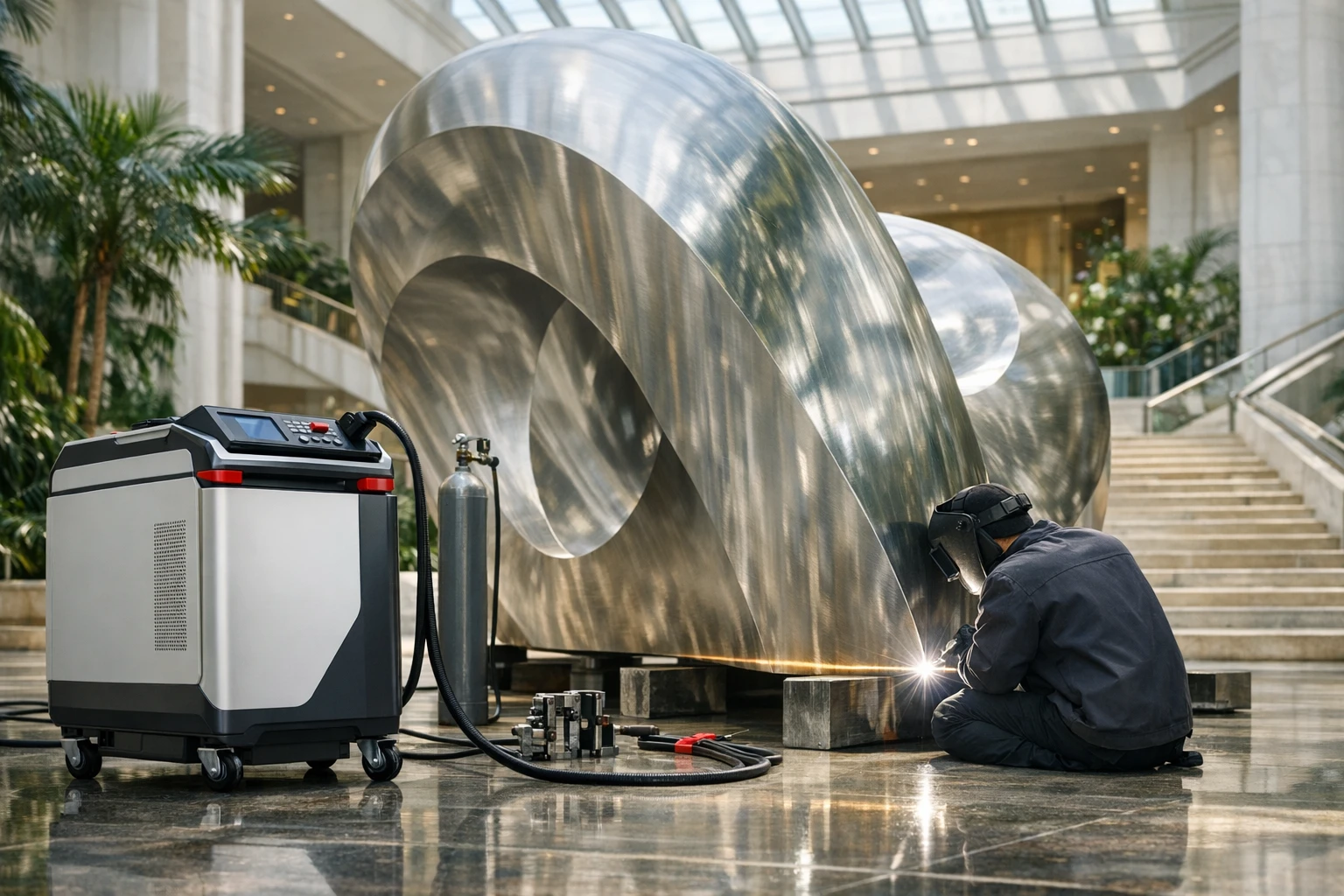
A portable laser welding machine is a compact welding system that uses a concentrated laser beam to fuse metal at the joint. In everyday shop language, it is often called a handheld laser welder, because the operator guides a welding gun by hand rather than placing the workpiece inside a large automated laser cell. Most portable units on the market today use fiber laser technology, which is valued for efficiency, stable beam quality, and relatively low maintenance compared with older laser designs. The machine usually includes a laser source, a handheld welding head, a control screen, cooling hardware, a cable set, and sometimes a wire feeder for gap filling or improved bead formation.
The basic principle sounds futuristic, but the mechanics are straightforward. The beam is focused onto a very small area, delivering intense energy exactly where the joint needs it. That concentrated input melts the edges of the metal, and in many applications a filler wire can be added to support the weld pool. Shielding gas, commonly nitrogen or argon depending on the material and process setup, protects the molten area from contamination. Because the heat is focused more narrowly than in many conventional processes, the heat-affected zone is often smaller, and nearby surfaces can stay cleaner and flatter.
In practice, the experience can feel surprisingly controlled. Instead of chasing a wide, bright arc and correcting for heavy spatter, the operator follows the seam with a steadier motion. Many machines offer preloaded modes for welding, cleaning, and sometimes cutting, though performance depends heavily on design quality and proper settings. Common power ratings include 1000 W, 1500 W, 2000 W, and 3000 W. Lower-power models are often chosen for thin stainless steel or light repair work, while higher-power systems can handle thicker sections and faster travel speeds.
Several technical factors shape how the process behaves: • Beam quality and focus control affect penetration and seam consistency. • Pulse or continuous-wave settings influence heat input and the weld profile. • Cooling capacity matters because laser sources and handheld guns generate substantial heat during extended use. • Joint fit-up remains important, even though handheld laser systems can be more forgiving than many buyers expect.
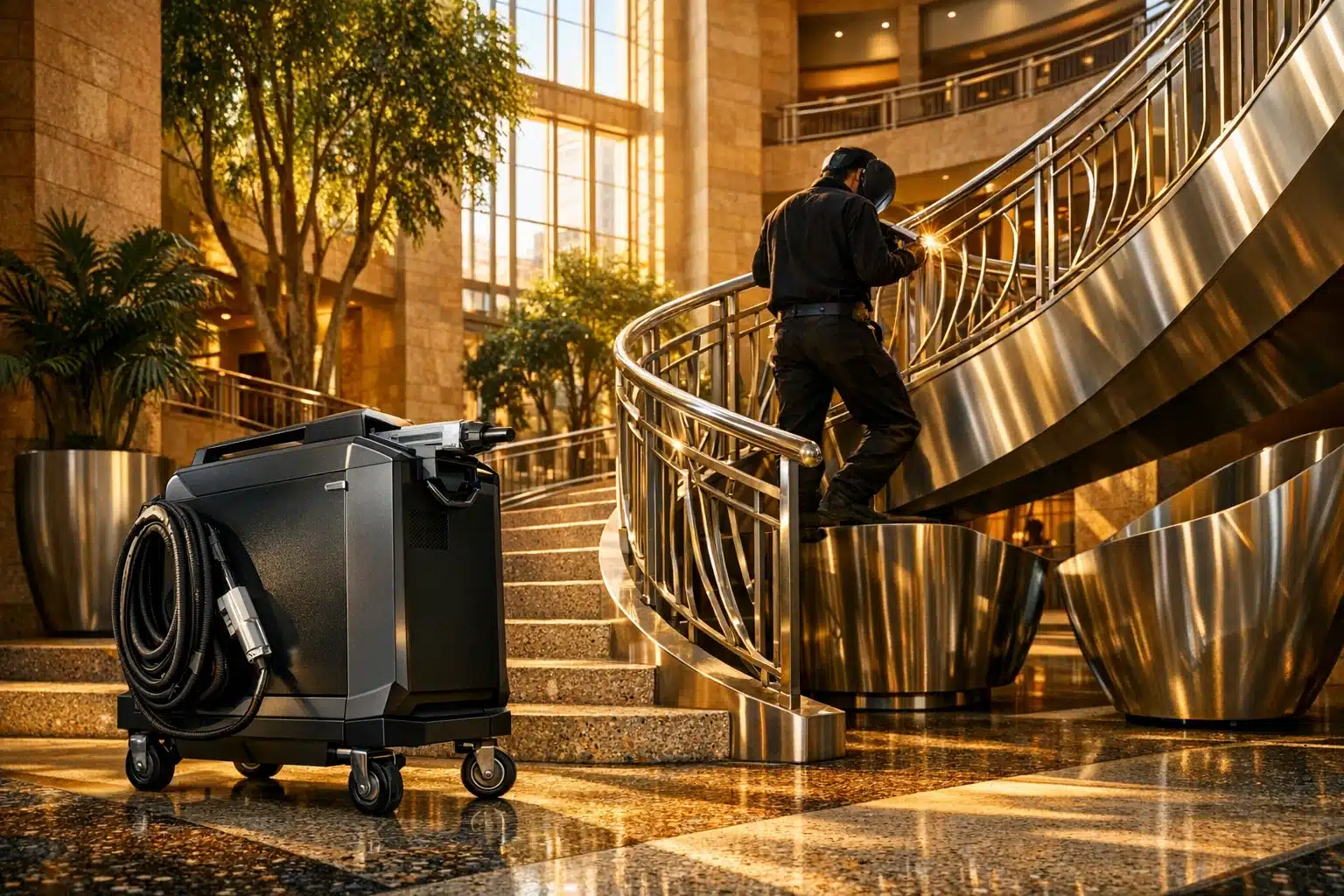
Portable does not mean pocket-sized, of course. These machines are usually cart-mounted or cabinet-based units with wheels, meant to be moved around a shop floor or transported between job areas. That mobility is one reason they have gained attention in fabrication, maintenance, and custom metalwork. They bring precision closer to the workpiece, which can be more efficient than bringing every job to a fixed workstation.
2. Core Features and Technical Specifications That Matter
Spec sheets for portable laser welding machines can look dense at first glance, but a smart purchase usually comes down to a manageable set of features. The most obvious number is laser power, yet power alone does not tell the full story. A 1500 W unit from one manufacturer may behave quite differently from another due to beam stability, control software, cooling design, wire feed integration, and ergonomics at the welding head. Buyers who compare machines only by wattage can end up overlooking the details that shape real production performance.
Laser source type is the starting point. Fiber laser systems dominate this category because they are generally efficient, durable, and well suited to industrial metal processing. From there, it helps to review the duty cycle, expected service intervals, and the quality of the handheld gun. A gun that feels balanced and manageable after ten minutes matters far more than one that merely looks sleek in a brochure. Welding sessions are physical, and operator fatigue affects seam quality as surely as any software setting.
Another major factor is the machine’s supported material range and thickness window. Manufacturers often publish recommended thickness ranges for carbon steel, stainless steel, aluminum, and galvanized sheet. Those ranges should be treated as operating guidance rather than universal truth because joint design, fit-up, shielding gas, travel speed, and operator skill all influence the result. For many portable systems, thin-to-medium gauge work is where the technology shines brightest. Very thick sections may still require alternative processes, joint preparation, multiple passes, or a less portable solution.
Useful features to evaluate include: • Wire feeder support for wider gaps or cosmetic bead improvement. • Preset process libraries for different metals and thicknesses. • Adjustable wobble or oscillation settings, which can help bridge small inconsistencies. • Cooling system size and ambient temperature tolerance. • Input power requirements, such as single-phase or three-phase electricity. • Alarm systems, interlocks, and password controls for safer operation.
Do not ignore consumables and accessories. Nozzles, protective lenses, shielding gas hardware, and replacement parts affect long-term operating cost. A machine that is cheaper upfront but slower to service can become expensive through downtime. Service support is equally important. If a supplier cannot explain training, spare part availability, response times, and warranty coverage in plain terms, that is not a minor paperwork issue; it is a warning sign.
Finally, consider the software and user interface. Good systems simplify setup with clear parameters, process memory, and readable fault messages. Poor interfaces create confusion, especially for small shops that do not have a dedicated laser specialist on staff. In other words, the best machine is not simply the most powerful one. It is the one whose specifications match the work, the people, and the pace of the operation.
3. Real-World Uses, Material Compatibility, and Shop Advantages
Portable laser welding machines are used across a wide span of industries because they fill a practical gap between heavy automated systems and slower manual methods. Small fabrication shops use them for stainless counters, cabinets, decorative metalwork, enclosures, railings, and thin structural parts. Automotive repair and customization businesses use them on sheet metal components, brackets, exhaust elements, and specialty assemblies. Appliance, kitchen equipment, electrical box, signage, and light machinery producers also value the process where clean appearance and low distortion are priorities. In maintenance departments, the appeal is equally simple: the machine can travel to the repair area instead of forcing the repair to move to a distant station.
Material compatibility is one of the biggest reasons buyers explore this technology. Stainless steel is often a strong candidate because it responds well to controlled heat input and frequently benefits from the neat finish a laser process can produce. Carbon steel is also common, especially in thin and medium gauges where fast travel and limited rework create noticeable time savings. Galvanized steel can be welded successfully with appropriate settings and ventilation, though operators need to respect fume management and process control. Aluminum is possible as well, but it demands more care because of reflectivity, thermal conductivity, oxide layers, and sensitivity to parameter changes. Copper and brass can be processed too, yet they often require higher power, careful tuning, and more experienced handling.
The benefit many shops notice first is reduced finishing work. A narrower, cleaner seam can mean less grinding, less polishing, and less heat distortion. That matters when appearance affects product value. A brushed stainless enclosure with a tidy weld line may move to final finishing faster than one that needs heavy post-weld cleanup. There is an almost quiet elegance in that efficiency: fewer sparks, fewer passes, less time undoing what the joining process itself created.
Typical advantages in daily use include: • Faster welding on suitable thin and medium materials. • A cleaner bead with limited spatter in many applications. • Lower distortion on heat-sensitive parts. • Easier handling of visible seams where cosmetics matter. • Greater mobility for repair work or mixed production environments.
Still, portable laser welding is not a magic key for every metal problem. Poor fit-up, contaminated surfaces, incorrect gas flow, and unrealistic expectations can undermine results quickly. Gaps that are too large may require filler support or a different process altogether. Reflective or highly conductive metals demand disciplined setup. Operators also need to learn travel angle, standoff distance, and seam tracking habits that differ from TIG or MIG routines. The technology can reward good practice generously, but it does not erase the need for process control. Shops that treat it as a serious production tool rather than a novelty usually gain the most.
4. Portable Laser Welding vs. TIG and MIG: Strengths, Trade-Offs, and Limits
Comparisons with TIG and MIG welding are unavoidable because those processes remain the everyday standard in countless shops. Portable laser welding is not a universal replacement for either one, but it does offer a distinct combination of speed, visual cleanliness, and lower heat input in many thin-metal applications. TIG is famous for control and weld quality, especially on stainless steel and aluminum, yet it is often slower and more dependent on operator skill for long, repetitive seams. MIG is productive and versatile, especially in thicker or structural work, but it can produce more spatter, more heat distortion, and more cleanup than a handheld laser system on certain jobs.
For visible, cosmetic seams, laser welding can be particularly attractive. The beam’s concentrated energy often creates a narrow bead and smaller heat-affected zone, which can help preserve nearby finishes and reduce warping. Shops that produce stainless furniture, food equipment, display fixtures, or decorative assemblies often notice this difference immediately. Less rework can translate into faster throughput, and in production environments, minutes shaved from grinding and polishing add up quickly. A weld that emerges closer to final appearance is not just aesthetically pleasing; it is economically meaningful.
That said, there are clear trade-offs. Portable laser welders usually cost more upfront than a basic MIG or TIG setup. Safety requirements are also more demanding because the laser beam can cause severe eye and skin injury, and reflective surfaces introduce additional risk. Proper eyewear, controlled work practices, protective barriers where appropriate, and training are essential. Another limit is joint condition. While many suppliers promote handheld laser systems as easy to use, success still depends on reasonable fit-up, surface preparation, and process discipline. Large gaps, heavy rust, or awkward joint geometry may be better handled by conventional processes or by additional prep work before welding.
A practical comparison looks like this: • TIG often offers exceptional control but lower speed. • MIG often handles general fabrication well but may create more finishing work. • Portable laser welding often excels on clean, thin-to-medium materials where appearance and heat control matter. • Conventional methods may remain better for very thick sections, rough fit-up, or lower capital budgets.
The best decision is rarely ideological. A well-run shop may use all three methods, choosing each process by material, tolerance, appearance standard, and labor constraints. In that sense, portable laser welding is less a dramatic revolution than a sharp new tool on the bench. It expands options. It gives fabricators another way to balance speed, skill, finish quality, and distortion control. The smartest buyers see that nuance early, which saves them from both hype and disappointment.
5. Buying Guide: Safety, Cost, Support, and Long-Term Value
Buying a portable laser welding machine should begin with the work itself, not the catalog. Start by reviewing the materials you weld most often, the thickness range, the joint types, and the finish standard customers expect. A shop that mainly joins thin stainless enclosures has very different needs from a maintenance team repairing mixed steel components in the field. Once that workload is clear, it becomes easier to compare power levels, portability, and accessory packages. For many users, a mid-range handheld fiber laser welder is more practical than the highest-power unit available, because the machine must match electrical supply, operator experience, and day-to-day production patterns.
Budgeting should also go beyond purchase price. Ownership cost includes shielding gas, consumables, training time, maintenance, spare parts, protective equipment, and downtime risk. A lower sticker price can lose its appeal if replacement lenses are hard to source or service support is weak. Ask suppliers direct questions about warranty scope, response time, software updates, training format, and the local availability of parts. If answers arrive wrapped in vague promises, pause. Reliable support is part of the machine, even though it is not bolted into the cabinet.
Safety deserves its own serious review. Handheld laser welding is not casual equipment. Buyers should plan for operator training, laser-rated protective eyewear matched to the system wavelength, controlled access to the work area, fume extraction, and clear operating procedures. Reflections from shiny surfaces, poor housekeeping, or improvised work habits can turn a productive process into a hazardous one. Responsible adoption means treating safety systems as core infrastructure, not optional extras added after the first incident.
Before signing off on a machine, check these points: • What materials and thicknesses are proven in demonstrations, not just claimed in brochures? • Does the supplier offer test welds on your own samples? • Is wire feed available for the joints you commonly run? • What electrical input and cooling demands will the machine place on your site? • How quickly can service engineers or trained technicians respond if a fault occurs? • What protective equipment and training are included in the quote?
It is also wise to think about return on investment in practical terms. Gains may come from faster cycle times, reduced polishing, lower rework, easier onboarding for suitable tasks, or the ability to take on work that previously required outsourcing. Not every shop will recover the cost at the same pace. High-mix custom production, cosmetic stainless work, and light industrial fabrication often see the clearest advantages. For a buyer who values flexibility, finish quality, and mobility, a portable laser welding machine can be a strong addition. For a buyer whose work is mostly thick, rough, or highly variable structural fabrication, the benefit may be narrower. The right purchase is the one that fits the welds you actually make on an ordinary Tuesday, not the ones imagined during a sales demo.
Conclusion: What This Means for Fabricators, Repair Teams, and Small Manufacturers
Portable laser welding machines make the most sense for users who need a cleaner seam, faster processing on suitable metals, and the freedom to move the machine where work happens. They can be highly effective in stainless fabrication, light industrial production, custom metalwork, and repair environments where reduced distortion and lower finishing effort create measurable value. At the same time, they are not automatic replacements for TIG or MIG, and they demand serious attention to safety, setup, and supplier support.
If you are a shop owner, production manager, or technician comparing options, focus on fit rather than hype. Test the machine on your own parts, verify service coverage, examine safety requirements in detail, and calculate value across labor, rework, and output quality. A well-chosen portable laser welding machine can improve workflow and product finish in the right setting. A poorly matched one can become an expensive lesson parked in the corner.