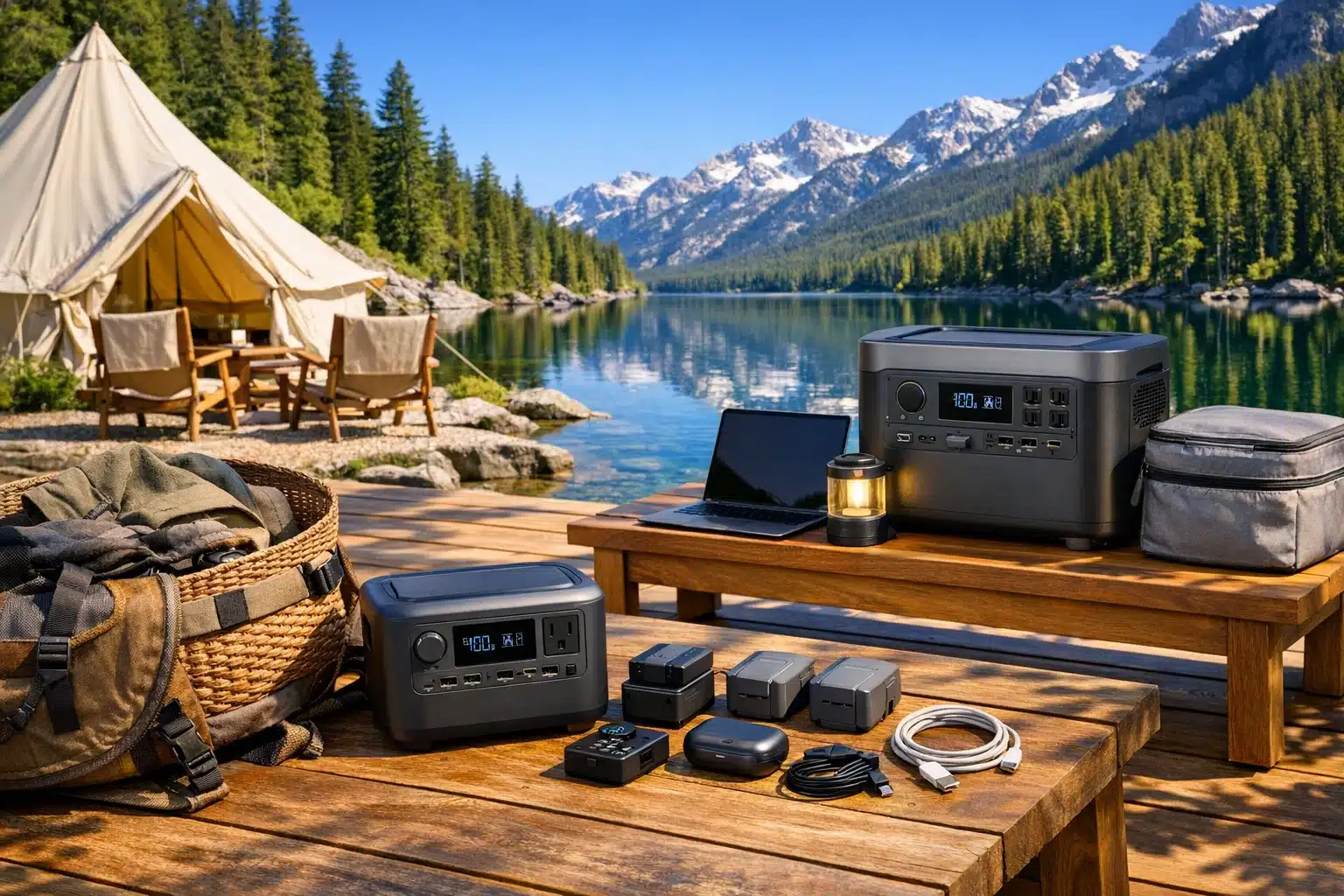
Portable Power Station vs Mini Power Station: Key Differences and Buying Guide
Portable power stations and mini power stations have shifted from niche gadgets to genuinely useful tools for blackouts, road trips, outdoor work, and device-heavy daily life. Many shoppers still compare them mainly by size, yet the bigger differences lie in watt-hours, output limits, charging speed, and long-term practicality. A small unit can feel like freedom in a backpack, while a larger one can quietly support a router, laptop, and lights during an outage. This guide untangles those trade-offs so you can choose with more confidence and far less guesswork.
Article Outline
This article covers five core areas: what separates a portable power station from a mini power station, the technical specifications that matter most, the real-world situations where each option makes sense, the buying criteria that prevent expensive mistakes, and a final audience-focused summary that turns the comparison into a practical decision.
1. Portable Power Station vs Mini Power Station: What the Terms Really Mean
The easiest way to understand this category is to start with a simple truth: every mini power station is portable, but not every portable power station is truly mini. The market uses both labels loosely, and that is where confusion begins. In general, a mini power station is designed for lightweight mobility and short-duration power needs. It often ranges from roughly 100Wh to 300Wh, though some compact units stretch toward 500Wh. A broader portable power station usually begins where mini models start to run out of breath, often spanning 300Wh to well above 2000Wh, with larger inverters, more ports, and far more stamina.
Size and weight create the first visible difference. A mini unit may weigh only 2 to 5 kilograms, making it suitable for a day trip, a small home office backup, or a quick charging companion in the car. A larger portable power station can weigh 7 to 25 kilograms or more, depending on battery chemistry and capacity. That extra weight buys more runtime, higher output, and often better port variety. It also changes how you use the device. One lives happily on a shelf or in a backpack-sized space. The other becomes more like a movable appliance.
Power output is just as important as capacity. Mini power stations are commonly built for phones, tablets, cameras, drones, LED lights, portable monitors, and many laptops. Their AC output may sit around 100W to 300W, with some higher-end compact units reaching 500W or a little beyond. Portable power stations, by contrast, can support heavier electronics and small appliances, often providing 600W, 1000W, 1800W, or more. That difference determines whether you are charging a few gadgets or running a cooler, router, monitor, fan, CPAP, or even a compact fridge depending on startup demand.
The naming also reflects intent. Mini models are about convenience first. They are made for moments when a dead battery would be annoying. Portable power stations are about resilience. They step in when losing power would be disruptive. One feels like a smart travel companion. The other starts to resemble a silent backup system.
Here is a practical way to separate them:
• Mini power station: light, compact, best for personal electronics and short tasks
• Portable power station: heavier, more capable, better for extended use and higher loads
• Overlap zone: some 300Wh to 500Wh models can sit awkwardly between both categories, so specs matter more than labels
That last point matters most. Marketing language can be poetic, but electricity is stubbornly literal. A unit either has the watt-hours and output you need, or it does not. Understanding that difference saves money, frustration, and the familiar disappointment of buying something that looks perfect until the first real outage arrives.
2. Capacity, Output, Battery Chemistry, and Charging: The Specs That Actually Matter
When comparing portable and mini power stations, four specification groups do most of the talking: battery capacity, inverter output, battery chemistry, and charging options. Capacity is measured in watt-hours, or Wh, and tells you how much energy the station can store. Output, measured in watts, tells you how much power it can deliver at one time. Those two numbers work together, but they answer different questions. A 200Wh mini unit may keep a phone and camera charged all day, yet fail completely if asked to run a 700W appliance. A 1000Wh portable model may have enough stored energy for long use, but if its inverter is too small, it still cannot handle demanding devices.
A quick runtime estimate helps make these numbers real. A common rule of thumb is:
runtime in hours = battery capacity in Wh × efficiency factor ÷ device wattage.
If a 500Wh power station operates at about 85 percent real-world efficiency and you connect a 50W device, the expected runtime is roughly 8.5 hours. That estimate is not perfect, because temperature, inverter losses, and cycling behavior matter, but it is useful. It also shows why small differences on spec sheets can translate into very noticeable differences in daily use.
Battery chemistry has become one of the most important buying factors. Many newer models use LiFePO4 batteries, also called lithium iron phosphate. They are typically heavier than older lithium-ion chemistries such as NMC, but they are valued for longer cycle life, thermal stability, and durability. In practice, that means a LiFePO4 station can often handle far more charge and discharge cycles before dropping to around 80 percent of its original capacity. For frequent users, that can be a meaningful advantage. NMC-based stations may be lighter and more compact for the same capacity, which can still make sense in mini models where every kilogram matters.
Ports deserve more attention than they usually get. The best station for you is not only about how much power it stores, but how naturally it fits your devices. Useful options may include:
• AC outlets for laptops, small appliances, and chargers
• USB-C Power Delivery ports for phones, tablets, and modern notebooks
• USB-A ports for accessories and legacy cables
• 12V car sockets for travel gear, compressors, and certain coolers
• DC barrel outputs for niche devices and routers
Charging speed changes the ownership experience more than many buyers expect. Some mini stations recharge in a couple of hours from a wall outlet and are ready for spontaneous use. Larger portable stations may take longer, though many newer designs support rapid AC charging, solar input, car charging, or dual-input combinations. Solar compatibility is especially relevant for camping, van travel, or long outages, but the real question is input rate. A station with a large battery and limited solar input can take a very long time to refill in imperfect weather.
In short, ignore vague promises and read the numbers. Capacity tells you how long. Output tells you what. Chemistry suggests lifespan and safety profile. Charging options tell you how easy the unit is to live with. Once those pieces are clear, the comparison between mini and full portable models becomes much less mysterious.
3. Real-World Use Cases: Travel, Camping, Remote Work, and Emergency Backup
The most useful comparison between a portable power station and a mini power station happens outside the product page. It happens on a campsite after sunset, during a power cut at home, in a car between job sites, or at a café patio where every outlet is already taken. Real-world use reveals that these products are less about abstract technology and more about matching energy to a lifestyle.
Mini power stations shine when mobility is the main priority. They are ideal for people who carry a modest power load and want quick access to electricity without hauling extra bulk. A photographer can recharge camera batteries and a drone controller. A commuter can top up a phone, tablet, and earbuds. A student can keep a laptop alive through a day of classes. A remote worker can power a router and notebook for a short internet outage. In these situations, the small form factor matters just as much as the battery. The station is not a backup plan hidden in a closet. It is an active part of the daily kit.
Portable power stations step into bigger roles. They are better suited for camping trips with multiple devices, van travel, outdoor markets, mobile workstations, and basic emergency backup at home. For example, a mid-sized unit in the 500Wh to 1000Wh range can often support a laptop, LED lighting, a Wi-Fi router, phone charging, and some low-draw accessories for several hours or longer depending on use. Larger units can help with small refrigerators, CPAP machines, fans, and other household essentials, as long as startup surge and continuous wattage are within limits. They do not replace a whole-home generator, but they can reduce stress dramatically when the grid goes quiet.
This is where the practical divide becomes clear:
• Choose mini for short outings, personal electronics, and frequent carrying
• Choose portable for multi-device setups, overnight use, and outage readiness
• Choose based on your highest-priority task, not your most optimistic fantasy scenario
Noise is another reason many buyers prefer these systems over fuel generators. Battery stations operate quietly, with only some fan noise under heavier loads. That makes them attractive for indoor use, camping areas, shared workspaces, and nighttime charging. They also avoid the exhaust and fuel storage issues associated with gas-powered alternatives. That does not mean they can do the same job in every situation. High-wattage heating appliances such as kettles, hot plates, or hair dryers can quickly overwhelm smaller models and drain even larger ones at surprising speed. A power station is efficient when paired with the right loads, but it is not magic in a handle-equipped box.
The smartest buyers think in layers. A mini power station can be perfect for daily mobility and light backup. A portable power station can serve as a more capable emergency or travel solution. If your usage swings between both worlds, the better choice depends on whether inconvenience or interruption is the bigger problem in your life. One saves you from dead batteries. The other saves the day when routines crack.
4. Buying Guide: How to Choose the Right Size, Features, and Value
Buying a power station should begin with your devices, not with a brand slogan or a dramatic photo of someone charging a laptop beside a mountain lake. Start by listing what you actually need to power, how many watts each item uses, and how long you need each one to run. This simple exercise often reveals whether you need a mini station, a mid-sized portable model, or something larger. If your must-have list is a phone, mirrorless camera charger, and tablet, a mini unit may be enough. If the list includes a laptop, router, lights, portable cooler, and several recharges over two days, capacity becomes much more important.
There are several buying criteria that deserve careful attention:
• Battery capacity in Wh for runtime
• Continuous wattage and surge rating for demanding devices
• Weight and handle design for actual portability
• Battery chemistry for lifespan and durability
• Port selection for modern and older devices
• Charging speed from wall, car, and solar input
• Warranty length and support reputation
• App control, display clarity, and safety protections
One common mistake is buying for occasional extremes instead of everyday needs. If you buy a large portable station only because you might one day want to run a power-hungry appliance for a few minutes, you may end up paying more, carrying more, and using less of the unit than expected. The opposite mistake is buying a mini station that feels attractively compact but becomes frustrating after the first outage because it cannot handle a router and laptop together for long enough. Good value comes from fit, not from the lowest price or the largest number.
Another key factor is expandability. Some portable power stations allow extra battery modules, higher solar input, or app-based control over charging behavior. These features are less common in mini units, which are designed to stay simple and small. If you plan to use solar panels, check the maximum solar input and compatible voltage range. A station that accepts only modest solar input may recharge slowly even in good sunlight, while a better-matched system can become a useful off-grid companion.
Pay attention to the inverter type as well. A pure sine wave inverter is generally preferred for sensitive electronics because it provides cleaner AC power. For many users, this matters more than flashy casing or decorative lighting on the unit itself. Safety features such as overload protection, temperature monitoring, short-circuit protection, and battery management are also important, especially for home use and frequent charging cycles.
Finally, think about ownership over time. A slightly more expensive LiFePO4 model with a longer cycle life may offer better long-term value if you plan to use it often. On the other hand, a lighter mini station can be the smarter purchase if your main goal is convenience, portability, and occasional use. The best buying question is not “Which one is strongest?” but “Which one will I actually use in the way I live?” That question usually leads to a better answer than any spec sheet alone.
5. Conclusion for Different Buyers: Which One Makes Sense for You?
If you have read this far, the big picture is now easier to see. Mini power stations and portable power stations share the same basic mission, but they solve different problems. A mini model is about lightweight convenience, flexible charging on the move, and support for personal electronics. A larger portable model is about longer runtime, stronger output, and better resilience when several devices matter at once. The right choice depends less on the product category itself and more on the shape of your routine.
For students, commuters, content creators, and travelers who mainly need to recharge phones, cameras, tablets, handheld gear, or a laptop, a mini power station often makes the most sense. It is easier to store, easier to carry, and usually faster to bring along without overthinking. If your power needs are measured in chargers and cables rather than appliances and outage plans, going bigger may only add cost and weight. In this role, small is not a compromise. It is the point.
For campers, van travelers, remote workers, homeowners preparing for short blackouts, and families that want a quieter alternative to fuel-based backup for essential electronics, a portable power station is usually the more practical investment. Extra watt-hours give breathing room. Higher output supports more devices. Better port variety can simplify setup when several people are sharing one source of power. The best units in this class become invisible until they are needed, then suddenly feel like the calmest object in the room.
A useful final checklist looks like this:
• Buy mini if your priorities are mobility, convenience, and light electronics
• Buy portable if your priorities are backup time, higher output, and multi-device support
• Focus on watt-hours, watts, and charging options before design language
• Treat marketing categories as rough labels, not decision-making facts
• Match the station to real habits, not imaginary emergencies
In the end, there is no universal winner between portable and mini power stations. There is only a better fit for a specific kind of user. If your days are mobile and your devices are modest, a mini power station will probably feel smarter and easier. If your concerns include outages, longer trips, shared use, or more demanding loads, a larger portable power station is the safer bet. Buy for the moments you know will happen, and your power station will feel less like a gadget and more like a quietly reliable tool.