Best Kitchen Cabinet Colors Trending in 2026
Choosing a kitchen cabinet color can feel oddly high-stakes because cabinets occupy so much visual space and usually outlast paint, hardware, and even appliances. The right shade can brighten a compact room, calm a busy layout, or give an older kitchen a cleaner and more current identity. Color also influences upkeep, resale perception, and the kind of cabinet service worth paying for. Trends matter, but so do finish quality, natural light, and the way your household actually uses the room.
1. Article Outline: How to Think About Cabinet Color Before You Buy or Refinish
Before comparing shades, it helps to step back and look at the full decision. Cabinet color is rarely just a style question. It intersects with lighting, flooring, countertop material, wall paint, hardware, budget, and how long you plan to stay in the home. That is why a smart article on this topic should not simply name a few fashionable tones and move on. It should build a practical framework, and that is the purpose of this section.
Here is the outline this guide follows: • first, the timeless cabinet colors that work in many kitchen styles • next, the specific color directions gaining momentum in 2026 • then, the meaning of kitchen cabinet service, including painting, refinishing, refacing, repairs, and replacement • finally, a homeowner-focused decision guide that connects aesthetics with budget and durability. Think of it as a map before the renovation road trip. It keeps you from taking an expensive scenic route you never meant to travel.
Why is this framework important? Cabinets often account for much of the kitchen’s visible mass, which means a color change can alter the room more dramatically than a new faucet or a fresh backsplash. Lighter finishes can make a galley kitchen feel wider. Mid-tone neutrals can soften harsh overhead lighting. Rich, dark paint can add depth in an open-plan space that otherwise feels flat or unfinished. Yet the same color can succeed in one kitchen and disappoint in another because exposure, ceiling height, and surrounding materials change the visual outcome.
Another reason to organize the topic carefully is that many homeowners confuse color decisions with service decisions. You may love a new olive-green cabinet sample, but if your cabinet boxes are damaged, the real issue is structural repair or replacement. On the other hand, if the cabinetry is solid and only looks dated, professional painting or refacing may bring far better value than a full tear-out. In short, the best color is not always the right project, and the right project is not always the most expensive one. A good result comes from aligning style, condition, and budget rather than chasing a trend in isolation.
2. Best Kitchen Cabinet Colors That Deliver Lasting Value
Some cabinet colors stay popular for good reason: they adapt well to changing décor, work with several countertop materials, and feel balanced rather than overly tied to one short-lived design moment. White and off-white remain the most flexible choices in many homes. They reflect available light, help smaller kitchens feel cleaner and more open, and pair easily with wood floors, quartz counters, stainless steel appliances, and mixed-metal hardware. Still, pure bright white can look sterile under cool bulbs, which is why warmer whites, soft cream, and bone tones often feel easier to live with.
Greige, taupe, and mushroom shades also earn their reputation as strong cabinet colors because they sit between gray and beige without becoming dull when chosen well. These tones are especially useful in transitional kitchens where you want calm but not starkness. They can bridge modern surfaces and traditional details in a way that icy gray often cannot. If your kitchen receives limited natural light, a warm neutral generally performs better than a dark cool tone. It is subtle, but the difference can make the room feel settled instead of shadowy.
Muted green and dusty blue have also moved from accent colors into reliable cabinet territory. Sage, eucalyptus, slate blue, and smoky navy can provide personality while still functioning as long-term choices. These colors tend to work best when the rest of the kitchen offers contrast through lighter walls, counters, or backsplash materials. Deep charcoal and near-black cabinetry can be striking as well, particularly in larger kitchens with good daylight, but they demand cleaner lines and stronger light to avoid a heavy look. Dark surfaces also show dust, fingerprints, and cooking residue more readily than many homeowners expect.
Natural wood deserves a place in any conversation about the best cabinet colors, even though it is technically a finish rather than a paint shade. Light oak, walnut, ash, and medium stained woods are being appreciated again because they add warmth and grain variation that painted surfaces cannot replicate. They also age gracefully when the stain is not overly orange or excessively glossy. For quick comparison, consider this practical rule set: • choose white or warm off-white for brightness and flexibility • choose greige or taupe for quiet balance • choose green or blue-gray for character without chaos • choose stained wood for warmth and texture • choose black or charcoal only if the kitchen has space, light, and enough visual contrast to support it.
3. Best Kitchen Cabinet Colors Trending in 2026
The color story for 2026 is moving toward warmth, softness, and a more grounded connection to natural materials. In recent years, many kitchens leaned heavily on sharp white, cool gray, and highly uniform finishes. Those looks are not disappearing overnight, but the visual center of gravity is shifting. Designers, paint brands, and remodeling professionals are increasingly highlighting earthy neutrals, botanical greens, and wood-forward palettes that feel calmer and less clinical. If previous trends aimed for polished minimalism, 2026 appears more interested in comfort with refinement.
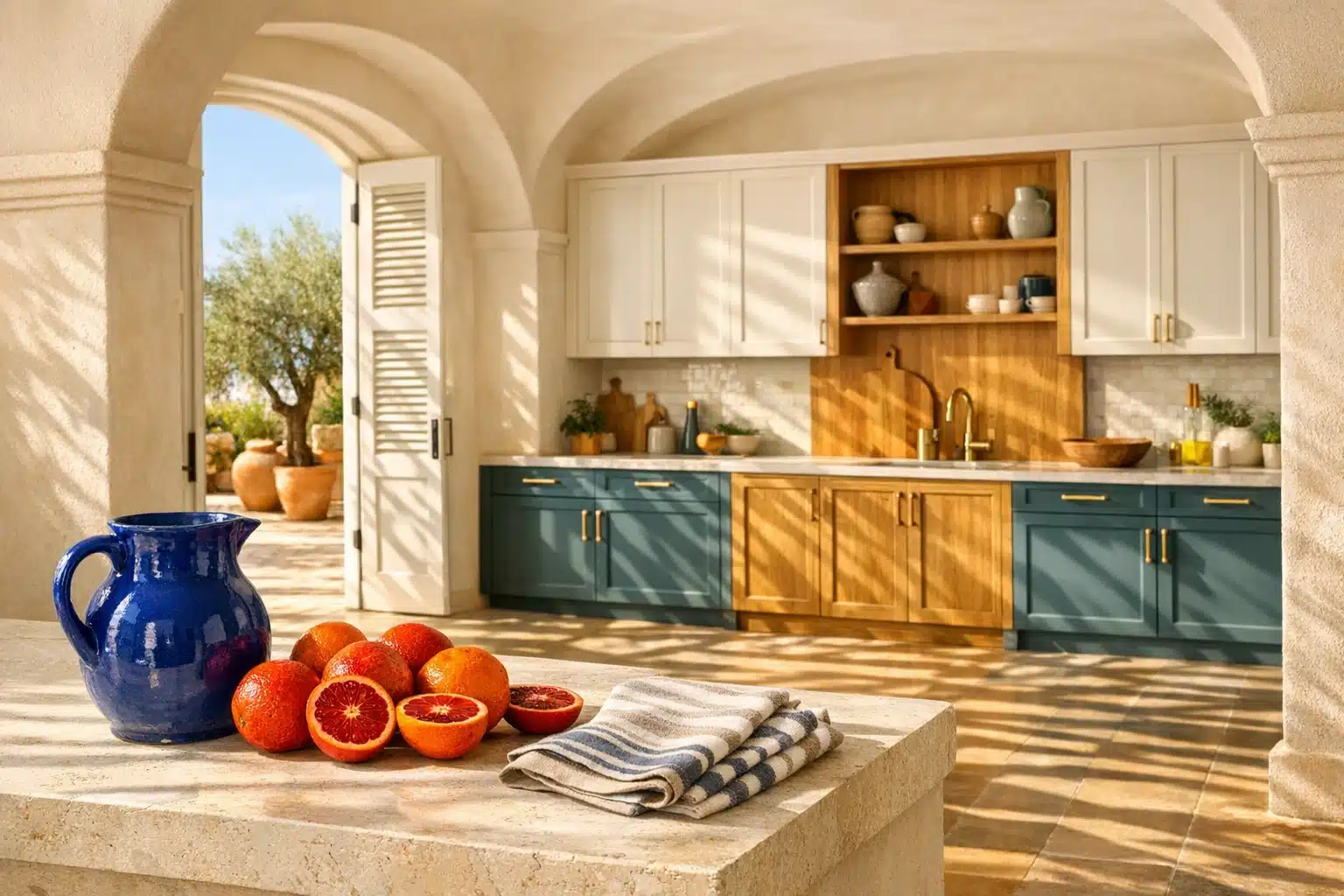
One of the clearest shifts is the rise of warmer whites and layered neutrals. Instead of stark, paper-bright cabinets, homeowners are looking at tones such as soft alabaster, creamy linen, oat, putty, and mushroom. These shades pair especially well with veined quartz, brushed brass, aged bronze, and natural oak accents. Another strong direction is green, though not in loud jewel tones for every kitchen. The colors getting traction are sage, olive, thyme, moss, and muted eucalyptus. They feel organic and decorative without overwhelming the room, especially when balanced by pale stone counters or simple backsplashes.
Blue is still in the conversation, but it is evolving. The trend is moving away from bright coastal navy toward deeper blue-green, stormy teal, and softened midnight tones. These shades bring depth while feeling less formal than classic navy. We are also seeing growing interest in brown-based colors, from cocoa-tinted stains to muddy taupes and warm clay-inspired hues. Not every homeowner will want terracotta cabinets, of course, but the broader point is important: brown is no longer treated as dated by default. In the right finish, it reads rich, grounded, and sophisticated.
Two additional 2026 themes deserve attention. First, mixed finishes are becoming more common, especially when upper cabinets are lighter and lower cabinets or islands carry the stronger color. This helps maintain brightness while still adding depth. Second, satin and low-sheen finishes are gaining favor over surfaces that look overly glossy or plastic. A cabinet should catch light, not shout at it. If you want a short trend summary, here it is: • warm white instead of icy white • mushroom instead of flat gray • olive and sage instead of loud emerald • blue-green instead of basic navy • natural wood instead of heavy faux-distressed finishes. The result is a kitchen that feels current, but not restless.
4. Kitchen Cabinet Service: Painting, Refinishing, Refacing, Repair, and Replacement Compared
The phrase kitchen cabinet service can mean several very different things, and understanding the difference matters as much as the color itself. Some services are cosmetic, some are structural, and some sit in the middle. Professional painting or refinishing usually involves removing doors and drawers, deep cleaning, sanding or deglossing, priming, spraying or brushing durable coatings, and reinstalling everything with adjusted hinges and hardware. This can be an efficient option when cabinet boxes are solid and the layout still works. It changes the look dramatically without the disruption of a full renovation.
Refacing goes a step further. In most refacing projects, the cabinet boxes remain, but doors, drawer fronts, hinges, and visible exterior surfaces are updated. This gives a more transformed appearance than repainting because the door style itself can change. If you dislike the current panel design, refacing may make more sense than paint alone. Repair services form another category and can include fixing drawer slides, replacing soft-close hardware, adjusting doors that no longer align, treating water damage in limited areas, and reinforcing weak boxes. These jobs may seem small, yet they often determine whether a cosmetic update is worth doing at all.
Full replacement is the most extensive service and usually the most expensive because it involves demolition, new cabinetry, installation, possible countertop changes, and often plumbing or electrical coordination if the layout shifts. Replacement makes sense when cabinets are severely damaged, poorly built, badly arranged, or too limited for present storage needs. Broadly speaking, professional painting tends to cost less than refacing, and refacing tends to cost less than replacement, though the exact numbers vary widely by region, kitchen size, finish type, door profile, and labor market. In other words, cost comparisons are useful only when tied to condition and scope.
When evaluating a service provider, ask practical questions rather than only asking for a color chart. Useful checkpoints include: • Do they remove doors and label parts carefully? • What surface prep do they perform before coating? • Which products are used for adhesion and stain resistance? • Is spraying done on site or in a controlled shop environment? • How are cracks, chips, and hinge wear addressed? • What is included in the warranty? A good cabinet service does not simply apply color. It solves a problem with craftsmanship. The paint may get the compliments, but preparation is usually what earns the years.
5. Final Takeaway for Homeowners Choosing Cabinet Colors and Services in 2026
If you are planning a cabinet update, the best decision is rarely the most dramatic one on a mood board. It is the option that suits your kitchen’s light, your household’s habits, your cabinet condition, and the amount you want to invest. A busy family kitchen with frequent cooking may benefit from a forgiving warm neutral in a durable satin finish. A design-forward open kitchen might support deeper olive, blue-green, or charcoal on the island with lighter perimeter cabinets. A smaller apartment kitchen may simply need a soft off-white that lifts the room and hides visual clutter rather than adding more of it.
The most dependable approach is to test before committing. View samples in morning light, afternoon light, and artificial evening light. Compare them next to the floor, countertop, backsplash, wall paint, and metal finishes already in the room. If possible, place larger painted boards vertically because cabinet doors are vertical surfaces and read differently than a flat sample left on a counter. This small step saves a surprising number of expensive regrets. Color is never isolated; it is always in conversation with the rest of the kitchen.
On the service side, start with an honest condition check. If your boxes are sturdy and the layout works, painting or refinishing may offer excellent value. If the door style is the bigger problem, refacing can provide a more visible change without requiring a full remodel. If storage is poor, materials are deteriorating, or water damage is significant, replacement may be the wiser long-term choice. The practical homeowner advantage comes from matching the service level to the actual problem instead of paying for a solution that looks impressive but solves little.
For 2026, the strongest cabinet directions lean warm, natural, and livable rather than cold or overly staged. Soft whites, mushroom tones, earthy greens, blue-green shades, and well-finished wood all have a place, provided they suit the room. So if you are standing in your kitchen, coffee in hand, wondering whether to play it safe or try something fresh, the answer is simpler than it seems: choose a color with staying power, hire a service that respects preparation, and build a kitchen that works beautifully on ordinary days, not just in renovation photos.