Portable Swimming Pool vs Mini Swimming Pool: Key Differences and Buying Tips
Choosing between a portable swimming pool and a mini swimming pool can feel surprisingly tricky, especially when your outdoor space, budget, and summer expectations are all pulling in different directions. One option leans on convenience and easy storage, while the other usually offers a sturdier, more built-in backyard experience. This guide explains the differences clearly, covering setup, comfort, maintenance, safety, and value. If you want fewer assumptions and better buying decisions, the next sections will help.
Outline and Core Definitions: What These Two Pool Types Really Mean
Before comparing features, it helps to define the terms properly. A portable swimming pool is usually a pool designed for temporary or seasonal use. It can be inflatable, soft-sided, foldable, or supported by a metal frame. The key idea is mobility: the pool can be assembled, disassembled, drained, and stored without major construction. Many households choose this type because it turns a patio, lawn, or small courtyard into a summer water zone without changing the property permanently.
A mini swimming pool, by contrast, is defined more by size than by mobility. It is a compact pool built for limited space, but it may be portable, semi-permanent, or fully permanent depending on the product. In practice, many mini pools resemble plunge pools: smaller than a standard backyard pool, but often deeper, stronger, and made for regular adult use as well as casual cooling off. In some product listings, the term mini pool can refer to a compact prefabricated shell, a modular raised pool, or a small in-ground installation. That means shoppers should read product details carefully, because the same label can describe very different structures.
This article follows a simple roadmap so readers can compare these categories without getting lost in marketing language:
- First, it explains how size, portability, and construction affect real-world use.
- Next, it looks at installation, maintenance, and operating costs.
- Then, it compares comfort, safety, and the kinds of households each option suits.
- Finally, it offers buying tips to help match the pool to space, climate, budget, and routine.
The difference matters because a pool is not just a product; it becomes part of a household’s rhythm. A family with young children may care most about quick setup and shallow depth. A homeowner with a tiny urban yard may want a compact pool that looks polished and stays in place for years. Someone else may simply want an affordable way to cool down during hot weekends. Portable pools and mini pools overlap in purpose, but they do not always overlap in performance.
Think of it this way: a portable pool behaves like seasonal furniture, while a mini pool often behaves like a small architectural feature. Both can be excellent choices, but they serve different lifestyles. Once those definitions are clear, the comparison becomes much easier and far more useful.
Size, Structure, and Portability: The Most Important Physical Differences
The most visible difference between a portable swimming pool and a mini swimming pool is physical design, but the real impact goes beyond appearance. Portable pools prioritize ease of movement and low commitment. They are often made of vinyl, laminated PVC, or fabric-reinforced liners supported by air chambers or lightweight frames. Common home models range from roughly 6 to 15 feet in length or diameter, with water capacities that may start below 300 gallons for children’s pools and rise above 3,000 gallons for larger frame models. Because they are lighter and simpler, they can usually be installed in hours rather than days.
Mini swimming pools, even when small, tend to feel more substantial. Typical sizes may range from about 8 by 8 feet for compact plunge designs to 10 by 20 feet or similar for narrow lap-friendly layouts. Depth often increases compared with budget portable pools, which changes how the pool feels in use. A mini pool may support adults standing, lounging, or doing light exercise more comfortably. Materials also differ. Instead of thin inflatable walls, mini pools may use fiberglass, acrylic, composite panels, insulated modular shells, or heavy-duty steel and resin systems. The result is usually better stability, better shape retention, and a more finished look.
Portability itself is where the separation becomes sharp. A portable pool can usually be:
- stored during winter or storm season,
- moved when the yard layout changes,
- replaced at relatively low cost if damaged,
- installed by the homeowner without specialized labor.
A mini pool is rarely that flexible. Even when sold as a compact prefabricated unit, it may need site preparation, reinforced ground support, electrical planning for pumps or heaters, and local permit checks. In some cases, once it is installed, moving it becomes impractical.
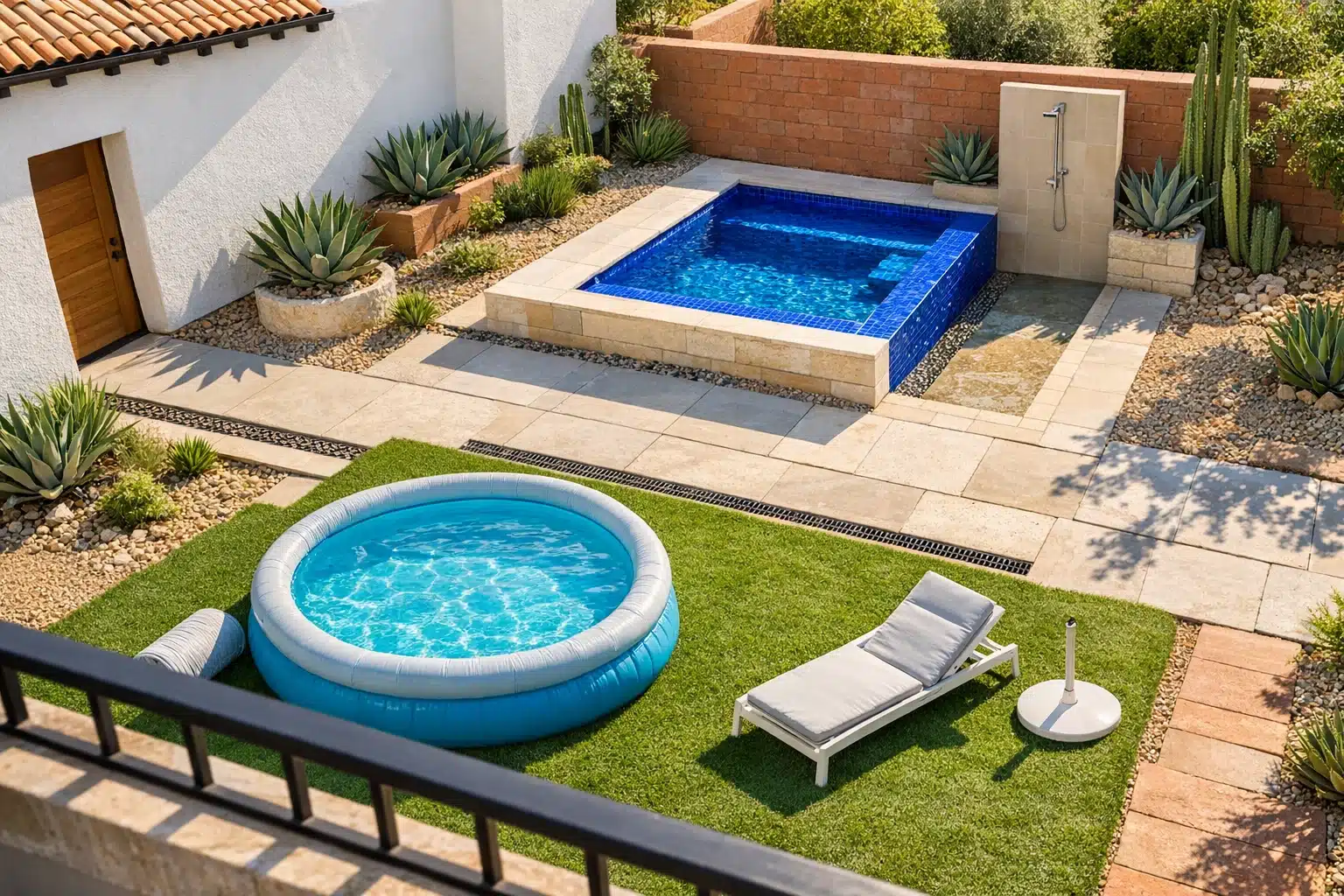
There is also an aesthetic difference. Portable pools are useful, but they often look temporary. That is not a flaw; it is simply part of their design logic. Mini pools generally blend into landscaping more effectively and can be paired with decking, stone, fencing, lighting, and seating. If a portable pool is the quick weekend guest, the mini pool is the quiet neighbor who plans to stay.
For small spaces, the decision is not always obvious. A portable pool may fit because it can be emptied and removed when not needed. A mini pool may fit because it uses the space more intentionally and efficiently. Buyers should measure not only footprint, but also access paths, required clearance, drainage routes, and the load-bearing strength of the intended surface.
Installation, Maintenance, and Long-Term Cost: Where Ownership Becomes Real
A pool may look affordable on the product page, but ownership costs start the moment water enters the liner. This is where many buyers begin to see the practical difference between portable swimming pools and mini swimming pools. A portable pool usually has a lower entry price. Small inflatable models may cost very little, while larger framed units typically remain within the range of many household seasonal purchases. The main expenses usually include the pool itself, a pump or cartridge filter, a ground cloth, water treatment supplies, and possibly a cover. In many cases, setup requires only level ground, a hose, and patience.
Mini swimming pools often demand a higher upfront investment. Even modest compact models may cost several times more than a portable pool before installation is included. Site preparation can add meaningful expense: base work, drainage planning, electrical connections, decking, fencing, and professional assembly can all increase the total. If the mini pool includes heating, jets, or integrated filtration, energy use may rise as well. That said, the longer expected service life can improve value over time for buyers who plan to use the pool regularly for years.
Maintenance differs in both intensity and style. Portable pools are simpler, but that simplicity can create extra routine work. Many smaller units have limited filtration, which means water quality can change quickly in hot weather. Leaves, sunscreen residue, and debris accumulate faster relative to water volume. Owners often need to skim, test, and rebalance the water more frequently than expected. Draining and refilling may sound easy, but it wastes water and can be restricted in some areas.
Mini pools usually have better filtration and circulation systems, which support more stable water conditions. However, better equipment also means more components to inspect, service, and occasionally repair. Pumps, heaters, filters, and plumbing are useful until they become maintenance items on your calendar.
When comparing cost, it helps to think in layers:
- Initial purchase price
- Installation or preparation expense
- Water treatment supplies
- Electricity for pumps and heaters
- Seasonal storage or winterization
- Repair and replacement cycles
Durability is another major factor. Portable pools can last several seasons with careful use, but punctures, UV wear, seam weakness, and frame rust may shorten lifespan. Mini pools generally hold up better, especially when built with stronger shells and better filtration. For occasional summer play, a portable pool may be the smarter financial choice. For frequent use and a longer planning horizon, a mini pool often offers better long-term economics despite the steeper beginning.
Comfort, Safety, and Everyday Use: Which Pool Fits Your Household Better?
The best pool is not always the largest or the most expensive; it is the one that matches how people actually live. This is where comfort and daily usability matter more than raw specifications. Portable swimming pools are often ideal for casual recreation. They suit families who want an easy place for children to splash, adults to cool off, or guests to gather during hot afternoons. Because many models are shallow, they can feel less intimidating for younger users when supervised properly. They also create fewer psychological barriers: inflate, fill, and suddenly the yard feels lighter, more playful, and a little less ordinary.
Still, portable pools have limitations in comfort. Thin walls can flex, floors may feel uneven unless the ground is prepared very carefully, and water temperature changes quickly because of the smaller volume and lighter materials. Some people enjoy that fast warming effect in sunny weather, while others find it makes the pool less refreshing in peak summer heat. Seating, entry steps, and lounging features are usually basic unless added separately.
Mini swimming pools usually provide a more refined experience. Even in a compact footprint, they can feel deeper, calmer, and more intentional. Adults often prefer them for soaking, gentle exercise, low-impact movement, or quiet relaxation after work. In narrow backyards, a mini pool can function as both a visual focal point and a practical cooling space. Some designs include benches, integrated steps, hydrotherapy features, or heating options, which extend use beyond the hottest months.
Safety deserves close attention in both categories. Portable pools can create a false sense of simplicity because they seem temporary. Yet even shallow water requires supervision, secure access control, and careful ground placement. Mini pools, meanwhile, may require compliance with local fencing and barrier rules because they are treated more like permanent water features.
Households should weigh the following questions:
- Will the pool be used mostly by children, adults, or both?
- Is the goal active play, cooling off, exercise, or design appeal?
- How much time is available for cleaning and water checks?
- Does the climate support short seasonal use or a longer swimming season?
- Will noise from pumps or splashing affect neighbors in dense housing areas?
For renters, portable pools are often the easier match because they can be removed without altering the property. For homeowners planning a more polished backyard, mini pools often make better sense. Comfort is not just about water; it is about entry, temperature, privacy, seating, safety, and the emotional tone of the space. One pool says, “Let’s make today fun.” The other says, “Let’s make this corner of the home work beautifully.”
Buying Tips and Final Summary for Homeowners, Renters, and Small-Space Shoppers
If you are ready to buy, the smartest move is to start with constraints rather than features. Measure the available area carefully, including walking space around the pool, filter placement, hose access, and any required safety clearance. Many buying mistakes happen because shoppers focus on the pool’s listed dimensions and forget the surrounding zone needed to use it comfortably. A backyard can look generous until a pump, ladder, storage bin, and wet feet all demand room at once.
Next, match the pool to your likely frequency of use. If you want a low-cost way to cool down during a few hot months, a portable swimming pool is often the practical winner. It is easier to store, easier to replace, and easier to justify when budgets are tight. If you expect frequent adult use, care about appearance, or want a compact pool that feels like a lasting part of the property, a mini swimming pool is usually the stronger candidate.
Use this decision guide as a quick filter:
- Choose a portable pool if you value flexibility, lower upfront cost, and seasonal convenience.
- Choose a mini pool if you value durability, aesthetics, deeper comfort, and longer-term ownership.
- Choose a portable model for temporary living situations or rental homes.
- Choose a mini model for permanent homes with stable outdoor planning.
- Choose based on maintenance tolerance, not just purchase price.
Also check practical details that are easy to overlook:
- Weight of the filled pool and whether the surface can support it
- Availability and cost of replacement filters or liners
- Drainage rules in your area
- Sun exposure, wind exposure, and tree debris
- Local rules regarding fencing, barriers, or permits
Conclusion: Which One Makes Sense for You?
For families seeking affordable summer fun, renters needing a no-commitment option, or shoppers testing whether they will truly use a pool, a portable swimming pool is often the most sensible choice. For homeowners with a compact yard, a clearer design vision, and a longer time horizon, a mini swimming pool usually delivers a better balance of comfort, durability, and visual appeal. Neither option is universally better; the right answer depends on space, budget, maintenance habits, and who will use the pool most often. When those factors are weighed honestly, the decision becomes far less confusing and far more rewarding.