Best Family Camping Tents: A Guide to Portable Options
Choosing a family camping tent is less about flashy extras and more about finding a shelter that fits real trips, real weather, and real people. The right tent affects sleep quality, storage, privacy, and how smoothly everyone handles rain, wind, muddy shoes, or a restless child at dawn. This guide explores the best family camping tents and the most practical portable options, focusing on space, setup, durability, and value. If you want fewer campsite headaches and more time around the fire, the details ahead are worth knowing.
Article Outline
This article moves from the basics of tent design to the practical choices that matter once the car is packed and the forecast looks uncertain.
- What makes a family camping tent truly good, beyond the capacity label on the box
- How portable family tents differ in weight, packed size, structure, and ease of transport
- Which popular tent styles and well-known examples suit different budgets and priorities
- How to match a tent to family size, campsite type, and trip length
- How setup habits, maintenance, and smart buying decisions improve long-term value
What Makes the Best Family Camping Tents Stand Out
The phrase best family camping tent can be misleading because the right choice depends on how a family camps, not just on a tent’s advertised capacity. A tent is often doing several jobs at once. It is a bedroom, a changing room, a weather shield, a gear locker, and, on a rainy afternoon, a small indoor living space. That is why the most useful way to judge tents is by livability first and marketing language second.
Capacity labels are a good example. A six-person tent rarely feels generous for six people once sleeping pads, duffel bags, jackets, and shoes are inside. In practical terms, many families find that a four-person household is more comfortable in a six-person tent, while a five-person household often prefers an eight-person model for car camping. Floor area matters, but so does shape. Cabin tents with near-vertical walls often feel much roomier than dome tents with similar square footage because adults can sit up, kneel, and help children get ready without folding themselves into strange angles.
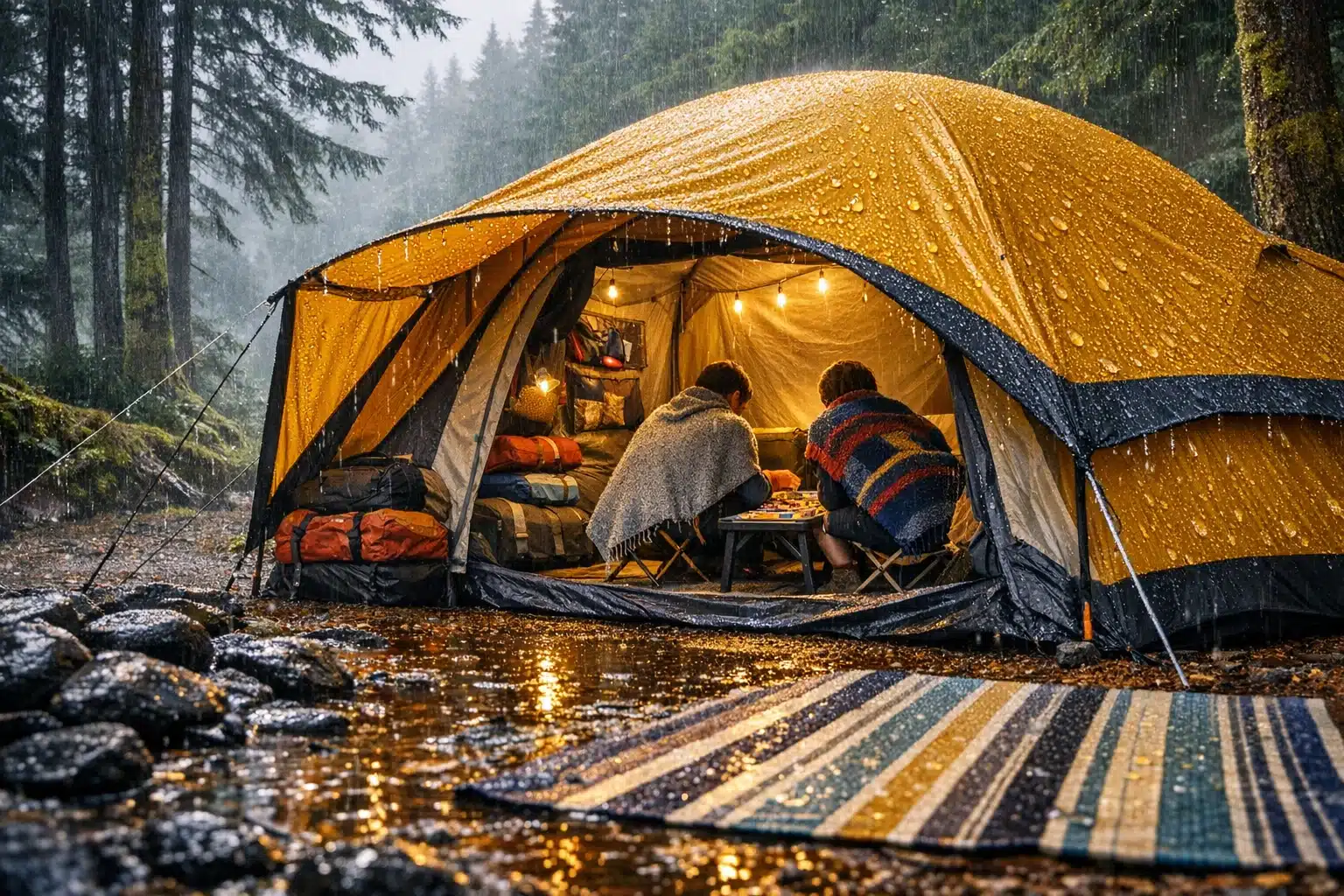
Weather protection is another dividing line between average and excellent tents. Strong family tents usually combine a durable rainfly, properly sealed seams, a bathtub-style floor, and enough stake-out points to keep the structure stable. Better models also balance waterproofing with ventilation. That balance matters because condensation can make a dry night feel damp by morning, especially when several people are breathing in a closed tent. Mesh panels, high vents, and two-door designs can help warm air escape.
Before buying, it helps to compare these core features:
- Peak height, especially if adults want to stand or crouch less
- Number of doors, which reduces midnight traffic jams
- Vestibule space for shoes, wet gear, and bags
- Pole material and pole geometry, which influence strength
- Packed size and total weight, important for transport and storage
- Interior pockets, dividers, and gear lofts for organization
A quality family tent should also fit the campsite itself. Many campground tent pads are not enormous, so a giant footprint can become a problem. A tent that looks palace-like online may feel awkward when trees, rocks, or parking limits enter the picture. In short, the best family tents do not just promise room. They deliver useful room, dependable protection, and a layout that helps the whole group function more calmly when the weather turns or the day runs long.
Portable Family Camping Tents: What Portability Really Means
Portable family camping tents sound simple in theory, but portability is more than low weight. For families, it usually means a tent that can be carried, packed, stored, and pitched without turning arrival at camp into a test of patience. A tent may weigh less than another model yet still feel less portable if the bag is awkward, the poles are cumbersome, or the setup process requires a long stretch of open ground and perfect coordination.
Most portable family tents fall into a few practical ranges. Many six-person car-camping tents weigh roughly 15 to 25 pounds, while larger cabin tents can move into the 20 to 35 pound range or more. Inflatable air-beam tents, which replace traditional poles with pressurized tubes, can be quick to pitch but are often bulky when packed. Compact dome and tunnel tents may offer a better balance for families that walk from parking areas to campsites or regularly shift camps during a road trip.
Packed size matters almost as much as weight. A long, rigid tent bag can be annoying in a small trunk, especially alongside coolers, folding chairs, and a stroller. Families traveling in sedans or compact SUVs often benefit from tents with shorter pole segments and more compressible fabric bundles. Storage at home counts too. A highly portable tent is easier to keep in a closet, basement shelf, or garage bin, which means it is more likely to be used often rather than dreaded.
There are several types of portability to think about:
-
Car portability: how neatly the tent fits around other gear in the vehicle
-
Carry portability: how comfortable it is to move from parking to pitch site
-
Setup portability: how quickly one or two adults can raise it without confusion
-
Travel portability: how practical it is for frequent moves during multi-stop trips
Setup speed deserves special attention. For many families, a tent that pitches in ten minutes with clear color-coded poles is more portable in real life than a technically lighter model that takes twenty-five minutes and several retries. Children rarely become more cheerful while adults sort through unlabeled pole sleeves in fading light. Portable design is about reducing friction, not just reducing ounces.
A useful rule of thumb is this: if your trips involve short campground stays, changing weather, or late arrivals, favor easier setup and compact packing over maximum interior volume. If you usually stay in one spot for several nights, you may accept more weight in exchange for standing height and bigger vestibules. The most portable family camping tent is not necessarily the smallest one. It is the one that fits your travel rhythm without stealing energy from the trip itself.
Popular Family Tent Styles and Notable Options Worth Comparing
When shoppers look for the best family camping tents, they often compare products by brand first. That is understandable, but tent style usually tells you more about the experience than the logo on the bag. Cabin, dome, tunnel, and inflatable family tents all solve the same problem in different ways. The smartest comparison is to start with structure, then narrow choices by budget and expected conditions.
Cabin tents are favorites for comfort-focused car camping. Their vertical walls create a roomy interior that is easy to move around in, and many families like the ability to stand while dressing children or organizing gear. These tents are often the easiest to love on calm, warm weekends. The trade-off is that very tall walls can be less aerodynamic in strong wind. Budget-friendly options from brands such as Coleman and CORE are popular because they offer good floor space for the price, though families in stormier regions may want sturdier pole systems and better rain coverage.
Dome and crossover tents are usually a safer pick when weather is a bigger concern. The curved structure sheds wind more effectively, and premium examples from companies such as REI Co-op, Marmot, MSR, Big Agnes, and NEMO often pair stronger materials with better vestibules and more thoughtful ventilation. These models can cost more, but they often feel more balanced: not as airy as a giant cabin tent, yet more reliable when a pleasant forecast turns moody.
Tunnel tents deserve more attention than they often get in North America. They can provide impressive interior length, useful vestibule storage, and efficient space-to-weight ratios. Families on longer summer holidays often appreciate how well tunnel designs separate sleeping and storage zones. Their main weakness is dependence on proper staking, so they are less forgiving on hard or rocky ground.
Inflatable family tents are a modern twist. Brands like Decathlon and some European makers have shown how air-beam structures can simplify setup. Once inflated, these tents can feel surprisingly sturdy and user-friendly. They are especially appealing to families who dislike threading long poles through fabric sleeves. The catch is bulk. They may pack larger than expected, and repairs require a little familiarity with valves and air tubes.
A practical comparison framework looks like this:
- Choose a cabin tent if interior comfort and easy movement matter most
- Choose a dome or crossover tent if you expect mixed weather and want better all-round stability
- Choose a tunnel tent if you want efficient layout and generous vestibule space
- Choose an inflatable tent if rapid, low-stress setup is the main priority
Well-regarded examples across the market often cluster around six-person formats because that size suits many families without becoming absurdly heavy. In broad terms, premium models tend to improve pole strength, seam finishing, storage details, and rainfly coverage, while budget models often win on price and basic spaciousness. Neither category is automatically better. A family that camps three calm weekends each summer may be perfectly happy with a simpler, less expensive cabin tent. A family heading into shoulder-season wind and rain will likely appreciate the stronger structure of a more technical design. The best option is the one whose strengths match the kind of trip you actually take, not the fantasy trip imagined in a catalog photo.
How to Match Tent Size, Layout, and Features to Your Family
Buying a family tent becomes easier when you stop asking which one is best in general and start asking which one fits your group’s habits. A young family with two small children, for example, has different needs from a family with teenagers, a dog, and a trunk full of sports gear. The same tent can feel luxurious in one scenario and frustrating in another. Matching the tent to the household is where good decisions quietly save weekends.
The first question is not capacity but sleeping style. Are you using narrow sleeping pads, thick air mattresses, or camping cots? A tent that can technically fit six standard pads may feel crowded once a double-height mattress enters the picture. Families with babies or toddlers often want extra floor area for changing, nighttime movement, or a travel crib. Older children may appreciate room dividers or at least a layout that gives them a little space from adults. Privacy in family camping is not only about comfort. It can also make mornings calmer and bedtime less chaotic.
Campsite type matters just as much. On established campground pads, a tent with a compact footprint may be easier to place than a massive eight-person cabin tent. On grassy drive-up sites, that larger tent can feel wonderful. If your usual trips involve national park campgrounds, popular holiday weekends, or sites with tree roots and uneven ground, moderate tent dimensions are often more practical than sprawling ones. Families who camp in hot climates should prioritize mesh, airflow, and shade management. Families who camp in cooler or wetter seasons should lean toward fuller rainfly coverage, stronger pole architecture, and vestibules for wet gear.
These matching questions help narrow the field:
- How many people will sleep in the tent most of the time, not theoretically?
- Will bags and shoes stay inside, or can they live in a vestibule or vehicle?
- Do you need full standing height, or is seated comfort enough?
- How often will one adult set the tent up alone?
- Are your campsites typically breezy, exposed, wooded, or very hot?
It is also useful to think in terms of trip length. For a single overnight, a simpler portable tent may be all you need. For four or five nights, more headroom, better storage pockets, and easier access start to matter more. Little details become bigger after repeated use. A second door can spare everyone from climbing over sleepers. A vestibule can keep wet jackets from soaking the floor. Interior pockets can prevent the nightly scavenger hunt for headlamps and car keys.
In the end, the right family tent should feel like a good host. It should welcome tired people, absorb clutter gracefully, and make rough weather easier to manage. When size, layout, and features fit the people using them, camping feels less like improvisation and more like a simple, satisfying routine under canvas and sky.
Setup, Maintenance, and Buying Tips for Long-Term Value
A family camping tent is not a small purchase if you plan to use it for several seasons, so value matters as much as first impressions. The good news is that long-term value does not always mean buying the most expensive tent on the shelf. It usually means choosing a tent whose materials, setup process, and maintenance needs suit your habits well enough that it actually gets used and lasts.
Start with setup realism. If possible, practice pitching the tent at home before the first trip. This sounds obvious, yet it remains one of the most overlooked steps in camping. A rehearsal in the yard reveals whether the color coding is intuitive, whether the rainfly clips are easy to reach, and whether one adult can manage the process alone if needed. That knowledge pays off when you arrive near sunset and the children are already asking where dinner is. Fast, familiar setup is one of the quiet luxuries of good camping gear.
Maintenance is equally important. Tents last longer when they are dried thoroughly before storage, cleaned gently, and packed without grinding dirt into zippers and coatings. Waterproof performance often declines not because a tent is badly made, but because it was stored damp or left baking in sunlight for long stretches. Ultraviolet exposure slowly weakens many tent fabrics. Even a robust family tent benefits from shade when possible.
Good care habits include:
- Always drying the tent completely before long-term storage
- Brushing off grit so zippers and floor fabric wear more slowly
- Using a properly sized footprint when the site is rough
- Reapplying seam sealant or durable water repellent treatment if recommended by the manufacturer
- Checking poles, clips, and guylines before each season begins
When buying, prioritize the features that solve the problems you actually face. Families who camp in fair weather may gain more from a lighter, simpler tent than from a storm-heavy design with extra cost and bulk. Families who see wind, rain, or frequent shoulder-season trips should invest more in structure and weatherproofing. Read specifications carefully, but also pay attention to how tents behave in use. Reviews that mention awkward door placement, weak zippers, or poor ventilation often reveal more than polished product summaries.
Finally, think about the tent as part of a system. A great tent works better with suitable sleeping pads, a sensible campsite layout, and a few storage bins or organizers. When those pieces come together, camp starts to feel less like moving house outdoors and more like stepping into a temporary home. That is the real value of a well-chosen portable family tent: it lowers friction, protects comfort, and leaves more room for the parts of camping people actually remember.
Conclusion for Families Choosing Their Next Tent
The best family camping tents are the ones that match real travel habits, real weather, and real comfort needs without becoming a burden to carry or store. For many households, the smartest portable option is not the lightest or the largest model, but the tent that offers enough space, straightforward setup, dependable weather protection, and a packed size that fits the vehicle without a wrestling match. If your trips are short and relaxed, a roomy cabin tent may be ideal. If you camp in mixed conditions or move often, a more compact dome, tunnel, or well-designed inflatable tent may serve you better. Choose with honesty about how your family camps, and the tent will stop being a piece of gear and start becoming the place where the trip settles in and feels real.