E Bike: A Comprehensive Guide to Electric Bicycle Technology and Modern Transportation
Electric bikes have evolved from a niche curiosity into a practical answer for crowded streets, rising fuel costs, and changing travel habits. They keep the familiar rhythm of cycling while adding motor assistance that makes hills gentler and longer journeys less daunting. For commuters, students, older riders, and curious beginners, that mix of efficiency and ease is hard to ignore. This guide breaks down the technology, real-world benefits, buying factors, and ownership basics so you can understand whether an e-bike fits your daily life.
Outline
• What an e-bike is, how the term relates to electric bike, and how common classes and designs differ
• The core technology behind motors, batteries, sensors, controllers, charging, and range
• Why riders choose e-bikes for commuting, fitness, errands, and everyday mobility
• What to consider before buying, plus maintenance, safety, storage, and long-term costs
• A practical conclusion for readers deciding whether an electric bike suits their needs
Understanding the E-Bike: Meaning, Design, and Everyday Categories
The terms “e-bike” and “electric bike” generally refer to the same thing: a bicycle equipped with an electric motor and a rechargeable battery that assist the rider. That simple definition matters because many people still confuse e-bikes with scooters or lightweight motorcycles. An electric bike is still, at heart, a bicycle. You pedal, steer, brake, shift gears on many models, and interact with the road in a familiar way. The electrical system is there to support effort, not erase the cycling experience altogether.
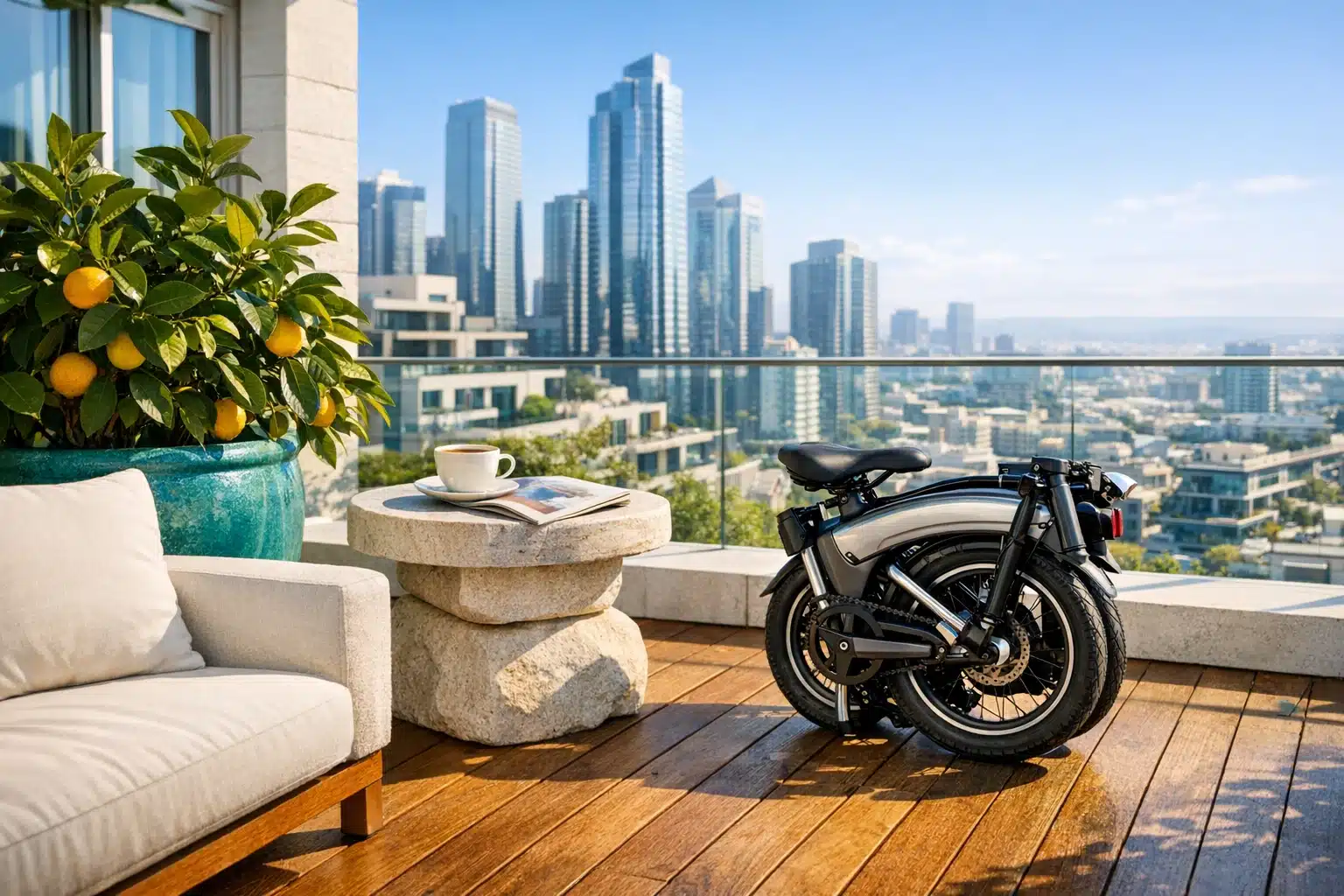
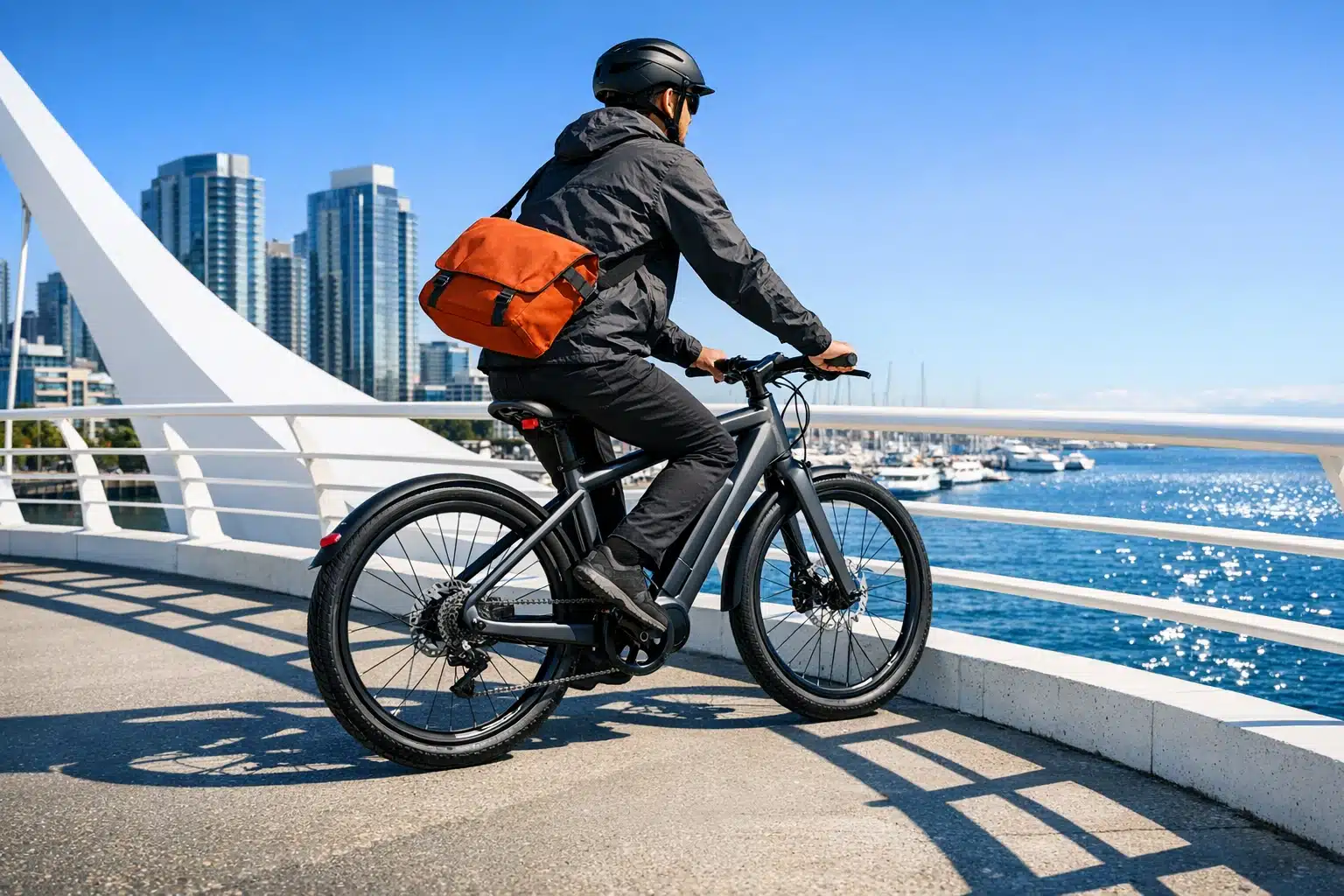
Most e-bikes fall into a few broad design categories. City and commuter models focus on upright comfort, lights, racks, and practical tires. Hybrid and trekking models balance pavement efficiency with versatility for mixed surfaces. Mountain e-bikes add suspension, stronger frames, and motors tuned for climbing. Folding e-bikes aim at storage convenience for apartments, trains, and office corners. Cargo e-bikes stretch the concept even further by carrying groceries, tools, or even children in specially designed boxes or rear platforms. In many urban neighborhoods, these machines are quietly replacing a second car or, in some cases, the first one.
A useful distinction is the type of assistance offered. Pedal-assist systems activate when the rider pedals, while throttle-equipped models can provide power without pedaling, depending on local rules. Many regions classify e-bikes according to assisted speed and power delivery. For example, parts of Europe commonly treat standard pedelecs as bicycles when assistance cuts out at 25 km/h and motor power stays within legal limits. In the United States, many states recognize a three-class framework, often including pedal-assist models up to 20 mph, throttle-capable models up to 20 mph, and faster pedal-assist bikes up to 28 mph. Laws vary, so checking local regulations is essential before buying or riding.
Even within those categories, design choices change the ride dramatically. Frame geometry affects comfort. Tire width changes grip and stability. Rack mounts determine whether a bike works for errands. Step-through frames can make mounting easier for riders wearing work clothes or those with limited mobility. A small change on paper can feel enormous on the road.
A quick way to think about the market is this:
• Commuter e-bikes prioritize practicality
• Mountain e-bikes prioritize control and trail performance
• Cargo e-bikes prioritize carrying capacity
• Folding e-bikes prioritize portability
• Road and gravel e-bikes prioritize speed and distance
That range of options explains why e-bikes are no longer a novelty. They are a category broad enough to serve students, office workers, delivery riders, weekend explorers, and people who simply want cycling to feel more possible than punishing.
How Electric Bike Technology Works: Motors, Batteries, Sensors, and Range
Electric bike technology looks complex at first glance, but its main parts are easy to understand once you break them down. Every e-bike relies on a motor, a battery, a controller, and an interface that lets the rider choose assistance levels. The real character of the bike comes from how those parts are combined. Two bikes may have similar price tags yet feel entirely different because one uses a hub motor with a simple cadence sensor while the other uses a mid-drive motor paired with a torque sensor.
Hub motors sit in the front or rear wheel and push the bike forward directly. They are common on commuter and budget models because they are relatively simple, quiet, and often less expensive. Mid-drive motors sit near the crank and apply power through the bike’s drivetrain. That design usually offers better hill climbing, more natural weight distribution, and improved efficiency on varied terrain. Riders who tackle steep hills or prefer a more responsive feel often gravitate toward mid-drive systems, though they can cost more and place more wear on the chain and cassette.
The battery is the e-bike’s energy reservoir. Most modern models use lithium-ion battery packs, commonly ranging from about 250 watt-hours on light urban bikes to 750 watt-hours or more on larger cargo or long-range models. A higher number does not automatically mean a better bike, but it does indicate greater energy storage. Real-world range depends on several variables:
• Rider weight
• Terrain and wind
• Tire pressure
• Temperature
• Motor efficiency
• Assistance level
• Stop-and-go traffic
• Cargo load
Because of those variables, advertised range figures should be treated as estimates rather than promises. Many riders see anywhere from roughly 20 to 70 miles on a charge, though some lightweight bikes can exceed that in low assist modes, while heavy cargo use may reduce it sharply. It is less like a laboratory number and more like fuel economy in a car: your habits matter.
Sensors shape how natural the ride feels. Cadence sensors detect whether you are pedaling and then deliver preset support. Torque sensors measure how hard you are pushing and adjust power more fluidly. That is why one bike can feel like a helpful tailwind and another can feel like an on-off switch. Controllers, displays, and apps add another layer, giving riders information such as speed, battery level, trip distance, estimated range, and walk-assist functions.
Charging is usually straightforward with a standard outlet, and many batteries need roughly three to six hours for a full charge, depending on charger size and battery capacity. The magic of an e-bike is not that it replaces effort with a miracle. It is that it turns effort into momentum more efficiently, making ordinary trips feel a little less like work and a little more like freedom.
Why Electric Bikes Matter: Commuting, Fitness, Access, and Urban Mobility
The rise of the electric bike is not only a story about gadgets. It is also a story about how people move through modern life. In dense cities, short car trips often consume the most time relative to distance. Parking, congestion, fuel costs, and delays can turn a five-mile journey into an exercise in irritation. E-bikes offer a different pattern. They are fast enough to be practical, small enough to store more easily than cars, and flexible enough to adapt to streets, bike lanes, and neighborhood routes. For many people, the biggest benefit is not top speed but consistency. Travel times become more predictable because hills and headwinds matter less.
Cost is another reason the category keeps growing. While an e-bike can require a meaningful upfront investment, ongoing costs are generally far lower than those of a car. Electricity for charging is modest compared with fuel. Insurance, registration, parking, and maintenance costs can also be lighter, depending on local laws and the type of bike. That does not mean e-bikes replace every vehicle for every household, but they can replace a surprising number of trips, especially commuting, errands, school runs, and visits within a local radius.
There is also a health angle that deserves nuance. Riding an e-bike is still physical activity. Because riders continue pedaling, they often spend more time riding and may choose longer routes than they would on a standard bicycle. Research from transport and public health fields has suggested that e-bike riders can still gain meaningful exercise, particularly when e-bikes help them ride more frequently. The assistance lowers barriers rather than eliminating movement. For someone returning to cycling after years away, or managing hills, distance, or moderate joint limitations, that matters enormously.
E-bikes also widen access. Older adults may keep riding longer. People recovering confidence after injury may find riding manageable again with medical guidance. Parents can transport children with cargo models. Workers can carry tools without arriving exhausted. Students can cover campus and city routes without relying entirely on buses or car ownership. In that sense, electric bikes are not only transport devices; they are access devices.
Some of the strongest real-world advantages show up in everyday situations:
• Replacing short car trips for groceries or commuting
• Making longer cycling distances realistic for beginners
• Reducing arrival sweat in work clothes
• Helping riders handle hilly terrain
• Expanding mobility for people who want less dependence on cars
There is something quietly transformative about that. An e-bike does not make a city perfect, and it does not solve every transport problem. Yet on an ordinary Tuesday morning, when traffic crawls and parking disappears, it can make the distance between home and destination feel refreshingly human again.
Choosing the Right E-Bike: Buying Factors, Maintenance, Safety, and Ownership Costs
Buying an electric bike is easier when you move past marketing language and focus on how the bike will actually be used. Start with the route, not the brochure. A rider commuting on mostly flat pavement has different needs from someone hauling groceries up steep streets or riding forest trails on weekends. Fit and comfort should come before flashy specifications. An uncomfortable bike with a huge battery is still an uncomfortable bike, and discomfort has a way of ending good intentions quickly.
Battery size, motor placement, frame style, and component quality should be evaluated together. A larger battery can extend range, but it also adds weight and cost. Mid-drive motors are often favored for hills and natural handling, while hub motors can suit budget-conscious commuters. Hydraulic disc brakes are especially valuable on heavier e-bikes because motor assistance and battery weight increase stopping demands. Wider tires can improve comfort and stability, particularly on rough streets. Built-in lights, fenders, chain guards, kickstands, and rear racks may sound mundane, but on daily-use bikes they often matter more than a sleek display.
A practical buyer checklist might include:
• How far is my typical round trip?
• Do I need to carry cargo or a child seat?
• Can I safely store and charge the bike indoors?
• What local service support exists for this brand?
• How much does the bike weigh if I need to lift it?
• Are replacement batteries and parts easy to find?
Maintenance is less intimidating than many newcomers expect. The electrical system usually needs little day-to-day attention beyond sensible charging and dry storage. Standard bicycle parts, however, still wear normally, and on some e-bikes they wear faster because speeds and loads are higher. Chains, brake pads, tires, and drivetrains deserve regular inspection. Battery care matters too. Avoid extreme heat, use the proper charger, and follow brand guidance on long-term storage charge levels. A battery is one of the most expensive consumable parts on the bike, so careful treatment is not a detail; it is good economics.
Safety deserves equal attention. A helmet is a baseline. Front and rear lights improve visibility even in daylight. Reflective details, mirrors on some commuter setups, and a loud bell can all help. Riders should practice braking distance, cornering, and low-speed control because an e-bike often accelerates faster than a standard bicycle. Theft prevention is another ownership reality. A strong lock, secure parking habits, and battery removal when possible can reduce risk.
In the end, the best purchase is not necessarily the most powerful one. It is the one that fits your body, your routes, your storage situation, and your budget well enough that you will keep riding it long after the first test ride excitement fades.
Conclusion: Who Should Consider an E-Bike and What to Expect Next
If you are the kind of person who looks at a short urban trip and sighs at the thought of traffic, parking, or a crowded bus, an e-bike deserves serious attention. If you like the idea of cycling but worry about hills, fitness level, distance, or arriving sweaty, it deserves attention too. Electric bikes are especially compelling for commuters, students, older adults, households trying to reduce car dependency, and riders who want a practical machine rather than a hobby object. They are not magic carpets, but they do remove enough friction from everyday travel to change behavior in a meaningful way.
The most useful expectation is a balanced one. An e-bike will not make every road safe, every battery eternal, or every ride effortless. You still need to choose the right model, learn local rules, maintain components, and ride with awareness. Weather still matters. Storage still matters. Budget still matters. Yet within those real-world limits, the category offers one of the clearest examples of technology improving a familiar tool without making it unrecognizable. A good electric bike still feels like a bicycle, only one that is a little more forgiving and a lot more versatile.
For first-time buyers, the smartest next step is to define your main use case. Think in plain terms:
• Daily commuting
• Weekend recreation
• Family cargo trips
• Fitness with assistance
• Mixed urban and light off-road riding
Then test ride more than one style. Numbers on a product page cannot fully capture stability, comfort, power delivery, or handling. Pay attention to how confidently you start, stop, climb, and corner. Notice whether the bike invites regular use or feels like a machine you would only ride on ideal days.
That is the real promise of the e-bike. Not perfection, and not hype, but practicality with a spark of possibility. For the reader trying to decide whether this category is relevant, the answer is simple: if you want transportation that is more efficient than a car on short and medium trips, less intimidating than a traditional bike for demanding routes, and adaptable to modern urban life, an electric bike is no longer an experiment. It is a mature option worth understanding, testing, and, for many people, welcoming into daily routine.