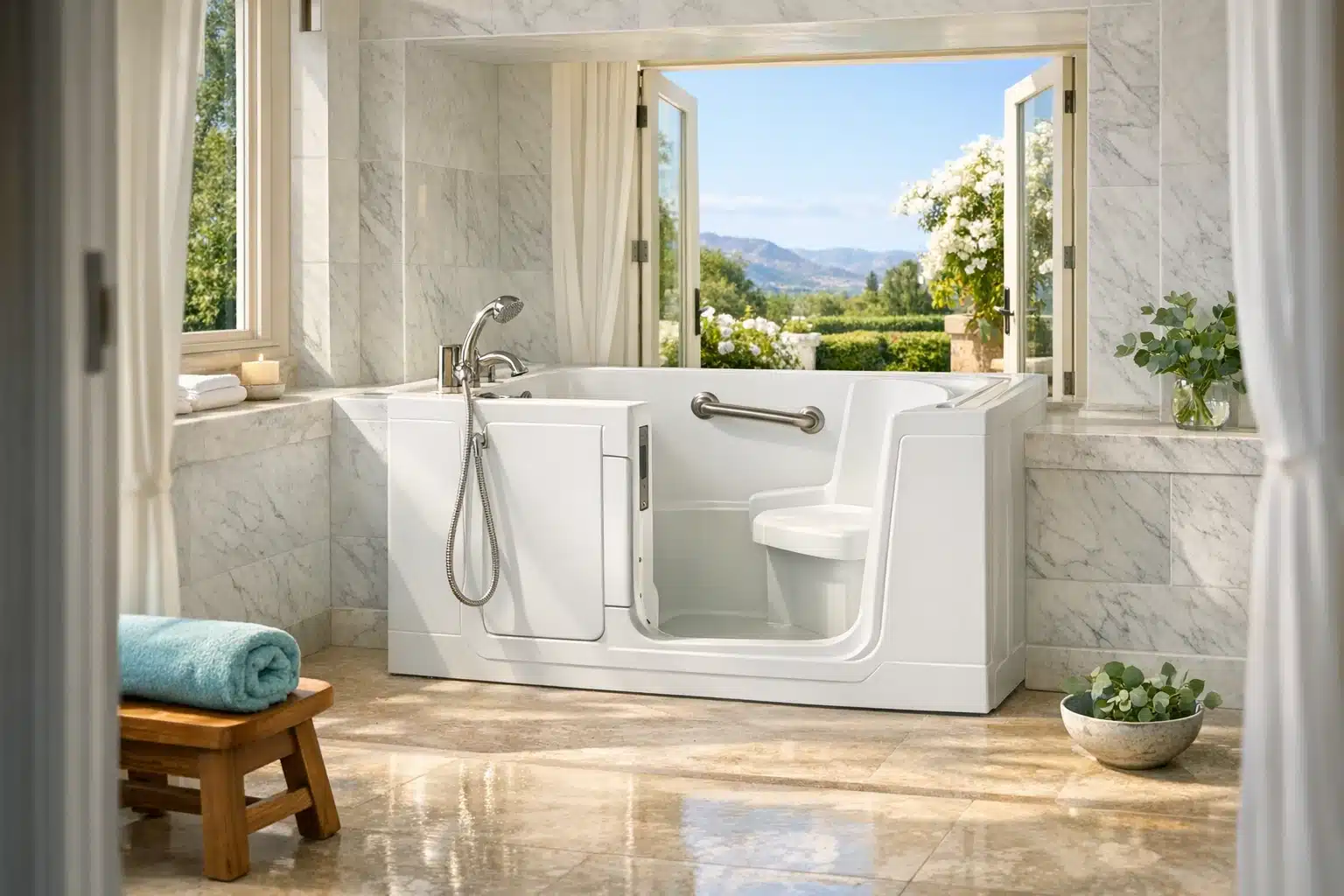
 Artificially generated image
 Guide to Best Walk-in Tubs for Seniors: Features, Safety, and Selection Factors
A walk-in tub is more than a bathroom upgrade; for many older adults, it is the difference between bathing with confidence and avoiding the tub altogether. As balance changes, joint pain grows, or recovery takes longer, a high step over a slippery rim can turn a daily routine into a real hazard. Walk-in tubs answer that problem with a door, a built-in seat, and safety-focused design. This guide explains how they work, what features matter, and how seniors and families can choose one without getting lost in the sales talk.
Article outline: 1. what walk-in tubs are and who they help; 2. the safety and comfort features that matter most; 3. the main tub types and how they compare; 4. installation, plumbing, and bathroom planning; 5. costs, warranties, and how to choose wisely.
Understanding Walk-in Tubs and Why They Matter for Seniors
Walk-in tubs are designed to let a person enter through a side door, sit on a molded seat, and bathe without stepping over the high wall of a standard bathtub. That sounds simple, yet the change in access can be significant for seniors, older adults recovering from surgery, and people living with arthritis, reduced balance, or limited leg strength. In many homes, the bathroom is one of the smallest rooms and one of the easiest places to lose footing. Slippery floors, awkward turning space, and the need to lift one leg over a tub edge create a set of challenges that families often underestimate until an accident or near miss happens.
Public health agencies consistently identify falls as a major source of injury among older adults, and bathrooms are a common setting because water, tile, and tight spaces do not forgive hesitation. A walk-in tub addresses part of that risk by reducing the climbing motion required with a conventional tub. Instead of stepping high and lowering the body into a low basin, the user opens the door, steps over a low threshold, turns, and sits at chair height. That shift can preserve independence for someone who still wants to bathe without hands-on help.
Still, a walk-in tub is not automatically the right solution for every senior. Some people benefit more from a curbless shower with a bench, especially if wheelchair access is a top priority or if standing showers are already part of the routine. Others love the seated soak because warm water can ease stiffness and make evening bathing feel less like a task and more like a pause button. The right choice depends on mobility, bathroom layout, caregiver support, and budget.
This guide looks at five practical questions:
• What problems does a walk-in tub solve?
• Which safety features are essential, and which are optional?
• How do soaking, air-jet, whirlpool, and specialty models compare?
• What installation issues catch buyers off guard?
• How can seniors and families judge value without focusing only on brand slogans?
Think of the walk-in tub as part safety equipment, part comfort product, and part home modification. When those three roles line up well, it can support aging in place. When they do not, the tub may feel expensive, bulky, or mismatched to the user’s daily habits. That is why careful comparison matters more than flashy brochures.
Safety and Comfort Features That Deserve Close Attention
If you compare walk-in tubs long enough, every brochure begins to sound impressive. Jets sparkle on the page, chrome fixtures gleam, and every model seems to promise a spa-like experience. For seniors, though, the smartest purchase usually begins with safety, then moves to comfort, and only after that considers luxury extras. A beautiful tub that is hard to enter, slow to drain, or confusing to operate misses the point.
The core safety features are fairly consistent across good models. A low threshold helps reduce the step-in height. A watertight door is central to the design, and the handle should be easy to grip with damp hands. Most tubs also include a built-in seat so the user does not need to lower themselves all the way to the floor of the tub. Add textured flooring, grab bars positioned where they are actually useful, and a handheld shower wand, and the basic setup becomes far more practical for older adults with limited stability.
Several features deserve more scrutiny than they often get:
• Fast-fill and fast-drain systems, because the user must stay inside the tub while it fills and drains
• Anti-scald or thermostatic controls, which help keep water temperature more stable
• Wide doors and transfer-friendly seating, especially for users with walkers or caregiver assistance
• Easy-to-read controls, important for seniors with vision changes or reduced hand dexterity
• Backup options or quick release instructions, so families know what happens if power or a pump fails
Comfort features can also be genuinely helpful, not merely decorative. Air jets provide a lighter, bubbling massage that many users find gentle on sore muscles. Whirlpool jets are stronger and may appeal to those who like a more targeted massage, though they can require more cleaning attention. Heated backrests, neck support, and a slightly higher seat may sound minor on paper, but for an elderly user who spends extra time bathing, they can influence whether the tub feels inviting or tiring.
One of the most overlooked issues is operating sequence. Because the door must remain shut until the water drains, the bather may sit in an empty tub before filling and then wait again at the end. If the bathroom is chilly or the drain is slow, that downtime can be uncomfortable. This is why fast-drain pumps, warm-air systems, and good room heating matter more than many first-time buyers realize.
In short, the best walk-in tubs for seniors are not defined by the longest feature list. They are defined by useful design: secure entry, comfortable seating, clear controls, stable temperature, and a bathing process that feels calm rather than complicated.
Comparing the Main Types of Walk-in Tubs for Elderly Users
Not all walk-in tubs are built for the same kind of bather. Some are made for straightforward soaking, some emphasize therapeutic water motion, and others are designed around accessibility needs such as wider transfer space or higher weight capacity. Choosing between them is a bit like choosing footwear: the pair that looks appealing in a catalog may not be the one that supports you best over time.
The simplest option is the soaking walk-in tub. This model focuses on safe entry, seated bathing, and basic comfort. For many seniors, it is enough. If the main goal is reducing the risk of stepping over a high tub wall, a well-built soaking model may deliver the best value. It usually has fewer mechanical parts than jet systems, which can also mean less maintenance and a lower purchase price.
Air-jet tubs create a softer, all-around bubbling effect. Users who have general stiffness rather than one very specific pain point often prefer this style because it feels gentle and relaxing. Whirlpool or hydrotherapy tubs use stronger jets that direct water pressure toward muscles and joints. Some elderly users appreciate the deeper massage after exercise, gardening, or physical therapy, while others find it more forceful than they want. Preference matters here, and whenever possible, seeing or testing a similar system can help.
Common types include:
• Soaking tubs: practical, simpler, and often more affordable
• Air-jet tubs: gentle bubbling massage with a comfort-focused feel
• Whirlpool tubs: stronger targeted water jets for a more active massage effect
• Combination tubs: both air and water jets, usually at a higher price
• Bariatric tubs: wider seating and stronger structure for larger users
• Wheelchair-transfer or outward-door models: designed to improve access in specific mobility situations
• Shower-tub combos: useful when one bathroom must serve different household needs
There are trade-offs in every category. A compact tub may fit an older bathroom but offer less legroom. A two-seat model may sound friendly for shared use, yet it often demands more floor space than most homes can spare. A hydrotherapy model may appeal to someone with chronic soreness, but if cleaning routines are likely to be ignored, a simpler design may prove more realistic.
For seniors and caregivers, the best comparison method is to start with mobility and bathing habits, not features. Ask how the person transfers, how long they like to bathe, whether hand strength is limited, and if caregiver help is part of the plan. Once those answers are clear, the list of suitable tubs narrows quickly. Good selection is less about finding the most advanced model and more about finding the model that fits the body, the room, and the routine.
Installation, Bathroom Planning, and What to Expect Before Buying
A walk-in tub may look self-contained in a showroom photo, but installation is where the real complexity begins. Before choosing a model, it is worth thinking through the bathroom as a working space rather than a display space. Will the tub fit through the hallway and doorway? Can the floor support it when filled with water and occupied? Is there enough hot water capacity for a full bath? These questions are not glamorous, yet they often determine whether the project goes smoothly or becomes expensive halfway through.
Most walk-in tubs are intended to fit into the footprint of a standard bathtub alcove, but “fit” on paper does not always mean easy installation in practice. Older homes may have uneven floors, outdated plumbing, narrow doors, or electrical systems that need upgrading. A jetted tub may require a dedicated electrical circuit. Some models also need larger drain lines or pump access. If a tub is replacing a traditional bathtub, wall tile, flooring edges, or nearby fixtures may need adjustment. In small bathrooms, even the direction of the door swing matters.
Key planning points include:
• Exact tub dimensions, including seat height, width, and door clearance
• Whether the user transfers independently, with a walker, or with caregiver help
• Water heater capacity, since many walk-in tubs hold more water than standard tubs
• Drain speed and pump requirements
• Non-slip flooring outside the tub
• Placement of towels, toiletries, and emergency call access
• Permit requirements and whether local building codes affect the work
Installation timelines vary. A straightforward replacement can sometimes be completed in a day or two, but older bathrooms often need extra prep, especially if plumbing or electrical changes are involved. Delivery access can also be surprisingly important. Some tubs are large and heavy enough that installers need to remove doors, work around stairs, or protect tight corners. In condos or managed communities, elevator size, scheduling rules, and plumbing approvals can add another layer.
This is also the stage where comparison shopping pays off. One installer may quote only the tub and basic labor, while another includes demolition, disposal, minor finish repairs, and haul-away. Families should ask for written details, not just a total number. A cheaper quote can become less attractive once add-on charges appear for electrical work, faucet relocation, wall patching, or subfloor repair.
Finally, remember that a walk-in tub is just one way to improve bathroom safety. In some homes, a low-threshold shower, extra grab bars, a handheld shower, and a sturdy bench may offer a better fit. The bathroom should serve the person, not the other way around.
Costs, Warranties, and How Seniors Can Choose the Right Walk-in Tub
Price is often the part of the conversation that arrives late and lands hard. A walk-in tub can range from a relatively basic purchase to a substantial home modification once installation is included. In broad terms, product-only pricing often starts in the lower thousands for simple soaking models and rises significantly for hydrotherapy, combination-jet, or specialty-access models. Fully installed costs can move much higher depending on plumbing updates, electrical work, finish repairs, and regional labor rates. That is why two tubs that seem similar online can produce very different final quotes.
For seniors on a fixed income, value matters more than headline features. The question is not whether a tub has every optional extra. The question is whether it solves the user’s real problems safely and reliably. A tub that is easy to enter, comfortable to sit in, and quick to drain may be a better long-term choice than a premium model loaded with features the owner rarely uses.
Buyers should review several cost factors carefully:
• Base price of the tub
• Installation labor and demolition
• Plumbing or electrical upgrades
• Finish work after installation
• Warranty length on the shell, door seal, pumps, and controls
• Service availability in the local area
• Ongoing maintenance and cleaning needs
Coverage is another area where families should keep expectations realistic. Traditional Medicare generally does not treat walk-in tubs as standard covered equipment, because they are often classified as home modifications rather than medically necessary durable equipment. In some cases, Medicaid waiver programs, veterans’ benefits, local aging services, or certain Medicare Advantage plans may offer assistance, but support varies widely by location and individual eligibility. A contractor or salesperson should never be the only source of guidance on coverage; families should confirm details directly with the relevant program.
When evaluating sellers, ask plain questions. How long is the labor warranty? Who handles service if the pump fails? How fast are replacement parts available? Is the quoted price all-inclusive? Are there financing terms, and if so, what is the total cost over time? A polished brochure can make every tub look perfect, but the more revealing details usually appear in the installation contract and warranty document.
The best buying approach for elderly users is steady and practical. Measure the bathroom. Match the tub to the user’s mobility. Prioritize entry, seating, drain speed, and controls. Compare at least two or three quotes. If the decision still feels murky, bring in an occupational therapist, contractor, or trusted caregiver who can view the bathroom with fresh eyes. A wise purchase is rarely the fastest one.
Conclusion for Seniors, Elderly Buyers, and Family Caregivers
Walk-in tubs can be a meaningful safety upgrade when bathing has become difficult, stressful, or risky. They are especially relevant for seniors who want to stay in their homes while reducing the challenge of climbing into a standard bathtub. The most suitable model is not always the one with the biggest name, the strongest jets, or the highest price; it is the one that matches the user’s mobility, the bathroom’s limits, and the household’s budget. For families helping an older adult choose, the clearest path is to focus on daily use: safe entry, comfortable seating, manageable controls, dependable draining, and installation done correctly. When those basics are handled well, a walk-in tub can support comfort, confidence, and independence in one of the most personal rooms in the home.