Guide to 3 Best Restaurants For Foreigners
Outline: What Makes a Restaurant a Strong Choice for Foreign Visitors
Finding a restaurant in an unfamiliar country can be surprisingly stressful, especially when language barriers, different dining customs, and unknown ingredients all arrive at the table before the meal does. For many foreign travelers, the best place to eat is not simply the most famous one, but the one that balances flavor, clarity, comfort, and a sense of local culture. This guide begins with a practical outline and then compares three restaurant styles that regularly work well for visitors who want to eat confidently rather than guess their way through dinner.
Before naming any “best” options, it helps to define the standard. Since no single city or country is specified here, the most honest way to answer the topic is to focus on restaurant formats that consistently serve foreign guests well in many destinations. A foreigner-friendly restaurant usually succeeds in five areas: communication, menu clarity, payment convenience, cultural accessibility, and food quality. In simple terms, the ideal place does not force a traveler to choose between authenticity and ease. It offers a local experience without turning the meal into a puzzle.
The outline of this article is simple. First, we look at the classic local restaurant that has learned how to welcome non-native speakers without losing its identity. Next, we examine the modern bistro or brasserie near major attractions, a format that often combines polished service with predictable standards. Finally, we turn to the food hall or market-based restaurant, which can be one of the best choices for flexible, visual, low-pressure dining.
- Local neighborhood restaurants are best for cultural immersion and regional dishes.
- Modern bistros are best for menu clarity, reservations, and smoother service.
- Food hall restaurants are best for choice, speed, and visual ordering.
These categories matter because foreigners often judge a restaurant by different criteria than locals. A resident may already know the language, tipping customs, table etiquette, and seasonal specialties. A traveler often needs extra signals: English or multilingual menus, allergen guidance, card payment, staff willing to explain dishes, and a location that feels safe and easy to access after dark. That does not mean visitors want a watered-down experience. Quite the opposite: most want a real meal, but they also want enough context to enjoy it.
In other words, the best restaurants for foreigners are not necessarily the most luxurious, the cheapest, or the trendiest. They are the ones that remove unnecessary friction while still letting the city speak through the plate. That balance is where a good dinner turns into a lasting travel memory.
1. The Local Neighborhood Restaurant With a Bilingual or Visual Menu
If one restaurant type deserves the top spot for many foreign travelers, it is the local neighborhood restaurant that remains rooted in local cooking while offering just enough support for outsiders to settle in. This kind of place often sits a little beyond the most crowded tourist strip. It may be family-run, modest in design, and busy with regulars, yet still prepared to serve guests who speak limited local language. When it is done well, this format delivers the most satisfying blend of authenticity and accessibility.
What makes this restaurant style especially valuable is that it introduces visitors to the real rhythm of local dining. The menu usually reflects regional dishes rather than a broad international mix designed to please everyone. That matters. Foreigners often travel in search of flavor that feels tied to the place itself, whether that means handmade pasta in a residential district, charcoal-grilled seafood near the coast, or a stew known more by locals than by guidebooks. A neighborhood restaurant can offer these experiences without the inflated prices that sometimes appear in heavily visited areas.
The key difference between a stressful local restaurant and a welcoming one is communication. A bilingual menu, clear dish photos, or patient staff can transform the entire evening. Even basic support helps enormously, such as noting spice level, identifying common allergens, or explaining whether a dish is meant for one person or shared by the table. In many destinations, QR-code menus and translation tools have made this easier than ever. Restaurants that adapt in these simple ways often become favorites among international guests.
- Best for: travelers seeking local character and better value.
- Strong points: authentic food, neighborhood atmosphere, memorable hospitality.
- Possible drawbacks: fewer reservations, cash-only policies in some places, smaller staffs during peak hours.
There is also a human side to this choice. In a good neighborhood restaurant, the meal often feels less like a transaction and more like a small encounter with the city. A server might show you how to eat a dish properly, recommend a local dessert, or gently warn you that what looks mild is actually very hot. These moments matter. They turn uncertainty into confidence and give travelers a richer sense of place than a polished but generic dining room often can.
For foreigners, this is often the best restaurant category overall because it offers the thing many trips are missing: a genuine local meal that still feels navigable. It asks for a little curiosity, but it rewards that curiosity generously.
2. The Modern Bistro or Brasserie Near Major Sights and Transport Hubs
The second excellent option for foreign visitors is the modern bistro, brasserie, or contemporary casual restaurant located near museums, central squares, business districts, or major transit stations. At first glance, this may sound like the less adventurous choice, but it is often the smartest one, especially for first-time visitors, solo travelers, business guests, and people with tight schedules. Convenience is not the enemy of good food. In many cities, it is simply part of good planning.
These restaurants tend to stand out for operational clarity. Reservations are usually available online, opening hours are posted accurately, card payments are standard, and staff members are more likely to be used to serving international guests. Menus often include English descriptions, vegetarian symbols, wine pairings, and more precise explanations of ingredients. For travelers managing allergies, dietary restrictions, or jet lag, this kind of structure can be a genuine advantage rather than a compromise.
Another strength is consistency. A well-run bistro near major attractions often understands how to keep service moving without making guests feel rushed. That matters after a long walking day, a delayed train, or an afternoon navigating a city in a language you barely understand. These venues are also easier meeting points. Telling someone “let’s meet at the brasserie by the station” is simpler than locating a hidden side street dining room with no visible sign and no online booking page.
Critics sometimes dismiss centrally located restaurants as tourist-oriented, and sometimes that criticism is fair. Prices can be higher, and a few places rely too heavily on location rather than culinary strength. Still, it would be a mistake to ignore the number of excellent urban bistros that serve both residents and visitors well. Many chefs use this format to present local ingredients in a more readable way, with seasonal menus, thoughtful plating, and service standards that reduce confusion.
- Best for: first-time visitors, business travelers, and diners who value predictability.
- Strong points: easy reservations, multilingual service, central location, reliable payment options.
- Possible drawbacks: higher prices, less intimacy, and occasional emphasis on presentation over depth.
Imagine arriving in a city just before dinner, suitcase wheels clicking behind you, energy fading fast. In that moment, a bright, professionally run bistro near your hotel or station can feel less like a compromise and more like a rescue. When the bread arrives warm, the server explains the specials clearly, and the bill can be paid by card in seconds, the restaurant has done something important: it has given the traveler a soft landing. For foreigners, that practical comfort often makes this category one of the best choices available.
3. The Food Hall or Market Restaurant With Open Kitchens and Flexible Choice
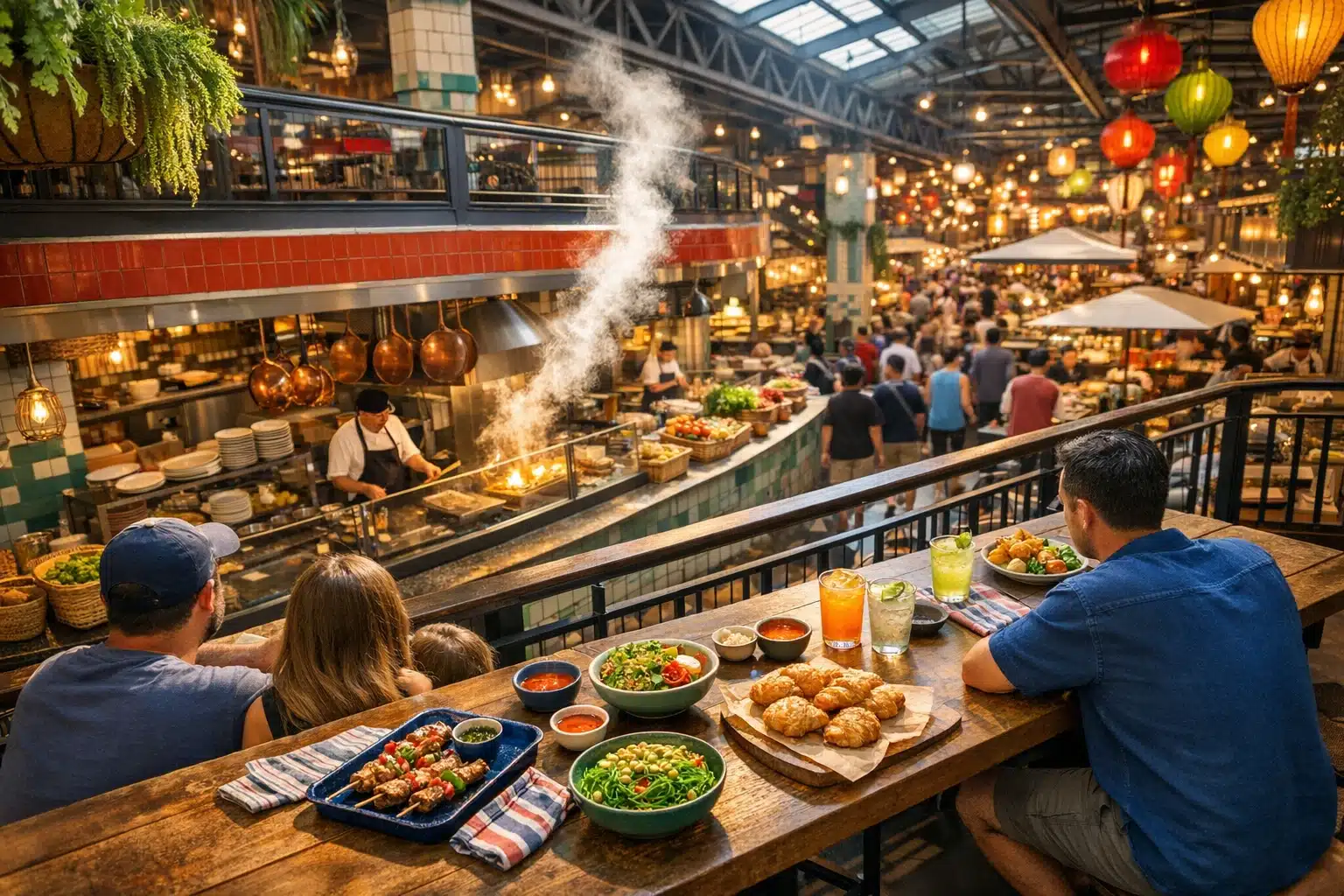
The third standout option for foreign diners is the food hall, covered market restaurant, or market-based dining venue with visible cooking stations. This format is especially useful for travelers who want variety, speed, and the ability to see what they are ordering before committing. In a foreign country, visual reassurance matters more than many people expect. When you can watch a dish being grilled, plated, or baked in front of you, uncertainty drops immediately.
Food halls work well because they solve several common travel problems at once. Groups with different tastes can eat together without forcing everyone into the same menu. One person can choose local noodles, another can order grilled meat, and someone else can pick a vegetarian bowl or a pastry-based meal. Families benefit from this flexibility, and solo travelers often appreciate the lower pressure. You usually do not need a formal reservation, and you can browse before deciding. That makes the experience feel exploratory rather than intimidating.
Open kitchens also create transparency. Portion size, cooking style, and ingredient freshness are easier to judge when the preparation is visible. This is particularly helpful for foreigners with dietary concerns or hesitation around unfamiliar dishes. Instead of translating every line on a menu, you can often point, ask a short question, and build your meal step by step. In some destinations, market restaurants are among the best places to taste respected local specialties in smaller portions before ordering a full sit-down dinner elsewhere.
Of course, not every market venue is perfect. The busiest ones can be noisy, seating may be competitive at peak times, and the most famous stalls sometimes build long lines. Prices also vary widely. A market that serves local office workers may offer strong value, while a newly fashionable food hall in a city center can charge as much as a full-service restaurant. Still, the format remains highly practical because it lowers the cultural barriers that sometimes make foreigners hesitate.
- Best for: mixed groups, families, solo travelers, and curious eaters who want options.
- Strong points: visual ordering, variety, casual atmosphere, often faster service.
- Possible drawbacks: noise, queue times, and uneven quality between vendors.
There is a special kind of travel pleasure in these places. You follow the smell of roasting spices, hear a pan hiss, watch a cook fold dough with quick practiced hands, and suddenly the meal no longer feels abstract. It becomes immediate, sensory, and wonderfully easy to enter. For many foreigners, that combination of discovery and control makes the market restaurant one of the best dining formats on any trip.
How to Choose the Right Restaurant Abroad: A Practical Summary for Foreign Travelers
So which of these is truly the best restaurant for foreigners? The most useful answer is that the best choice depends on the kind of traveler you are, the amount of time you have, and how much uncertainty you enjoy. If you want the richest cultural experience and are comfortable navigating a little ambiguity, the local neighborhood restaurant is often the winner. If you want a smoother evening with fewer surprises, the modern bistro usually offers the safest balance. If flexibility matters most, the food hall or market restaurant may be the smartest option of all.
A simple decision framework can help. Ask yourself a few questions before you book or walk in. Do you need allergen information? Are you paying by card? Is the meal for a business meeting, a family outing, or a solo dinner after a long day? How comfortable are you with limited language support? The answers quickly point you toward the right category. Travelers often make poor dining choices not because the restaurant is bad, but because the format does not match the moment.
- Choose a neighborhood restaurant when authenticity and local flavor matter most.
- Choose a modern bistro when convenience, reservations, and easy communication matter most.
- Choose a market or food hall when your group has mixed preferences or you want a more flexible meal.
There are also a few universal signs of a good foreigner-friendly restaurant. Look for menus with clear descriptions, visible opening hours, recent reviews mentioning service quality, and staff responses that sound patient rather than defensive. Photos can help, but they should not be your only tool. A better clue is whether reviewers explain why the place worked for them: clear communication, honest pricing, reliable dishes, and a comfortable atmosphere. Those details are more useful than hype.
For the target audience of this guide, namely international visitors trying to eat well without unnecessary confusion, the real goal is not to find a mythical “perfect” restaurant. It is to find a place where hospitality bridges the gap between cultures. The strongest restaurants for foreigners do exactly that. They offer food worth remembering, enough guidance to relax, and an experience that feels local without becoming inaccessible. When you find that balance, dinner stops being a logistical problem and becomes one of the best parts of the journey.