Portable Water Bottle for Dogs: A Simple Guide for Pet Owners
Introduction and Article Outline
A portable water bottle for dogs looks like a small travel accessory, yet it solves a real problem that many owners notice only when a walk stretches longer than planned or the afternoon turns hot. Dogs lose moisture through panting, movement, and warm weather, and even mild dehydration can leave them tired, distracted, and uncomfortable. Picking the right bottle makes outings cleaner, simpler, and safer for both of you.
For many pet owners, hydration is easy to remember at home and easy to forget outside. A full bowl sits in the kitchen, but a trail, sidewalk, beach, or car ride offers no such convenience. That gap matters because dogs often need water at exactly the times when they are most excited and most active. A common rule of thumb is that healthy dogs may need roughly an ounce of water per pound of body weight each day, though needs vary with diet, weather, age, activity, and health status. A dry-food-fed dog on a warm day may need noticeably more access to fresh water than a calm dog resting indoors. Portable bottles are designed to close that gap by giving owners a simple way to carry clean water and offer it quickly.
This article begins with an outline so you can see where the discussion is heading before we unpack the details. The goal is not to tell every owner to buy the fanciest model on the shelf. Instead, it is to explain what makes a bottle genuinely useful in real life, where muddy paws, car seats, crowded parks, and impatient dogs all play a part.
Article outline:
• Why hydration matters during walks, travel, play, and hot weather
• The main styles of dog water bottles and how they differ in design and convenience
• How to choose the right size, material, and features for your dog and routine
• Practical advice on cleaning, using, and maintaining a bottle so it stays safe and useful
• Final guidance for pet owners who want a reliable, low-stress solution
Think of the dog water bottle as one of those quiet helpers that earns its value over time. It may not be as exciting as a new leash or as charming as a bright bandana, but it can prevent discomfort, reduce waste, and make spontaneous outings far easier. In the sections that follow, we will compare the most common options, explain where each one shines, and help you choose a model that fits your dog rather than a marketing slogan.
Why Dogs Need Reliable Hydration on the Go
Dogs regulate body temperature very differently from humans. They do not cool themselves efficiently through sweating across the skin the way people do. Instead, they rely heavily on panting, which increases water loss. That means an active dog at the park, on a hike, or simply walking on a warm sidewalk can begin to need water long before the owner feels thirsty. Small breeds, senior dogs, puppies, and flat-faced breeds can be especially sensitive to heat and exertion, and they often benefit from more frequent breaks.
A portable bottle becomes useful because outdoor conditions are inconsistent. Public bowls may be empty, hard to find, or not especially clean. Natural water sources can look harmless while carrying bacteria, algae, parasites, or other risks. Even on a short outing, offering water from a bottle you filled yourself gives you more control over cleanliness and timing. This is particularly helpful on road trips, during long waits at sports fields, or while running errands with a dog in the car. The bottle turns hydration from an afterthought into a routine.
There are also behavioral reasons to carry water. Some dogs become so focused on sniffing, exploring, or greeting people that they ignore discomfort until they are already tired. A familiar bottle and drinking cup encourage brief, calm pauses. Owners often find that these breaks improve the whole outing. A dog that drinks, rests for a moment, and cools down is usually easier to guide, more comfortable on the return walk, and less likely to become overstimulated.
Signs that a dog may need water or a rest can include:
• heavy or rapid panting
• a dry or sticky mouth
• reduced enthusiasm for walking
• searching for puddles or standing water
• lingering in shade or lying down sooner than usual
None of this means every five-minute stroll requires special equipment. On a cool, short neighborhood walk, many owners will not need a bottle at all. The point is context. When time, temperature, distance, or activity level rises, access to water matters more. A portable bottle gives owners a practical middle ground between carrying a loose bowl and hoping water will be available somewhere along the way. It is a simple piece of preparation that can quietly improve comfort, safety, and peace of mind.
Portable Water Bottle Designs Compared
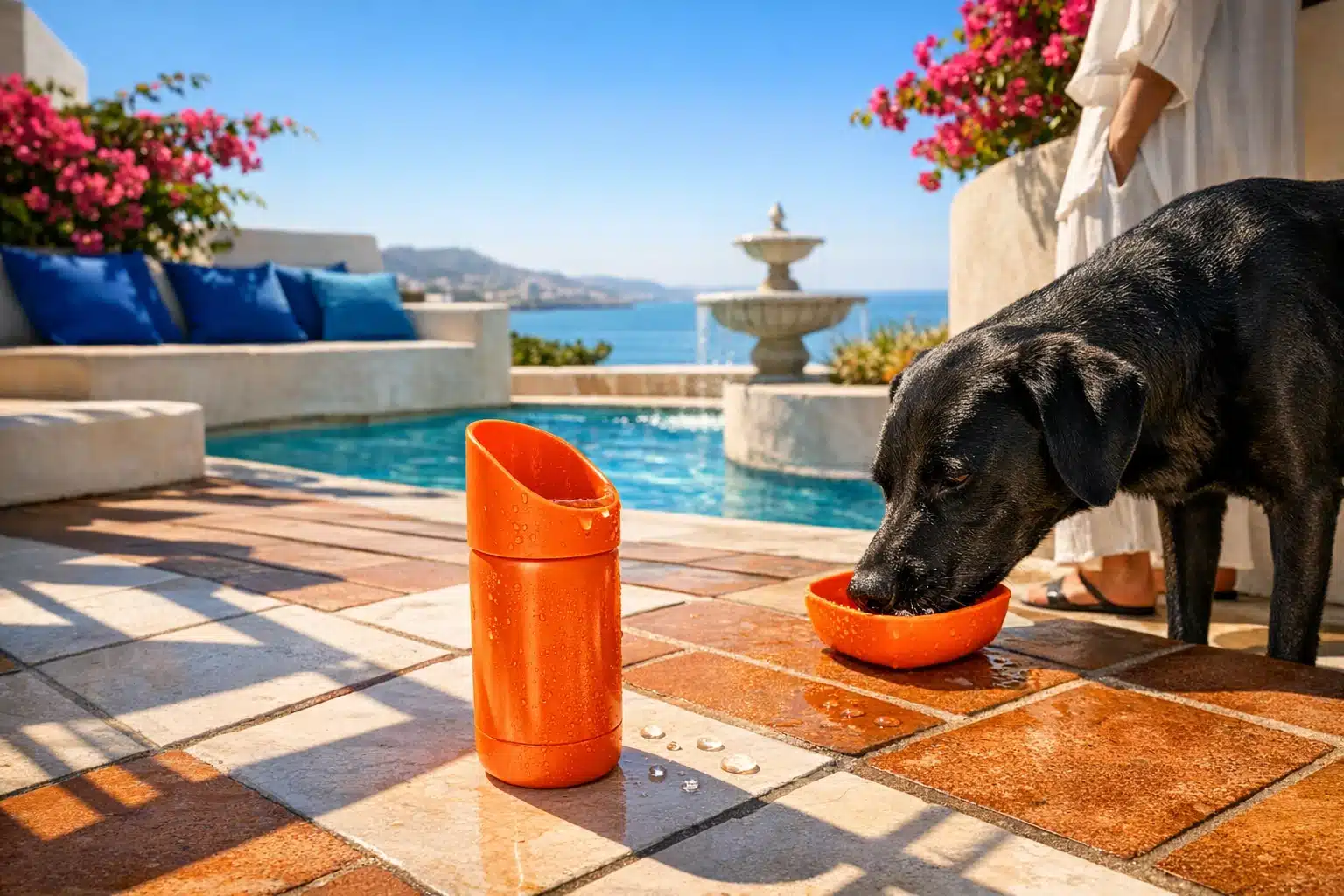
Dog water bottles come in several common styles, and each solves the same problem in a different way. The most recognizable version combines a bottle with a built-in trough or spoon-shaped cup at the top. You squeeze, press, or tilt the bottle, water flows into the attached tray, and the dog drinks directly from that space. These models are popular because they are compact and easy to use one-handed. If you have a leash in one hand and a very curious dog in the other, that convenience feels less like a luxury and more like good engineering.
Another style pairs a standard travel bottle with a collapsible silicone bowl. This setup is flexible and often easier for larger dogs that dislike narrow drinking areas. The downside is that it involves two pieces rather than one, and the bowl may need to be carried wet after use. Some owners prefer this trade-off because the bowl feels more natural to the dog. Others want the speed of an all-in-one design that clips to a bag or slips into a car door pocket.
Materials also make a noticeable difference. BPA-free plastic bottles are light and affordable, which makes them attractive for casual use. Stainless steel options are often sturdier and may keep water cooler for longer, especially in insulated designs, but they tend to weigh more and cost more. Silicone drinking cups fold well and are easy to pack, though very soft designs can feel flimsy if squeezed too hard. Leak resistance matters just as much as material quality. A bottle that drips in a backpack or soaks a car seat will quickly become annoying, even if every other feature looks great on paper.
When comparing designs, pay attention to these practical details:
• Capacity: around 12 to 20 ounces often suits short walks, while 20 to 32 ounces works better for longer outings or medium to large dogs
• Water return feature: some bottles let unused water flow back inside, reducing waste
• Locking mechanism: a simple lock helps prevent leaks during travel
• Mouth width and cup shape: a wider drinking area is often easier for broad-snouted dogs
• Cleaning access: wide openings and fewer hidden seams usually mean easier hygiene
There is no universal winner, because the best design depends on how and where you use it. A city walker may love a slim, lightweight bottle that fits in a coat pocket. A hiker may prefer a larger model with a rugged build and an easy-carry strap. A family with two dogs may decide that a regular insulated bottle plus collapsible bowl is more practical than a narrow built-in cup. Good comparison shopping is less about chasing features and more about matching the bottle to your dog’s drinking style, your handling preferences, and the kind of outings you actually take.
How to Choose the Right Water Bottle for Your Dog
Choosing the right dog water bottle starts with a simple question: what does your routine look like on an average week? A tiny bottle that works beautifully for a ten-minute neighborhood loop may be frustrating on a beach day. A large insulated model can feel perfect in the car and cumbersome in a small shoulder bag. Rather than shopping by appearance alone, think in terms of context, frequency, and the habits of your individual dog. A practical match nearly always outperforms a trendy one.
Dog size is one of the clearest starting points. Small dogs often drink comfortably from compact trough-style bottles, and their owners may value portability over large capacity. Medium and large dogs usually benefit from a wider cup area and more water volume, especially during exercise. If you have a high-energy breed, a double-coated dog, or a dog that pants heavily in warm weather, it often makes sense to size up. Owners of multiple dogs should also plan beyond the first few sips. A bottle that seems generous for one pet can feel empty surprisingly fast when shared.
Your travel style matters just as much. For urban errands and café stops, look for a leak-resistant bottle that can be opened quickly and held in one hand. For hiking, camping, and longer outdoor sessions, durability, capacity, and ease of clipping to gear become more important. If your dog rides in the car often, a stable bottle that stores neatly in a console or side pocket is worth considering. Some owners also prefer bottles with measurement markings so they can track how much water has been offered during a long day out.
Here is a useful decision shortcut:
• Short walks and light errands: small, lightweight, simple bottle
• Park sessions or warm-weather walks: medium capacity with a broad drinking cup
• Hiking, travel, or all-day outings: larger bottle, stronger lock, strap or clip, easy refill access
• Big dogs or multiple dogs: higher volume and a cup shape that allows comfortable lapping
• Mess-sensitive owners: strong seal and a return-flow feature for unused water
Finally, consider how your dog actually drinks. Some lap quickly and confidently from almost anything. Others are suspicious of new containers and prefer a bowl-like surface. If your dog is particular, test the shape at home before relying on it outdoors. Also remember that ease of cleaning is not a bonus feature; it is a safety feature. A beautifully designed bottle that is awkward to wash may end up sitting unused in a cupboard. The best choice is the one that fits your dog, your schedule, and your tolerance for spills, carrying weight, and cleanup.
Smart Use, Cleaning, and Final Advice for Pet Owners
Even a well-designed bottle works best when it becomes part of a simple routine. Before leaving home, fill it with fresh drinking water and make a quick check of the lock, cap, and cup area. Offer water before your dog becomes obviously tired, especially in warm conditions. Many owners wait until heavy panting starts, but earlier breaks are often more effective. Think of hydration like pacing on a long walk: it is easier to maintain comfort than to catch up once your dog is already overheated and irritable.
Introducing a new bottle can take a little patience. Some dogs accept it immediately, while others stare at it as if it were a puzzling little fountain from another planet. Let your dog inspect it at home first. Offer a small amount of water indoors, where distractions are low. Praise calm interest, and avoid pressing the cup against the muzzle. Once the dog understands that the tray means water, the bottle usually becomes much easier to use on walks and trips.
Cleaning deserves more attention than it often gets. Moisture trapped in lids, seals, straws, or folded cups can encourage odor and bacterial growth. After each day of use, empty the remaining water, wash the bottle with warm water and mild soap, and allow all parts to dry fully before reassembling them. Check the product instructions for dishwasher safety, but remember that hand-washing small seals and creases is often still the better option. Replace a bottle if it develops cracks, stubborn residue, or a smell that does not wash out.
Common mistakes are easy to avoid:
• leaving water in the bottle overnight for repeated use
• relying on a bottle that is too small for the dog’s activity level
• skipping shade and rest because water is available
• forgetting to test for leaks before placing the bottle in a bag
• assuming every dog will happily drink from a narrow cup design
For pet owners, the best portable water bottle is rarely the most complicated one. It is the model you remember to bring, can clean without frustration, and can use smoothly when your dog is eager, muddy, or impatient. If you choose a bottle based on real habits rather than shelf appeal, you are far more likely to use it consistently. That consistency is what matters. A dependable source of fresh water can make daily walks more relaxed, road trips more manageable, and active days far kinder to the dog trotting beside you. In short, a good dog water bottle is not about gadget collecting; it is about making care easier in the moments when care matters most.